
Pass Your Microsoft MCSD 70-483 Exam Easy!

Microsoft MCSD 70-483 Exam Questions & Answers, Accurate & Verified By IT Experts

Instant Download, Free Fast Updates, 99.6% Pass Rate

70-483 Premium VCE File

Microsoft 70-483 Premium File

50 Questions & Answers

Last Update: Jan 30, 2026

$69.99

70-483 Bundle gives you unlimited access to "70-483" files. However, this does not replace the need for a .vce exam simulator. To download VCE exam simulator click here
70-483 Premium VCE File
Microsoft 70-483 Premium File

50 Questions & Answers

Last Update: Jan 30, 2026

$69.99

Microsoft MCSD 70-483 Exam Bundle gives you unlimited access to "70-483" files. However, this does not replace the need for a .vce exam simulator. To download your .vce exam simulator click here

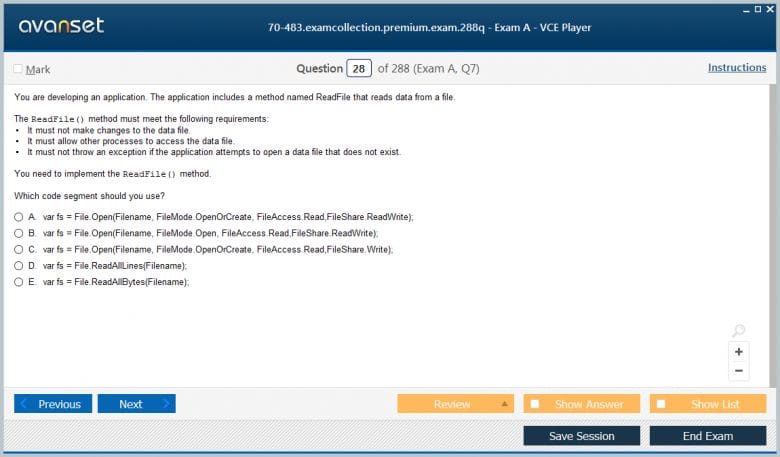
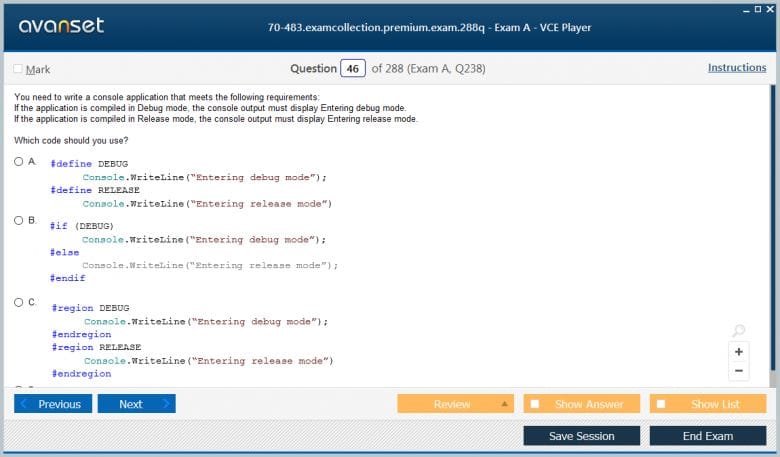
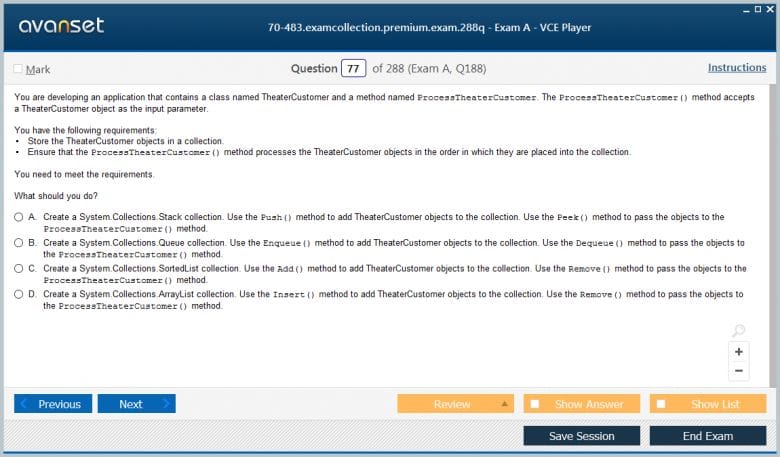
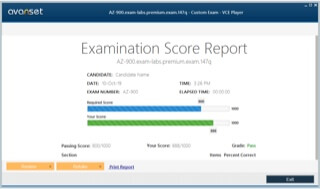
Microsoft MCSD 70-483 Exam Screenshots
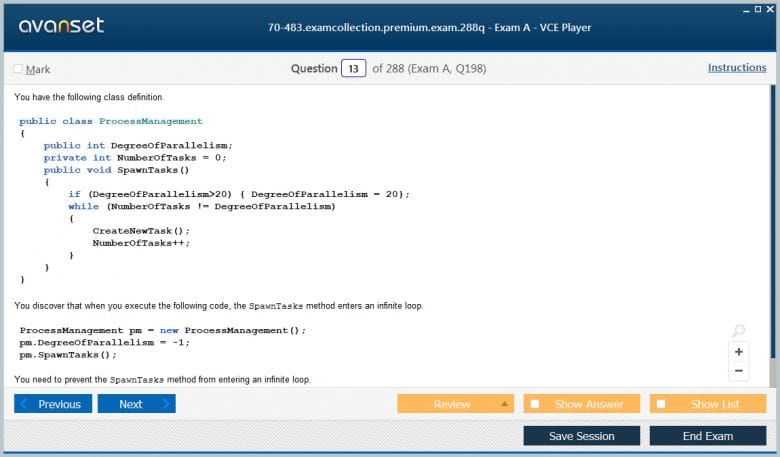
Microsoft MCSD 70-483 Practice Test Questions in VCE Format

File Votes Size Date
File
Microsoft.Test-king.70-483.v2018-11-17.by.Victoria.171q.vce
Votes
19
Size
10.78 MB
Date
Nov 26, 2018
File
Microsoft.Certkey.70-483.v2018-06-30.by.Ashley.155q.vce
Votes
9
Size
9.56 MB
Date
Jul 11, 2018
File
Microsoft.Testpapers.70-483.vv2014-11-07.by.Laura.190q.vce
Votes
15
Size
8 MB
Date
Nov 07, 2014
File
Microsoft.Testinside.70-483.v2014-09-22.by.BENNETT.48q.vce
Votes
16
Size
4.73 MB
Date
Sep 22, 2014
File
Microsoft.Certkey.70-483.v2014-06-27.by.Calvin.30q.vce
Votes
24
Size
2.61 MB
Date
Jun 27, 2014
File
Microsoft.Actualtests.70-483.v2014-05-15.by.BRANDY.189q.vce
Votes
218
Size
8 MB
Date
May 15, 2014
File
Microsoft.Passguide.70-483.v2014-01-03.by.Delores.32q.vce
Votes
20
Size
2.9 MB
Date
Jan 03, 2014
File
Microsoft.Passguide.70-483.v2013-10-31.by.Delores.44q.vce
Votes
13
Size
3.9 MB
Date
Oct 31, 2013
File
Microsoft.Testking.70-483.v2013-09-03.by.Anonymous.66q.vce
Votes
17
Size
131.35 KB
Date
Sep 04, 2013
File
Microsoft.ActualTests.70-483.v2013-04-19.by.SomeBody.64q.vce
Votes
19
Size
1007.47 KB
Date
Apr 21, 2013

Archived VCE files

File Votes Size Date
File
Microsoft.Testpapers.70-483.v2014-12-12.by.Jason.185q.vce
Votes
6
Size
8 MB
Date
Dec 12, 2014
File
Microsoft.Actualtests.70-483.v2014-12-11.by.Alfred.185q.vce
Votes
1
Size
8 MB
Date
Dec 11, 2014
File
Microsoft.Certkiller.70-483.vv2014-10-15.by.DAINE.40q.vce
Votes
7
Size
3.8 MB
Date
Oct 15, 2014
File
Microsoft.Certkiller.70-483.v2014-09-13.by.GRAZYNA.40q.vce
Votes
2
Size
3.8 MB
Date
Sep 13, 2014
File
Microsoft.Actualtests.70-483.v2014-09-02.by.NANCY.189q.vce
Votes
3
Size
8 MB
Date
Sep 02, 2014
File
Microsoft.Certkiller.70-483.v2014-08-20.by.MYRA.40q.vce
Votes
4
Size
3.8 MB
Date
Aug 20, 2014
File
Microsoft.Actualtests.70-483.v2014-06-26.by.KELLEY.189q.vce
Votes
10
Size
8 MB
Date
Jun 26, 2014
File
Microsoft.Actualtests.70-483.v2014-06-18.by.MARCY.189q.vce
Votes
3
Size
8 MB
Date
Jun 18, 2014
File
Microsoft.Certkiller.70-483.v2014-06-06.by.Brad.40q.vce
Votes
4
Size
3.8 MB
Date
Jun 07, 2014
File
Microsoft.Testinside.70-483.v2014-05-17.by.Xochitl.48q.vce
Votes
5
Size
4.73 MB
Date
May 17, 2014
File
Microsoft.Testinside.70-483.v2014-05-06.by.Della.130q.vce
Votes
3
Size
172.05 KB
Date
May 06, 2014
File
Microsoft.Braindumps.70-483.v2014-04-28.by.Philip.70q.vce
Votes
8
Size
206.05 KB
Date
Apr 28, 2014
File
Microsoft.Certkiller.70-483.v2014-03-18.by.Buck.55q.vce
Votes
4
Size
183.92 KB
Date
Mar 18, 2014
File
Microsoft.Selftestengine.70-483.v2014-03-13.by.Heather.69q.vce
Votes
1
Size
202.03 KB
Date
Mar 13, 2014
File
Microsoft.Visualexams.70-483.v2014-03-10.by.Mabel.83q.vce
Votes
3
Size
203.8 KB
Date
Mar 10, 2014
File
Microsoft.Realtests.70-483.v2014-03-04.by.Gayel.93q.vce
Votes
4
Size
238.95 KB
Date
Mar 04, 2014
File
Microsoft.Passguide.70-483.v2013-08-15.by.Reaper.66q.vce
Votes
12
Size
5.76 MB
Date
Aug 16, 2013
File
Microsoft.ActualTests.70-483.v2013-05-08.by.litterbugkid.63q.vce
Votes
3
Size
5.6 MB
Date
May 13, 2013
File
Microsoft.ActualTests.70-483.v2013-05-07.by.litterbugkid.63q.vce
Votes
2
Size
5.6 MB
Date
May 06, 2013
File
Microsoft.ActualTests.70-483.v2013-04-06.by.sophye.63q.vce
Votes
2
Size
5.58 MB
Date
Apr 07, 2013
File
Microsoft.ActualTests.70-483.v2013-04-03.by.qloslawGK.63q.vce
Votes
2
Size
5.61 MB
Date
Apr 03, 2013
File
Microsoft.ActualTests.70-483.v2013-03-22.by.qloslaw.63q.vce
Votes
1
Size
5.6 MB
Date
Mar 24, 2013
File
Microsoft.ActualTests.70-483.v2013-03-16.by.sophye.63q.vce
Votes
1
Size
5.6 MB
Date
Mar 17, 2013
File
Microsoft.ActualTests.70-483.v2013-02-13.by.sophye.63q.vce
Votes
2
Size
5.6 MB
Date
Feb 13, 2013
File
Microsoft.ActualTests.70-483.v2013-02-05.by.matshj.63q.vce
Votes
2
Size
5.5 MB
Date
Feb 06, 2013
File
Microsoft.ActualTests.70-483.v2013-01-29.by.Azerus.62q.vce
Votes
1
Size
5.45 MB
Date
Jan 29, 2013
File
Microsoft.Passguide.70-483.v2013-01-09.by.SpideysWife.62q.vce
Votes
1
Size
5.4 MB
Date
Jan 09, 2013
File
Microsoft.BrainDump.70-483.v2012-11-20.by.dniwe.23q.vce
Votes
3
Size
546.95 KB
Date
Nov 20, 2012

Microsoft MCSD 70-483 Practice Test Questions, Exam Dumps

Microsoft 70-483 (MCSD Programming in C#) exam dumps vce, practice test questions, study guide & video training course to study and pass quickly and easily. Microsoft 70-483 MCSD Programming in C# exam dumps & practice test questions and answers. You need avanset vce exam simulator in order to study the Microsoft MCSD 70-483 certification exam dumps & Microsoft MCSD 70-483 practice test questions in vce format.

Mastering the Microsoft 70-483 Exam: Foundational C# Concepts 

C# is a widely used programming language that serves as the foundation for Microsoft’s .NET ecosystem. Mastering its syntax is the first step toward creating robust, maintainable applications. This includes understanding variables, data types, operators, loops, and conditionals. A developer’s ability to read and write clean syntax not only facilitates exam preparation but also enhances practical programming efficiency. Practicing small coding challenges repeatedly can help reinforce these basic concepts and ensure they are applied correctly in real-world scenarios.

In addition, exploring frameworks and integration practices offers valuable insights. For instance, developers can benefit from dynamic email dispatch system Python which demonstrates structured workflows and modular design principles that can inspire C# applications. These exercises help learners grasp how functions, methods, and loops interact, creating a solid programming foundation.

Finally, understanding advanced syntax nuances like operator precedence, type casting, and exception handling ensures applications run efficiently. Paying attention to correct syntax prevents errors and improves readability, which is crucial for both certification exams and professional development projects. These skills create a strong base for exploring object-oriented principles and more complex constructs later on.

Object-Oriented Programming Principles

Object-oriented programming (OOP) is central to C# development, emphasizing encapsulation, inheritance, and polymorphism. These principles allow developers to structure code efficiently and create reusable components. Encapsulation bundles data and methods, preventing unintended interference, while inheritance enables new classes to extend existing functionality without redundant code. Polymorphism allows objects to behave differently depending on context, adding flexibility to application behavior. Understanding these fundamentals is critical for passing the 70-483 exam and designing scalable software solutions.Practical experience strengthens comprehension, and integrating real-world examples is key, AWS security instance subnet illustrates layered design principles that mirror OOP concepts, highlighting how structured approaches ensure system stability and security.

Additionally, developers must master constructors, destructors, abstract classes, and interfaces. Constructors initialize objects, destructors handle cleanup, and interfaces enforce contracts across classes. Practicing these principles in small applications like inventory management or employee tracking systems reinforces understanding of OOP’s role in creating organized and maintainable code.

Working with Data Types and Variables

Data types and variables are the building blocks of C# programs. Choosing the right type determines how data is stored and manipulated, and understanding scope, lifetime, and memory management is essential. Developers must practice using primitive types such as int, float, and char alongside reference types like strings and arrays. Implementing constants, enums, and type inference with var enhances code flexibility while maintaining readability and efficiency.Learners can enhance their knowledge by reviewing AWS AI practitioner exam which demonstrates structured handling of complex data, paralleling C#’s systematic data management. This connection highlights the value of disciplined data structures and variable management in professional development scenarios.

Advanced concepts include nullable types, dynamic typing, and object references. Understanding these allows for safer and more versatile code, particularly when dealing with large datasets or integrating multiple application components. Mastery of variables and data types ensures efficient program execution and forms a prerequisite for more advanced topics like OOP and LINQ.

Implementing Control Structures

Control structures in C# define the flow of execution and decision-making processes in an application. Conditional statements such as if-else, switch, and ternary operators allow programs to respond differently based on input or program state. Looping constructs including for, while, and foreach facilitate repetitive operations, streamlining tasks like array traversal and file processing. Proper application of these structures is essential for both exam preparation and professional coding tasks.To deepen understanding, developers can study Amazon SageMaker data preparation which demonstrates systematic workflows for handling complex operations, mirroring the logical flow structures in C#. Such exercises reinforce the importance of designing efficient, maintainable control flows.

In addition, exception handling with try-catch-finally blocks complements control structures by preventing unexpected failures. Developers should practice combining loops, conditionals, and error handling to build robust, fault-tolerant applications. Mastery of these structures ensures that programs execute accurately and reliably in real-world scenarios.

Mastering Arrays and Collections

Arrays and collections allow efficient storage and management of multiple data items. Arrays are fixed-size and type-specific, whereas collections like List<T>, Dictionary<TKey, TValue>, and Queue<T> offer dynamic resizing, key-value pairing, and flexible ordering. Understanding these structures improves memory management and algorithm efficiency, particularly when handling larger datasets.Further insight into structured data can be seen cloud architecture operational excellence which shows layered and systematic approaches to organizing complex systems. Such examples highlight parallels between cloud architecture design and effective use of C# data structures.

Advanced techniques such as LINQ queries, lambda expressions, and collection manipulation provide elegant solutions for filtering, searching, and aggregating data. Hands-on exercises with practical applications like logging, inventory management, or reporting systems reinforce both conceptual understanding and practical skills.

Handling Strings and Text Data

Strings are essential for any C# application, representing sequences of characters. Efficient string manipulation includes concatenation, formatting, interpolation, and splitting, as well as working with escape characters and encoding standards. Correct handling ensures program reliability, especially when processing user input, reading files, or integrating with APIs.A good reference for structured data handling is CISSP data dictionary basics which highlights the importance of systematic management of textual data. This reinforces the value of understanding string manipulation, validation, and secure handling practices within applications.

C# developers should also explore the StringBuilder class for high-performance string operations, reducing memory overhead during repeated concatenations. Mastering these techniques is essential for both exam readiness and professional coding scenarios, providing efficient methods for handling large or frequently modified textual data.

Advanced Security Concepts in C#

Security is a fundamental concern in software development, and C# developers must understand key concepts to protect applications from vulnerabilities. Principles like authentication, authorization, and secure coding practices are essential. Learning how to implement encryption, handle sensitive data, and validate user inputs reduces risks and ensures compliance with industry standards. Developers should also familiarize themselves with security models and protocols to build robust and resilient software systems,  decoding password cracking techniques helps illustrate how attackers exploit weaknesses. Understanding these methods provides insight into preventive measures that can be implemented within C# applications, such as strong hashing algorithms, secure storage, and robust authentication mechanisms.

Additionally, studying common vulnerabilities like SQL injection, buffer overflow, and cross-site scripting reinforces secure coding habits. By simulating real-world attack scenarios in controlled environments, developers gain hands-on experience that enhances both exam readiness and professional expertise.

Information Security Models

Understanding information security models is critical for developing secure C# applications. Concepts such as confidentiality, integrity, and availability (CIA triad) guide the design of secure systems. Implementing access controls, role-based permissions, and auditing mechanisms ensures that sensitive information remains protected. Applying these principles helps developers anticipate potential threats and mitigate risks before they impact applications.A deeper understanding can be gained by information security models CISSP which discusses theoretical frameworks that inform practical security strategies. Translating these models into real-world software design enhances developers’ ability to secure applications effectively.

Advanced topics include mandatory access control (MAC), discretionary access control (DAC), and Bell-LaPadula or Biba models. Implementing these within C# programs strengthens security posture and ensures alignment with industry best practices.

Scripting and Automation

Scripting and automation are essential skills for optimizing repetitive tasks and improving efficiency in software development. Bash scripting, PowerShell, and other scripting languages enable developers to automate file management, system monitoring, and deployment processes. Integrating these skills with C# applications streamlines workflows and reduces manual errors, bash scripting ethical hackers demonstrates how scripting can be used to automate complex tasks while maintaining security standards. This approach highlights the synergy between scripting knowledge and secure software development practices.

Automation also facilitates testing, data manipulation, and continuous integration processes. Mastering these techniques improves productivity, ensures consistency, and prepares developers to implement real-world solutions in enterprise environments.

Cryptography and Data Protection

Cryptography is central to securing data and ensuring communication confidentiality. Developers must understand symmetric and asymmetric encryption, hashing algorithms, and digital signatures. Proper implementation of cryptographic techniques prevents unauthorized access and enhances overall application security, cryptography encryption CISSP companion offers practical insights into applying cryptography concepts in software development. This knowledge enables developers to protect sensitive information, comply with regulatory requirements, and maintain trust in their applications.

Key skills include encrypting files, securing communication channels, and managing keys safely. Combining cryptography with secure coding principles and testing ensures that C# applications are resistant to attacks and data breaches.

Linux and System Administration

Proficiency in Linux and system administration complements C# development, especially when deploying applications in server environments. Familiarity with Linux commands, file systems, permissions, and package management enhances operational efficiency and security. Administrators and developers alike benefit from understanding server configuration and automation practices.For example, reviewing Linux certifications system administrators highlights the value of mastering system administration skills, which directly improve deployment and maintenance workflows for C# applications.

Further knowledge includes managing processes, monitoring resources, and troubleshooting system issues. Integrating these skills with programming expertise ensures reliable application performance and seamless operation in diverse environments.

Open Source and Enterprise Tools

Open-source and enterprise platforms are often used alongside C# development to enhance functionality and scalability. Knowledge of virtualization, server management, and enterprise tools allows developers to build, deploy, and maintain complex applications efficiently. Learning how to leverage these platforms improves productivity and reduces costs.Developers can explore OpenStack RHCSA free course to understand how virtualization and Linux server management complement C# development workflows. This integration illustrates how enterprise tools support large-scale application deployment.

Skills in configuring servers, managing resources, and troubleshooting environments are essential for professional developers. Combining these capabilities with C# coding ensures applications are robust, scalable, and optimized for real-world use.

Specialized Certifications and Vendor Programs
Staying updated with specialized certifications and vendor programs enhances a developer’s skill set and credibility. Certifications from HP, Brocade, and Red Hat provide industry-recognized validation of knowledge in enterprise systems, networking, and storage. These programs offer hands-on experience with tools and platforms that are widely used in professional environments, understanding HP Idol server certification path gives insight into advanced system integration and enterprise application management, valuable skills for C# developers working in large-scale infrastructures.
Participation in these programs reinforces best practices, ensures familiarity with emerging technologies, and supports career advancement. Applying learned skills to C# projects enhances performance, security, and efficiency across enterprise applications.

Exploring NFV Certification Opportunities

Network Function Virtualization (NFV) is becoming an essential skill in modern network engineering. Understanding how NFV works, including virtualization principles, service chaining, and orchestration, allows developers and administrators to manage scalable networks effectively. Learning about NFV concepts also strengthens your understanding of software-defined networking (SDN) and cloud-based infrastructure management. Hands-on labs and practice tests provide a deeper grasp of NFV principles, enabling learners to confidently implement virtualized services in production environments,  free NFV certification offer which details how to gain foundational knowledge and industry-recognized certification at no cost. This helps professionals validate skills in network virtualization, gaining a competitive edge in the job market.

Mastering NFV concepts also involves understanding monitoring tools, automation scripts, and configuration management. Integrating these skills ensures efficient deployment and maintenance of virtualized network services, preparing candidates for both certification exams and real-world enterprise networking challenges.

Keeping Up With RHEL7 Exam Updates

Staying current with Red Hat Enterprise Linux (RHEL) exam updates is crucial for IT professionals preparing for certification. RHEL7 introduces several changes in system administration, security, and automation compared to previous versions. Understanding these updates ensures candidates focus their study efforts on the most relevant topics, optimizing exam readiness and professional growth. Hands-on practice with RHEL7 environments further reinforces key concepts such as package management, user permissions, and network configuration.Developers and administrators can review updates on RHEL7 exams which provides detailed guidance about recent modifications to exam objectives and content. This ensures that learners are aware of the latest requirements and can tailor their preparation strategies effectively.

Additionally, keeping up with RHEL7 updates improves operational efficiency and system reliability. By integrating updated practices into daily workflows, professionals can ensure compliance, maintain security standards, and demonstrate expertise in enterprise Linux administration.

Leveraging Big Data Analytics on Azure

Big data analytics has become a cornerstone of modern IT and business intelligence. Developers and data engineers must understand cloud-based tools and platforms for handling massive datasets efficiently. Microsoft Azure provides a comprehensive suite for data ingestion, processing, storage, and visualization. Mastery of these tools enables organizations to derive actionable insights, improve decision-making, and maintain competitive advantages. Learning how to manage and analyze data in Azure also strengthens skills in machine learning and AI integration, guide to Azure analytics which covers practical approaches to big data workflows, analytics services, and cloud implementation strategies. This helps professionals understand how to structure, query, and analyze datasets effectively using Azure.

Additionally, integrating big data analytics into enterprise applications requires knowledge of security, scalability, and performance optimization. Mastering these concepts ensures that developers can create data-driven solutions that are reliable, efficient, and compliant with organizational policies.

Comparing Azure Container Platforms

Modern C# applications often integrate with cloud platforms for scalable deployment. Containerization is a critical approach, enabling applications to run consistently across environments. Developers must understand container lifecycle management, image building, and orchestration tools to ensure efficient deployment. Using containers also simplifies dependency management and testing.To understand deployment choices, container instances versus Kubernetes provides insight into lightweight versus fully orchestrated container solutions. This comparison helps developers decide which platform best suits scalability, automation, and monitoring requirements for production-ready applications.

Furthermore, monitoring, logging, and security configuration are essential practices. Applying these ensures stable and efficient deployment, reduces downtime, and strengthens development skills for enterprise-level C# applications integrated with Azure services.

Ensuring High Availability in Azure

High availability is critical for enterprise applications, requiring redundancy, fault tolerance, and proactive monitoring. Developers must design software to handle unexpected failures, balancing performance with system reliability. Effective deployment involves proper infrastructure configuration and load balancing to prevent bottlenecks.Examining VM scale sets and availability sets demonstrates how different Azure approaches support fault domains and high availability. Understanding these strategies helps C# developers structure applications to maintain uptime while optimizing resource utilization in cloud deployments.

Additional high-availability strategies include automated failover testing, alerting mechanisms, and proactive resource allocation. Mastering these ensures applications remain operational under heavy workloads and during unforeseen system events.

Backup and Recovery Strategies

Reliable data management is crucial for any application interacting with cloud environments. Developers must understand snapshots, point-in-time recovery, and automated backup policies to protect critical information. Implementing recovery solutions ensures business continuity and prevents data loss.Following guidance on Azure backup recovery solutions explains how to configure automated backups, test restoration processes, and secure data efficiently. This helps developers adopt professional practices in protecting enterprise-grade applications.

Combining these strategies with encryption, access controls, and logging improves overall security and reliability. Developers can confidently manage cloud data while meeting compliance and operational objectives.

Optimizing Data Redundancy

Data redundancy is key to fault tolerance, ensuring continuous access and reliability. Developers must understand synchronous and asynchronous replication, cross-region distribution, and storage optimization techniques to minimize latency and downtime.Practical advice on Azure object replication setup shows how to implement replication policies that maintain consistent access to critical datasets across regions. This ensures enterprise C# applications remain robust and reliable.

Monitoring replication, validating data integrity, and performing periodic audits enhance redundancy management. Mastery of these practices ensures applications are highly available and resilient under diverse operational conditions.

Preparing for Certification Exams

Structured exam preparation improves knowledge retention and confidence. Developers should combine hands-on practice, study guides, and mock tests to cover all objectives effectively. Systematic planning ensures candidates are exam-ready and capable of applying concepts in practical scenarios.Accessing 70-483 test preparation exams provides targeted practice questions and detailed explanations to reinforce learning. This allows learners to identify weak areas and strengthen coding skills for C# certification exams.

Supplementing these exercises with real-world projects improves understanding of complex topics. Consistent practice ensures candidates are proficient in both theory and application, preparing them for professional challenges.

Learning Vendor-Specific Certification Paths

Vendor-specific certifications validate specialized knowledge and practical skills. Familiarity with enterprise programs, virtualization, and cloud integration enhances professional growth. Understanding these pathways equips developers to design, deploy, and maintain modern C# applications effectively.Consulting Open Group certification exams details the steps, objectives, and preparation strategies needed to succeed. This insight supports developers in earning industry-recognized credentials and expanding career opportunities.
Combining certification knowledge with hands-on C# projects ensures learners can demonstrate applied expertise, bridging theoretical knowledge with practical application in enterprise and cloud environments.

VMware Virtualization Training

Virtualization is foundational for deploying scalable enterprise applications. Developers must understand virtual machine management, resource allocation, and automation to optimize performance. Effective virtualization improves security, flexibility, and operational efficiency for cloud-integrated C# systems.Using VCP DTM 2024 training provides step-by-step guidance for mastering desktop virtualization, deploying virtual desktops, and troubleshooting complex environments. This helps developers align virtualization knowledge with modern C# application deployment requirements.

Practical exercises in configuring networks, monitoring performance, and managing storage enhance expertise. Mastery of these practices ensures applications perform efficiently in virtualized, cloud-based enterprise environments.

Cloud Automation with VMware

Automation is essential for managing large-scale virtual environments efficiently. Developers must understand scripting, orchestration, and workflow automation to reduce manual errors and improve operational consistency. C# developers integrating cloud applications benefit from automation by streamlining deployment and monitoring tasks, VCP7 cloud automation which demonstrates implementing automated workflows and managing virtual machines at scale. This example helps learners connect programming knowledge with practical automation strategies in enterprise cloud environments.

Additional automation best practices include task scheduling, template usage, and error handling. Combining these practices with monitoring and alerting ensures reliable and scalable deployments for enterprise applications.

Understanding VMware vSAN

VMware vSAN provides efficient storage management and scalability for virtualized environments. Developers must understand data distribution, storage policies, and fault tolerance to ensure consistent performance. Integration with C# applications enables seamless interaction with storage resources and enhances operational efficiency, VMware vSAN 6x tutorials provides step-by-step guidance on configuring, monitoring, and optimizing storage clusters. This illustrates practical deployment strategies and aligns virtual storage solutions with application requirements.

Further learning includes data deduplication, compression, and policy-based management. Mastery of these features ensures optimized performance and reliability, providing a solid foundation for enterprise virtualization.

Datacenter Virtualization Design

Effective datacenter design is essential for scalable, high-performing cloud applications. Developers must consider resource allocation, fault domains, and network topology to ensure reliable infrastructure for C# applications. Planning for growth and performance is a key element in enterprise environments.The VCAP6 datacenter virtualization design tutorial explains how to structure datacenter components, optimize resources, and integrate virtualization solutions. Learning these principles helps developers align application design with enterprise infrastructure standards.

Advanced concepts include clustering strategies, load balancing, and disaster recovery planning. Integrating these approaches ensures both efficiency and high availability for complex cloud-based applications.

Virtualization Deployment Practices

Deployment in virtualized environments requires precision to maintain stability and performance. Developers must understand provisioning, configuration management, and testing strategies to avoid errors during rollout. Effective deployment practices also improve maintainability and reduce operational risks.Guidance from VCAP6 virtualization deployment shows best practices for provisioning virtual machines, configuring networks, and implementing automated deployment workflows. This resource demonstrates how C# applications interact with virtualized infrastructure seamlessly.

Additional topics include validating configurations, monitoring deployment performance, and ensuring compliance. Applying these principles strengthens operational reliability and prepares developers for enterprise-scale deployment scenarios.

Advanced Virtualization Design

Advanced virtualization design focuses on scalability, redundancy, and optimized resource usage. Developers need expertise in architecture planning, failover strategies, and integration with cloud services to ensure high performance. Designing with efficiency and resilience in mind ensures robust enterprise systems,  VCAP6-5 virtualization design tutorial explains advanced planning techniques, emphasizing network optimization, storage allocation, and high availability. This guidance helps C# developers align software solutions with complex virtualization infrastructure.

Other considerations include disaster recovery integration, resource balancing, and lifecycle management. Mastering these ensures scalable, maintainable applications and prepares professionals for enterprise cloud challenges.

Cloud Management Design

Cloud management design is crucial for monitoring, optimizing, and automating virtual environments. Developers must understand governance, policy implementation, and resource management to maintain efficiency. Integrating management best practices with C# applications ensures smooth operation in large-scale deployments.A VCAP6 cloud management design which details designing monitoring systems, automating alerts, and maintaining configuration standards. This provides practical insight for aligning application management with infrastructure policies.

Other aspects include capacity planning, performance monitoring, and reporting. Mastery ensures that developers can deploy and manage enterprise applications effectively while maintaining high service levels.

Cloud Management Deployment

Deploying cloud management solutions requires understanding orchestration, automation, and monitoring tools. Developers must ensure applications interact reliably with management layers and that deployment follows best practices to prevent errors and downtime.The VCAP6 cloud management deployment illustrates practical deployment steps, including configuring dashboards, setting alerts, and integrating with existing infrastructure. Learning these processes ensures that C# applications operate efficiently in managed virtual environments.

Other considerations include automated updates, fault monitoring, and access control. Applying these principles guarantees smooth deployment, operational efficiency, and alignment with enterprise cloud strategies.

Citrix Networking Essentials

Networking knowledge is critical for enterprise cloud solutions. Developers must understand routing, switching, and virtualization networking to optimize application performance and ensure security. Integrating these networking concepts with C# applications improves reliability and efficiency, Citrix 1Y0-201 exam provide structured guidance on networking fundamentals, configuration, and deployment strategies. This helps developers understand networking principles in virtualized and cloud environments.

Additional areas include load balancing, VLAN configuration, and performance tuning. Mastery ensures that applications communicate efficiently across the network while maintaining enterprise-grade security standards.

Citrix Advanced Virtualization

Advanced virtualization concepts include multi-site deployment, disaster recovery, and storage optimization. Developers must design and implement virtualization strategies to support high-performance enterprise applications and seamless user experiences.Using Citrix 1Y0-202 exam guidance, learners gain insights into advanced configurations, clustering, and failover strategies. This prepares C# developers to integrate applications with sophisticated virtualization infrastructure.

Other best practices include capacity planning, automated monitoring, and resource optimization. Combining these ensures reliability, scalability, and compliance for complex enterprise systems.

Advanced Citrix Networking Concepts

Networking is critical for deploying and managing enterprise-grade virtualized systems. Understanding IP addressing, routing, VLANs, and virtual network integration allows developers to ensure stable and efficient communication across infrastructure. These skills support C# applications integrated with cloud and on-premises systems.A practical reference for mastering these concepts is Citrix 1Y0-203 networking fundamentals which covers configuration, monitoring, and troubleshooting strategies. Applying these practices helps developers maintain high availability and optimal performance for enterprise applications.

Additional networking strategies include traffic prioritization, fault tolerance, and load balancing. Combining these ensures robust connectivity and operational reliability, which is essential in professional virtualized environments.

Citrix Virtual Apps Deployment

Deploying virtual applications requires understanding resource allocation, user access policies, and server configuration. Effective deployment enhances performance, scalability, and security for enterprise systems. Developers must integrate these practices with their application code to ensure seamless user experience.Guidance on Citrix 1Y0-230 apps deployment illustrates step-by-step procedures for publishing applications, managing sessions, and configuring security settings. Learning from these examples ensures developers can maintain operational consistency while deploying enterprise solutions.

Best practices also include monitoring session performance, implementing automated updates, and validating configuration changes. Applying these methods ensures high-quality deployment and reliable application delivery to users.

Citrix Virtual Desktops Architecture

Designing virtual desktop infrastructures (VDI) requires balancing resource utilization, high availability, and user performance. Developers must understand image management, template configuration, and desktop provisioning strategies for efficient deployment.The Citrix 1Y0-240 desktop architecture tutorial provides insights into designing scalable and resilient virtual desktops, ensuring seamless integration with enterprise applications. It highlights practical approaches for optimizing storage, network, and compute resources.

Advanced considerations include disaster recovery planning, load balancing, and session monitoring. Mastering these concepts guarantees reliable VDI deployment and prepares developers for complex enterprise-level challenges.

Citrix XenServer Virtualization

Virtualization platforms like XenServer enable efficient resource management and scalable infrastructure. Developers must understand hypervisor configuration, virtual machine lifecycle, and storage management to optimize performance for enterprise applications.Reviewing Citrix 1Y0-250 XenServer virtualization explains creating, managing, and monitoring virtual machines effectively. The tutorial also demonstrates how C# applications can interact with virtualized resources in production environments.

Other critical skills include implementing resource pools, automating tasks, and ensuring fault tolerance. Mastery ensures efficient operations, reduced downtime, and robust integration between virtual machines and applications.

Citrix Provisioning Services

Provisioning services streamline deployment by creating standardized virtual desktops and applications. Developers must understand imaging, streaming technologies, and network boot configurations to manage environments efficiently, Citrix 1Y0-253 provisioning services which demonstrates practical setup, configuration, and optimization strategies. This knowledge ensures that C# applications function reliably on provisioned environments while simplifying maintenance.

Further strategies include monitoring provisioned images, implementing redundancy, and automating updates. Combining these methods ensures efficient resource use and consistent application performance.

Citrix Workspace Environment Management

Workspace environment management (WEM) optimizes user experience and system performance. Developers must understand policy enforcement, profile management, and resource allocation techniques to enhance desktop delivery, Citrix 1Y0-259 workspace management explains configuring policies, managing resources, and monitoring performance. Integrating these practices with C# applications ensures efficient execution across diverse environments.

Other considerations include optimizing startup times, controlling application priority, and ensuring security compliance. Mastering WEM techniques contributes to scalable, user-friendly enterprise solutions.

Citrix Hypervisor Optimization

Hypervisor optimization improves performance, reduces latency, and enhances resource utilization. Developers must understand CPU, memory, and storage tuning along with VM placement and load balancing strategies.The Citrix 1Y0-264 hypervisor optimization demonstrates fine-tuning virtual infrastructure, ensuring optimal performance for enterprise applications. Practical examples highlight resource balancing and monitoring to prevent bottlenecks.

Advanced practices include automated scaling, performance benchmarking, and redundancy planning. Mastering hypervisor optimization guarantees enterprise-grade application performance and reliability.

Citrix Monitoring and Troubleshooting

Monitoring and troubleshooting ensure enterprise systems operate efficiently and meet performance expectations. Developers must understand logging, alerting, and diagnostic tools to proactively resolve issues.Using Citrix 1Y0-300 monitoring troubleshooting provides practical examples of identifying system bottlenecks, analyzing logs, and applying fixes. Integrating these practices ensures applications run reliably and maintain service continuity.

Additional best practices include root cause analysis, reporting metrics, and implementing automated remediation. Mastery enables proactive system management and improved operational efficiency.

Citrix Performance Tuning

Performance tuning improves application responsiveness, stability, and resource utilization. Developers must optimize server configurations, virtual machines, and networking to maximize efficiency, Citrix 1Y0-301 performance tuning detail adjusting system parameters, balancing workloads, and monitoring real-time performance metrics. Applying these strategies enhances C# application performance in enterprise environments.

Other practices include automating performance analysis, identifying inefficiencies, and ensuring high availability. Mastering tuning techniques ensures scalable, resilient, and responsive enterprise deployments.

Citrix Advanced Deployment Techniques

Advanced deployment techniques focus on multi-site configurations, disaster recovery, and automation integration. Developers must plan deployments carefully to maintain operational continuity and efficiency, Citrix 1Y0-308 advanced deployment explains best practices for complex setups, including replication, automated deployment, and environment validation. These methods align with enterprise-level C# application requirements.

Other considerations include disaster recovery integration, capacity planning, and automated testing. Mastery ensures reliable deployment, operational efficiency, and seamless application performance across multiple environments.

Citrix Advanced Networking Troubleshooting

Advanced networking troubleshooting is essential for maintaining high-performance virtualized environments. Developers must understand routing, load balancing, and fault isolation techniques to prevent downtime. This knowledge ensures C# applications operate reliably across complex infrastructures, Citrix 1Y0-311 network troubleshooting, which covers analyzing network issues, identifying bottlenecks, and implementing solutions. Applying these strategies helps developers quickly resolve connectivity challenges in production environments.

Other practices include monitoring traffic, validating configurations, and simulating failures to ensure resilience. Mastering these troubleshooting techniques strengthens both operational reliability and professional expertise in enterprise networking.

Citrix Multi-Site Management

Managing multiple sites requires coordination of resources, policies, and virtual machine deployment across locations. Developers must understand replication, synchronization, and monitoring to ensure consistency and reliability.The Citrix 1Y0-327 multi-site management tutorial provides practical steps for configuring sites, ensuring connectivity, and monitoring performance across locations. These strategies help C# applications function seamlessly in distributed enterprise environments.

Additional considerations include failover planning, automated alerts, and performance optimization. Mastering multi-site management ensures operational continuity and high availability across the enterprise network.

Citrix VDI Performance Optimization

Optimizing virtual desktop infrastructure (VDI) is essential to delivering responsive and stable user experiences. Developers must focus on resource allocation, session management, and workload balancing to maintain performance,  Citrix 1Y0-350 VDI optimization demonstrates tuning virtual desktops, analyzing performance metrics, and implementing best practices. Integrating these methods with C# applications ensures optimal execution in enterprise virtual environments.

Other best practices include monitoring application responsiveness, adjusting memory and CPU allocations, and automating routine tasks. Applying these techniques ensures users have consistent, efficient access to virtual desktops.

Citrix Workspace Integration Techniques

Workspace integration enhances user productivity by streamlining application delivery and resource access. Developers must understand environment configuration, profile management, and policy enforcement to optimize workspace performance, Citrix 1Y0-351 workspace integration, which explains setting up integrated environments, automating workflows, and configuring access controls. These practices ensure seamless operation for enterprise applications.

Additional strategies include session monitoring, troubleshooting login issues, and configuring resource allocation. Mastery of workspace integration ensures reliable and secure access across distributed systems.

Citrix Disaster Recovery Planning

Disaster recovery planning is critical to ensuring business continuity and operational resilience. Developers must understand replication, failover procedures, and backup strategies to protect virtualized systems, Citrix 1Y0-370 disaster recovery illustrates planning recovery workflows, configuring automated failovers, and testing systems. Integrating these strategies ensures enterprise C# applications remain functional under unexpected outages.

Other considerations include scheduling recovery drills, validating backups, and maintaining compliance with regulatory requirements. Mastering disaster recovery practices guarantees minimal downtime and operational stability.

Citrix Secure Application Delivery

Securing application delivery ensures data integrity, access control, and compliance. Developers must implement encryption, authentication, and network segmentation to safeguard enterprise systems.Practical steps are outlined in Citrix 1Y0-400 secure delivery, which covers secure configuration, authentication management, and monitoring for vulnerabilities. Applying these methods ensures safe and compliant application deployment.

Other practices include auditing access logs, implementing role-based access, and updating security policies. Mastery of secure delivery safeguards sensitive data and maintains enterprise trust.

Citrix Endpoint Security Management

Endpoint security protects virtualized systems from threats and unauthorized access. Developers must configure security policies, monitor devices, and enforce access rules to ensure system integrity, Citrix 1Y0-401 endpoint security demonstrate implementing policies, monitoring compliance, and responding to security incidents. This approach ensures enterprise C# applications operate in secure environments.

Additional strategies include patch management, automated alerting, and regular security audits. Applying these techniques strengthens system defense and reduces vulnerability risks.

Citrix Cloud Certification Guidance

Certification validates professional knowledge and practical expertise. Developers pursuing Citrix cloud certifications gain credibility and mastery over enterprise virtualization and management concepts.The Citrix 1Y0-A05 cloud certification provides structured guidance on objectives, exam preparation, and practical scenarios. Following this guidance ensures candidates are ready for certification challenges.
Additional practices include hands-on labs, simulation tests, and review of complex deployment scenarios. Mastery ensures developers are recognized for cloud expertise and enterprise deployment proficiency.

Conclusion

Mastering the Microsoft 70-483 exam is a journey that extends beyond simply understanding C# syntax and core programming concepts. Throughout, we have explored foundational topics including data types, control flow, exception handling, object-oriented programming, and advanced practices integrating cloud and virtualization platforms. The exam not only evaluates technical proficiency but also tests practical application, logical problem-solving, and the ability to design efficient, maintainable, and scalable software solutions. By focusing on both theoretical knowledge and hands-on implementation, candidates can develop the skills necessary to write robust C# applications and confidently tackle real-world programming challenges.

A critical aspect of preparation involves aligning coding practices with modern cloud and enterprise environments. Integrating C# knowledge with platforms such as Azure, VMware, and Citrix enhances professional competency and ensures that developers can deploy applications in scalable, secure, and highly available infrastructures. Understanding containerization, virtual machine management, object replication, and cloud-based backup strategies reinforces the ability to optimize performance and maintain system reliability. Hands-on experimentation with Azure container instances, virtual machine scale sets, and automated backup solutions deepens comprehension of both software design and operational requirements, bridging the gap between coding expertise and practical deployment.

Security is another central theme emphasized throughout the learning process. In the current technological landscape, ensuring application security is critical. Concepts such as password protection, encryption, access control, and endpoint security are integral to C# application development and enterprise deployments. Examining security models, ethical hacking techniques, and cryptography practices helps developers anticipate potential vulnerabilities and implement safeguards within their software. Incorporating secure coding practices not only prepares candidates for the exam but also cultivates a professional mindset focused on maintaining integrity, confidentiality, and compliance across all software and system interactions.

Data management and analytics also play a pivotal role in modern application development. Developers are encouraged to explore big data handling in cloud environments, object replication, and redundancy strategies to ensure efficiency and resilience. Learning to configure automated backups, implement replication policies, and monitor data flows provides practical skills for sustaining enterprise applications. Coupled with cloud services, these capabilities allow C# developers to deliver high-performance applications that are responsive, reliable, and capable of handling complex operational requirements while maintaining data integrity and accessibility.

Certification preparation is enhanced by a strategic combination of theoretical study, hands-on practice, and simulated exams. Engaging with practice questions, step-by-step tutorials, and exam-oriented exercises strengthens knowledge retention and hones problem-solving skills. Additionally, exposure to vendor-specific certifications such as VMware and Citrix offers further context for professional growth, helping developers understand how their programming skills align with enterprise infrastructure requirements. These certifications demonstrate not only mastery of C# programming but also the ability to apply these skills effectively within virtualized and cloud-managed environments, positioning candidates for greater career opportunities.
Ultimately, success in the Microsoft 70-483 exam depends on a disciplined, comprehensive approach that integrates fundamental programming principles with practical, real-world scenarios. Consistent practice, exploration of advanced topics such as virtualization and cloud integration, and emphasis on security and data management collectively ensure preparedness. Developers who adopt this holistic approach gain a deeper understanding of C#, strengthen problem-solving capabilities, and develop the confidence to design, implement, and maintain applications that meet professional and organizational standards.
By combining foundational concepts, practical exercises, cloud integration techniques, and security awareness, candidates not only prepare effectively for the exam but also cultivate a professional mindset that transcends certification. Mastery of these concepts empowers developers to produce high-quality, maintainable software solutions, navigate complex enterprise environments, and respond proactively to evolving technology trends. This holistic development approach ensures long-term career growth, credibility in professional settings, and the ability to contribute meaningfully to innovative projects that leverage C# and modern cloud technologies.

In conclusion, achieving proficiency in C# and mastering the 70-483 exam requires dedication, strategic study, and hands-on experience. By integrating theoretical knowledge, practical application, cloud-based deployment strategies, virtualization practices, and a strong emphasis on security, candidates equip themselves with the tools necessary to excel. The journey through this highlights that exam success is more than memorization; it is the development of a professional, adaptable skill set capable of meeting the challenges of modern software development and enterprise application management.


Go to testing centre with ease on our mind when you use Microsoft MCSD 70-483 vce exam dumps, practice test questions and answers. Microsoft 70-483 MCSD Programming in C# certification practice test questions and answers, study guide, exam dumps and video training course in vce format to help you study with ease. Prepare with confidence and study using Microsoft MCSD 70-483 exam dumps & practice test questions and answers vce from ExamCollection.

Read More


Comments
* The most recent comment are at the top
  • sha11
  • India

premium dumps are completely valid, passed.

  • Osian
  • Czech Republic

Pass the exam using Premium dump with 709
All 100% questions were from dump.
  • hameed
  • Saudi Arabia

I need lasted dumps for 70-483
  • Pato
  • Nigeria

I am planing to take the exam. Did anyone write this month?

  • anon
  • South Africa

Premium file is valid passed this last week, 5 new questions

  • dottie
  • Liberia

who has utilized 70-483 premium file to tell whether it is reliable?

  • stanley
  • Iceland

wow! 70-483 practice questions and answers provided here are really good. they have aided me towards success in the exam. they made it easy for me to answer the actual exam questions. i appreciate you guys for enabling me to pass the test.

  • christine
  • Germany

for a while c# certification exam has been giving me stress because i fear failing. please, those who have passed the exam before guide me on what i should do to pass the exam as well.

  • james
  • Iceland

c# exam questions is all what you need to achieve you dream of excelling in the actual test. they are actually alike with those often tested in the real exam. they are the reason behind my success in cert exam. utilize them in your revision and you won’t be disappointed.

  • nancy
  • Iraq

i used c# certification practice test to prepare for the exam. it’s unbelievable i have scored 85 percent. i am glad guys.

  • brigitte
  • Iceland

hey comrades, i have a secret on how to excel in the c# exam easily. just utilize the vce files. they have all the information you may be required to cover in order to pass the exam.

  • moses
  • South Africa

70-483 exam questions are really awesome. they are similar with those found in the actual exam. they helped me to prepare well for the exam thus managing to excel with a high grade.

  • jeniffer
  • Canada

who has passed 70-483 programming in c# microsoft official practice test??????

  • pauline
  • United States

amazing! i have passed the test using exam 70-483 dumps. despite having limited time for revising for the test, the dump/s have helped me to escape a fail in the exam.

  • julius
  • Iceland

hey guys, please prepare for the test using 70-483 dumps. i can assure you they are helpful. i am confident if you revise for the exam using them you will automatically perform excellently like i did.

  • weddy
  • Colombia

unbelievable! i have managed to score 78 percent in exam 70-483. in due time i will be mcsd certified and have the potential to perform various tasks related to programming.

  • malik
  • United States

I’ve used the dumps available here for 70-483. practice questions as well as answers a really nice. for sure if it were not for them, i could failed in the exam.

  • wickliffe
  • Iceland

at least i have attained the pass mark in the 70 483 cert exam despite the test being tough. i was lucky to have come across the braindumps. they have made me proud.

  • justin levi
  • Belgium

can we download premium file for 70-483 exam multiple times if we pay once?

  • Arlie White
  • South Africa

i passed the 70-483 exam. i used the free microsoft 70-483 dumps for preparation, the dump does not cover 80 of the exam. you’ve got to read the exam book as well

  • chakriiking
  • India

i am going to take the exam 70-483 in january. i am new to microsoft certification.
can anyone describe the format or structure of the exam 70-483?...i mean , is it going to be multiple choice question?..or short answer question?..or else we have to write the bunch of coding in this exam?..

  • tien lee
  • United States

can anyone send me the link for old microsoft certification for the c# programming? ....compare to xam 70-483. which book material is recommended for the exam 70-483?..i am looking for the past exam papers for c#.

SPECIAL OFFER: GET 10% OFF

ExamCollection Premium

ExamCollection Premium Files

Pass your Exam with ExamCollection's PREMIUM files!

  • ExamCollection Certified Safe Files
  • Guaranteed to have ACTUAL Exam Questions
  • Up-to-Date Exam Study Material - Verified by Experts
  • Instant Downloads
Enter Your Email Address to Receive Your 10% Off Discount Code
A Confirmation Link will be sent to this email address to verify your login
We value your privacy. We will not rent or sell your email address

SPECIAL OFFER: GET 10% OFF

Use Discount Code:

MIN10OFF

A confirmation link was sent to your e-mail.
Please check your mailbox for a message from support@examcollection.com and follow the directions.

Next

Download Free Demo of VCE Exam Simulator

Experience Avanset VCE Exam Simulator for yourself.

Simply submit your e-mail address below to get started with our interactive software demo of your free trial.

Free Demo Limits: In the demo version you will be able to access only first 5 questions from exam.