
Pass Your LPIC-3 Certification Easy!
LPIC-3 Certification Exams Questions & Answers, Accurate & Verified By IT Experts
Instant Download, Free Fast Updates, 99.6% Pass Rate.

$69.99
LPIC-3 Certification Exams Screenshots
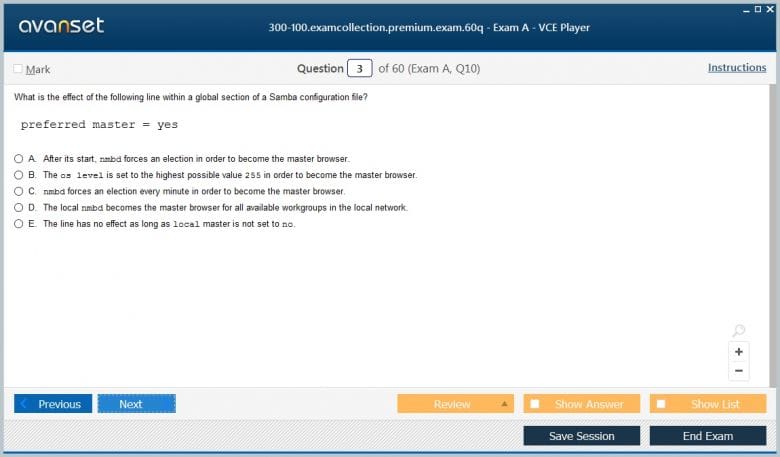
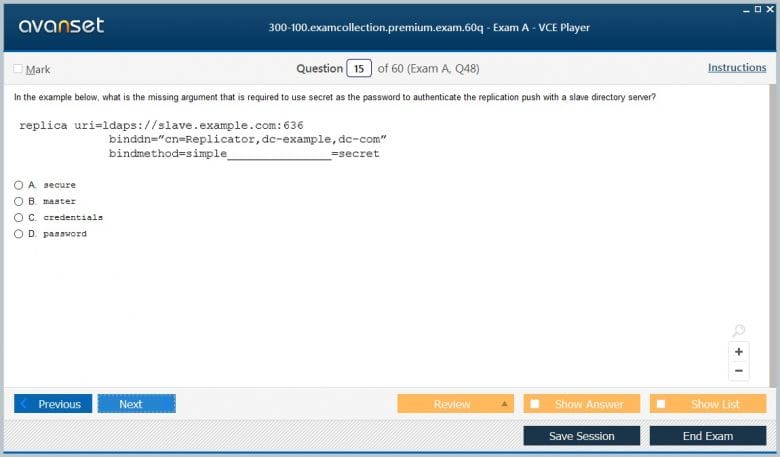
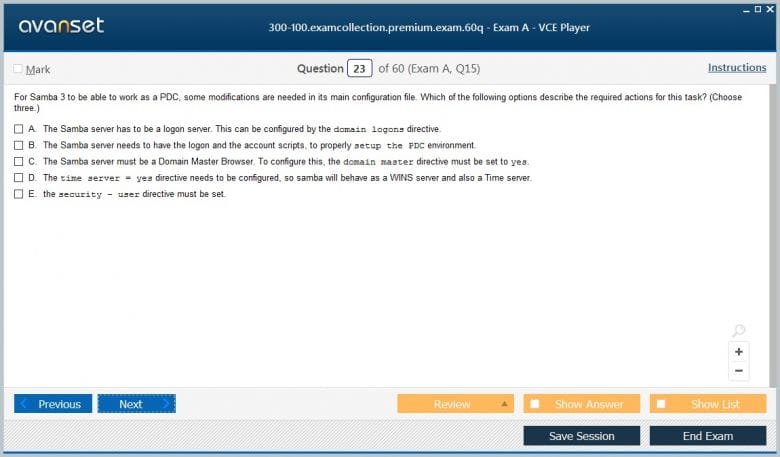
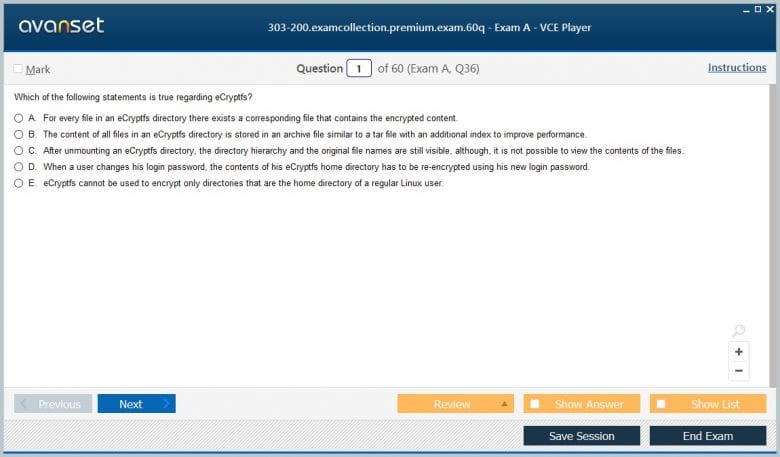
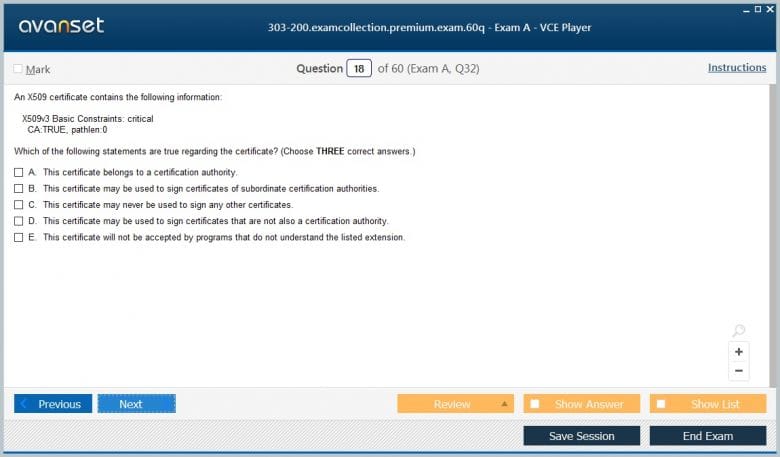
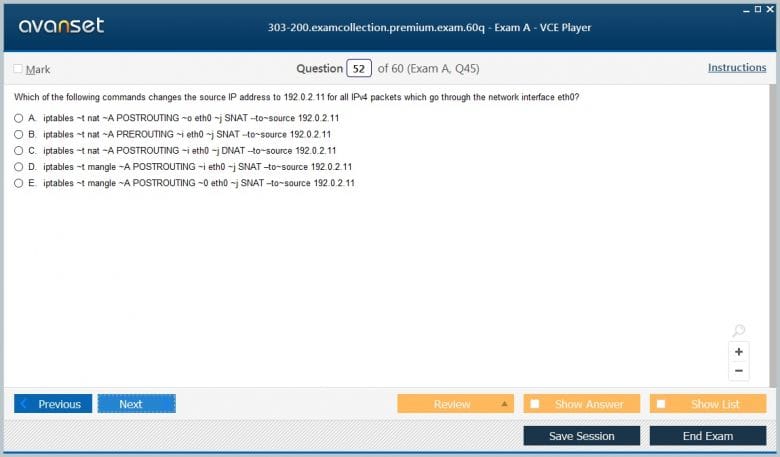
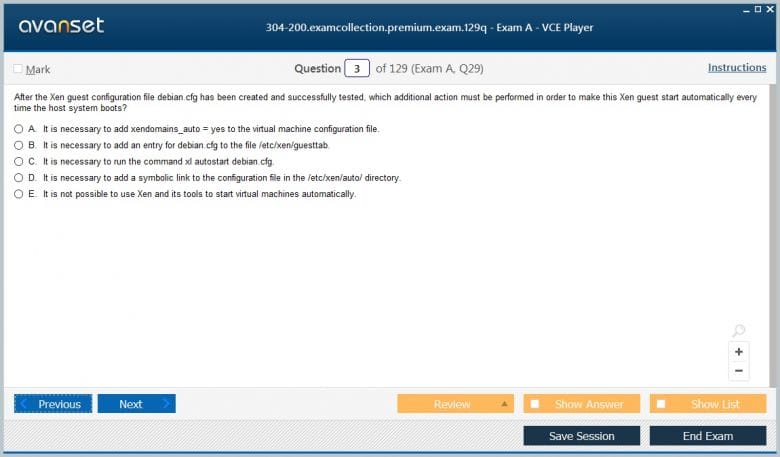
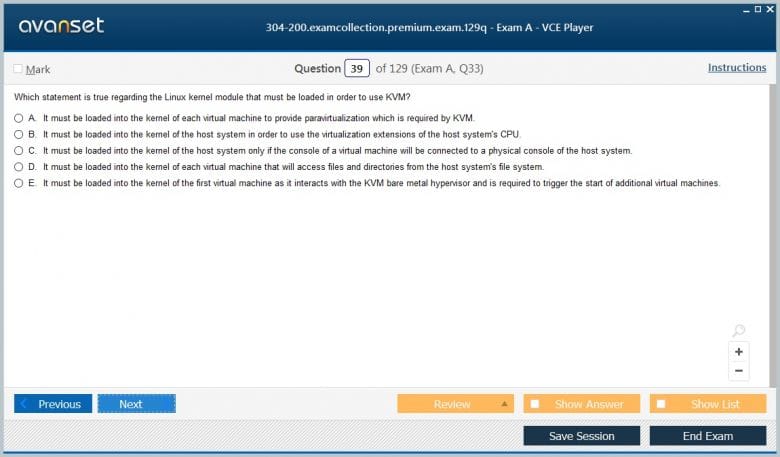
LPIC-3 Product Reviews
Download Free LPIC-3 Practice Test Questions VCE Files
| Exam | Title | Files |
|---|---|---|
Exam 300-100 |
Title LPIC-3 Exam 300: Mixed Environments |
Files 4 |
Exam 300-300 |
Title LPIC-3 Mixed Environments |
Files 1 |
Exam 303-200 |
Title Security |
Files 5 |
Exam 304-200 |
Title LPIC-3 Virtualization & High Availability |
Files 6 |
Exam 305-300 |
Title Linux Professional Institute LPIC-3 Virtualization and Containerization |
Files 1 |
LPIC-3 Certification Exam Dumps & Practice Test Questions
Prepare with top-notch LPIC-3 certification practice test questions and answers, vce exam dumps, study guide, video training course from ExamCollection. All LPIC-3 certification exam dumps & practice test questions and answers are uploaded by users who have passed the exam themselves and formatted them into vce file format.
LPIC-3 in 2026: Choosing the Right Enterprise Linux Specialty
LPIC-3 is the highest level of the Linux Professional Institute’s multi-level professional certification program. Unlike a single broad expert exam, LPIC-3 is organized into four separate specialties: Mixed Environments, Security, Virtualization and Containerization, and High Availability and Storage Clusters. Passing any one specialty exam grants the corresponding LPIC-3 certification, but the candidate must hold an active LPIC-2 certification to receive it.
The active specialty exams are version 3.0: 300-300 for Mixed Environments, 303-300 for Security, 305-300 for Virtualization and Containerization, and 306-300 for High Availability and Storage Clusters. Each specialty is a 90-minute, 60-question exam, and the certifications are valid for five years. LPIC-3 therefore rewards depth in a chosen enterprise domain rather than requiring every candidate to master every specialist technology.
LPIC-3 starts where general Linux administration stops
LPIC-1 establishes broad Linux administration fundamentals, while LPIC-2 proves the ability to administer mixed networks and server services. LPIC-3 assumes that foundation and asks candidates to handle enterprise problems where several technologies interact. The focus is less on “how do I run this command?” and more on “how do I design, integrate, secure, and troubleshoot this service in a complex environment?”
This is why the prerequisite matters. Candidates who have not internalized LPIC-2 topics such as networking, storage, service management, and security may find LPIC-3 objectives fragmented. At the expert level, those fundamentals are no longer the destination; they are tools used to solve larger architecture and operations problems.
Mixed Environments is the integration specialty
The Mixed Environments specialty, exam 300-300, concentrates on Samba, Active Directory domain integration, file sharing, client configuration, and Linux identity management. It is especially relevant to administrators who support Linux in organizations where Windows identity and file services are deeply established.
The central skill is integration. Candidates need to understand how Samba behaves in different roles, how directory and authentication concepts fit together, and how Linux systems participate in environments that were not designed as Linux-only islands. A good lab includes an identity domain, Linux servers, shared resources, users and groups, DNS dependencies, and permission scenarios that force the candidate to distinguish identity problems from file-permission or network problems.
Security is for administrators who want enterprise defensive depth
The Security specialty, exam 303-300, covers cryptography, access control, application security, operations security, network security, and threat or vulnerability assessment. It is not a generic cybersecurity certification detached from Linux. The emphasis remains on administering Linux systems enterprise-wide while applying security controls correctly.
Hands-on preparation should include certificate operations, encryption concepts, authentication and access-control mechanisms, host hardening, service security, and network protection. Candidates should be able to explain what a security control protects, where its trust assumptions sit, and what evidence would reveal a failure. Security becomes much easier to reason about when the candidate can trace identity, keys, processes, files, services, and network traffic through one scenario.
Virtualization and Containerization reflects modern Linux platforms
The Virtualization and Containerization specialty, exam 305-300, covers full virtualization, container virtualization, and virtual machine deployment and provisioning. Current objectives include the Linux primitives behind containers, such as namespaces, cgroups, capabilities, seccomp, and mandatory access-control mechanisms, as well as awareness of runtimes and container tooling.
This specialty rewards candidates who understand what virtualization tools are doing beneath their interfaces. Rather than treating containers as “small virtual machines,” candidates need to understand how the kernel isolates processes and resources. Build labs that compare virtual machines with containers, inspect namespaces and cgroups, observe resource controls, and troubleshoot networking or storage behavior. That conceptual depth transfers well to platforms built on top of containers.
High Availability and Storage Clusters focuses on continuity
The High Availability and Storage Clusters specialty uses exam 306-300. It covers cluster management, highly available storage, distributed storage, and single-node high-availability mechanisms. The emphasis is on keeping services and data available when components fail rather than merely making one server fast or redundant.
Candidates should understand quorum, fencing, replication, failover, cluster resources, and storage behavior during faults. Technologies such as DRBD and Pacemaker illustrate why availability is a systems problem: network state, storage state, application state, and cluster membership must agree enough to avoid corruption or split-brain behavior. A useful lab introduces controlled failures so the candidate can observe what the cluster decides and why.
Choosing a specialty should follow real operational interests
The best LPIC-3 specialty is not automatically the one with the highest perceived prestige. Choose the area closest to the problems you want to solve. Administrators working in mixed Windows and Linux estates may get the most immediate value from Mixed Environments. Security engineers responsible for Linux controls may prefer Security. Platform engineers may find Virtualization and Containerization more relevant, while storage or infrastructure specialists may prefer High Availability and Storage Clusters.
It is also possible to earn multiple specialties. Because each specialty is separate, an experienced engineer can build a portfolio that reflects a hybrid role. For example, a platform engineer may pair virtualization with security, while an infrastructure architect may combine mixed environments with high availability.
One persistent enterprise lab is better than many disconnected exercises
LPIC-3 preparation improves when candidates build a lab that can support multiple specialties. A directory service can provide identity for mixed-environment testing. Virtual machines can host clustered services. Containers can run applications whose access control and certificates are managed separately. Shared storage can support failover tests.
The lab does not need to imitate a large enterprise. It needs enough moving parts to expose dependencies. When an authentication failure occurs, candidates should decide whether the cause is DNS, time synchronization, directory configuration, permissions, or network reachability. When a cluster fails over, they should verify storage state and application state rather than celebrating only because a resource moved to another node.
At LPIC-3 level, symptoms often originate in a different layer from where they appear. An application may fail because identity resolution is broken. A cluster may refuse a resource because storage is not consistent. A container may start but be unable to access a service because namespace or network policy behavior differs from the host.
Develop a habit of collecting evidence from logs, process state, network state, storage state, authentication systems, and service configuration before making changes. This reduces destructive “try something and reboot” troubleshooting and prepares candidates for the reasoning expected in enterprise operations.
The certification remains vendor neutral by design
LPIC-3 is the enterprise-level specialization tier within LPI certifications, so its objectives emphasize transferable Linux and open-source concepts instead of one commercial platform. That neutrality is useful for engineers who move between distributions, hosting environments, private infrastructure, and cloud platforms.
Vendor neutrality does not mean avoiding real tools. The exams name specific technologies where those technologies embody important concepts. The preparation goal is to learn both levels: know the tool well enough to operate it, and understand the architecture well enough to recognize the same problem when another implementation is used.
A strong LPIC-3 plan is narrower and deeper than LPIC-2 preparation
Begin by selecting one specialty, then use its official objectives as the boundary of the first study cycle. Build a lab around those objectives and keep detailed notes on configuration decisions, failure modes, and verification commands. Avoid collecting unrelated Linux material simply because it is advanced; LPIC-3 is specialized enough that unfocused study can waste substantial time.
For every objective, aim to explain the architecture, configure a working example, identify the most important files or commands, verify the result, and troubleshoot at least one failure. Review the dependencies that come from LPIC-2, especially networking, DNS, storage, permissions, and service management. Expert-level problems often become manageable once the underlying Linux foundation is made explicit.
LPIC-3 is best viewed as a professional specialization framework rather than one final exam. The strongest candidates use it to formalize a domain they already operate in or to structure a deliberate move into enterprise Linux integration, security, platform engineering, or resilient infrastructure.
Cross-specialty knowledge still matters even when a candidate chooses only one LPIC-3 exam. Mixed-environment administrators need security judgment. Security specialists need to understand virtualization boundaries. Cluster engineers depend on networking, identity, and storage. Virtualization engineers need to reason about resilience. The specialty determines the deepest objective set, but enterprise incidents rarely respect certification boundaries.
For that reason, a useful preparation habit is to draw dependency maps. A Samba domain depends on DNS, time, identity, storage, and permissions. A container platform depends on kernel isolation, networking, storage, and security policy. A high-availability service depends on quorum, fencing, application health, and data consistency. Mapping these dependencies helps candidates anticipate the secondary failure that appears after the first problem is fixed.
Documentation is also part of expert practice. Keep architecture diagrams, configuration notes, recovery procedures, and short explanations of why a design choice was made. During study, these notes reveal whether you actually understand the environment. If a diagram cannot explain where identity comes from or how a failed node is fenced, the design probably contains an unexamined assumption.
Expert-level labs should include change as well as failure. Upgrade a component, rotate a certificate, change a network path, add a node, or migrate a workload. Many enterprise outages happen during planned changes rather than random hardware failure. Practicing safe change teaches candidates to think about compatibility, rollback, validation, and dependencies before touching a working system.
LPIC-3 is also a strong reason to improve command-line evidence gathering. Rather than relying only on management dashboards, inspect processes, sockets, mounts, namespaces, logs, authentication state, cluster resources, and service health from the systems themselves. This makes troubleshooting more portable across distributions and reduces dependence on one graphical tool.
Because LPIC-3 credentials are valid for five years, candidates should also think beyond the exam date. The technologies covered by the specialties will evolve substantially during that period. The most durable outcome is an operating model: understand architecture, automate repetitive work, document decisions, test recovery, and keep verifying assumptions as software versions and infrastructure patterns change.
ExamCollection provides the complete prep materials in vce files format which include LPIC-3 certification exam dumps, practice test questions and answers, video training course and study guide which help the exam candidates to pass the exams quickly. Fast updates to LPIC-3 certification exam dumps, practice test questions and accurate answers vce verified by industry experts are taken from the latest pool of questions.


Top LPI Certifications




Top LPI Certification Exams
Site Search:



