Pass Your LPIC-1 Certification Easy!
LPIC-1 Certification Exams Questions & Answers, Accurate & Verified By IT Experts
Instant Download, Free Fast Updates, 99.6% Pass Rate.

$89.98
Or Purchase LPIC-1 Exams Individually
| 101-500 | LPIC-1 Exam 101 | $69.99 | Add to cart |
| 102-500 | LPI Level 1 | $69.99 | Add to cart |
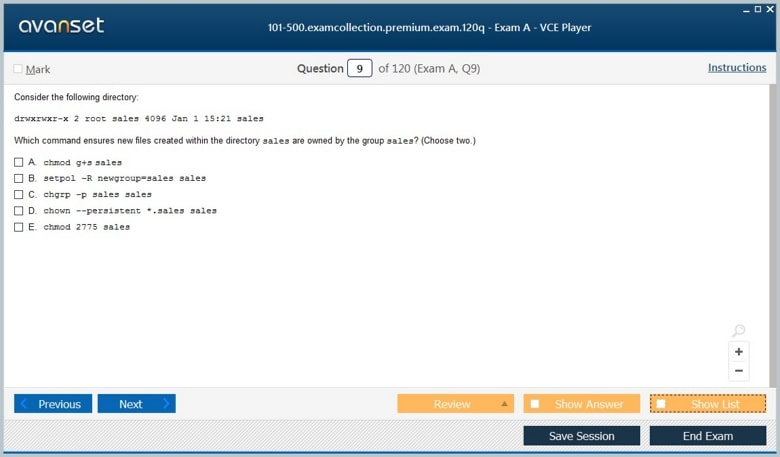
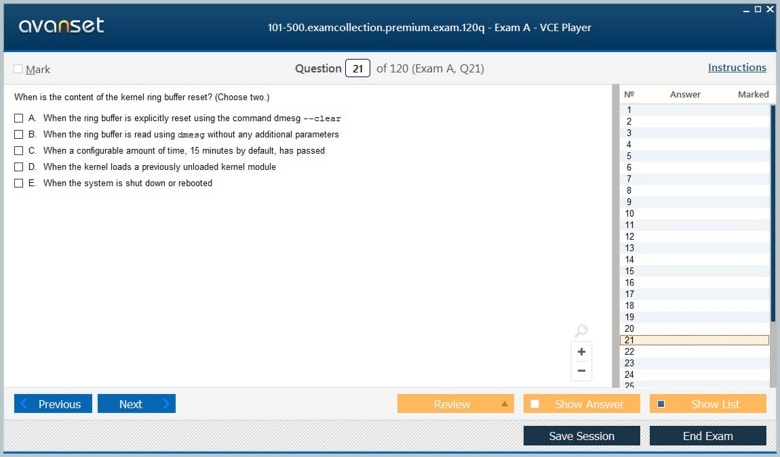
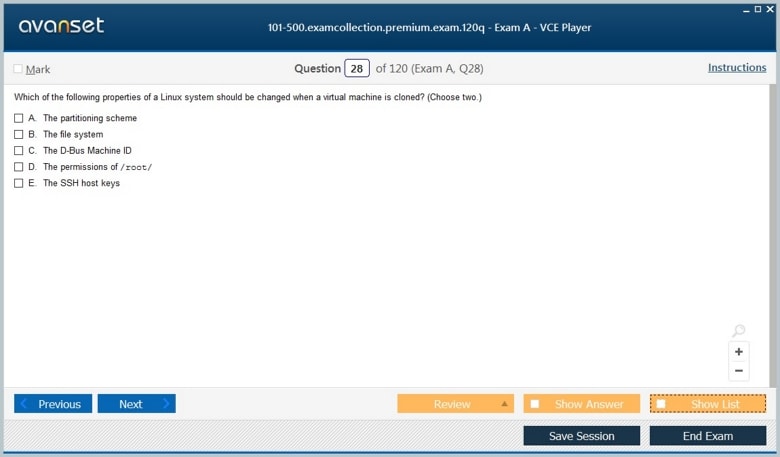
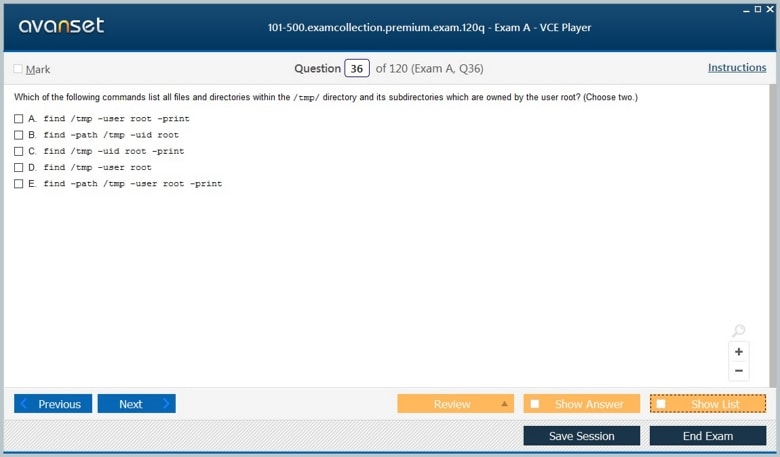
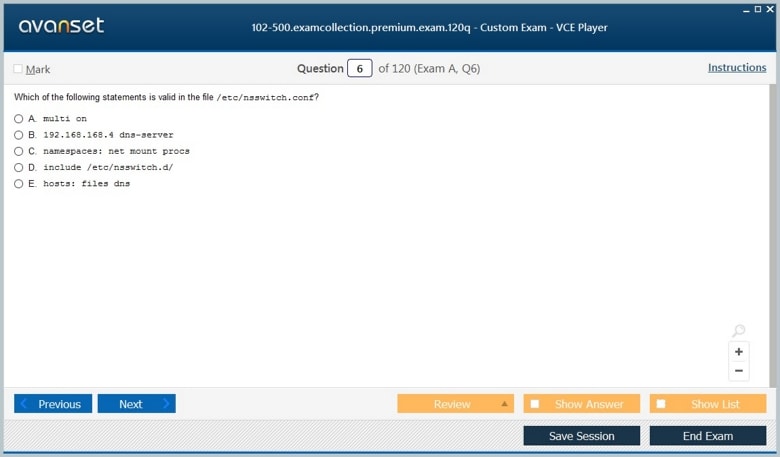
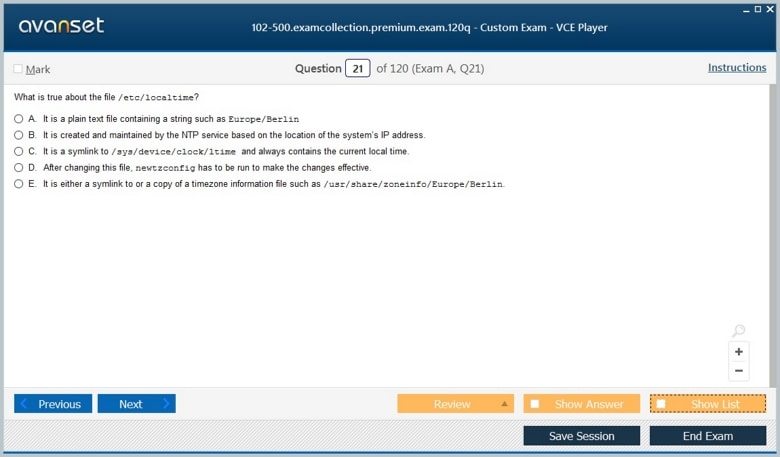
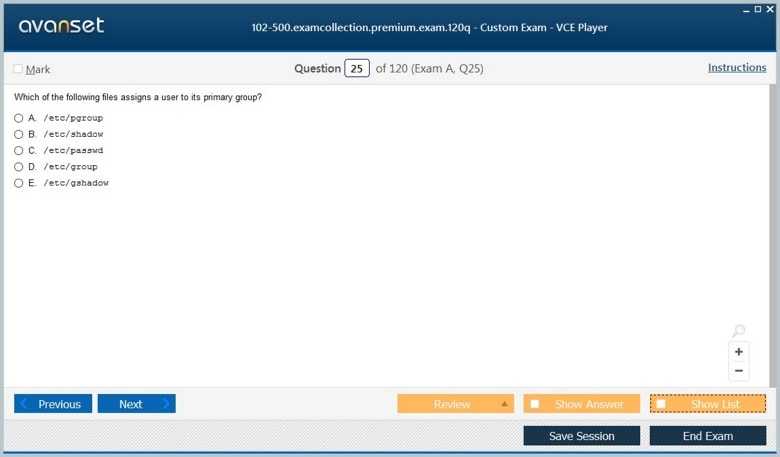
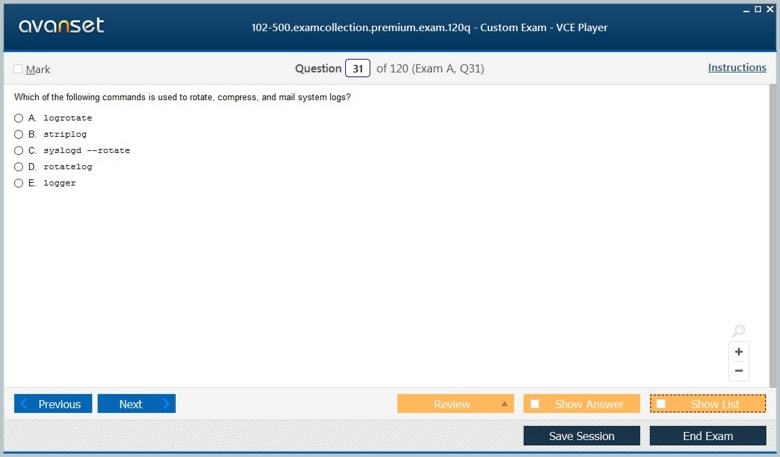
LPIC-1 Certification Exams Screenshots
LPIC-1 Product Reviews
Download Free LPIC-1 Practice Test Questions VCE Files
| Exam | Title | Files |
|---|---|---|
Exam 101-500 |
Title LPIC-1 Exam 101 |
Files 4 |
Exam 102-500 |
Title LPI Level 1 |
Files 3 |
LPIC-1 Certification Exam Dumps & Practice Test Questions
Prepare with top-notch LPIC-1 certification practice test questions and answers, vce exam dumps, study guide, video training course from ExamCollection. All LPIC-1 certification exam dumps & practice test questions and answers are uploaded by users who have passed the exam themselves and formatted them into vce file format.
LPIC-1 in 2026: The Two-Exam Linux Foundation
LPIC-1 is the first professional certification in the Linux Professional Institute’s multi-level Linux track. The current version is 5.0 and requires passing both 101-500 and 102-500. Each exam is 90 minutes with 60 multiple-choice and fill-in-the-blank questions. There are no certification prerequisites, and the LPIC-1 credential is valid for five years. The two-exam structure reflects the breadth of real Linux administration rather than trying to compress the entire foundation into one test.
LPIC-1 belongs to the LPI certifications and sits above Linux Essentials. It validates practical knowledge of system architecture, installation, package management, GNU and Unix commands, devices, filesystems, shells, scripting, interfaces, administrative tasks, essential services, networking fundamentals, and security. The strongest preparation treats the exams as a connected administration curriculum rather than two unrelated question banks.
Exam 101 establishes the machine-level foundation
The 101 exam focuses heavily on system architecture, Linux installation and package management, GNU and Unix commands, devices, filesystems, and the Filesystem Hierarchy Standard. Candidates should understand boot-related concepts, hardware awareness, storage devices, partitions, filesystems, mounting, package tools, and command-line data processing.
This half of LPIC-1 is where regular lab work pays off quickly. Build a virtual machine, inspect its hardware and boot configuration, create or attach additional storage, format and mount filesystems, install and remove packages, and use standard commands to manipulate files and text. Each task connects several objectives naturally.
LPIC-1 is vendor neutral, so candidates need awareness of major package-management families rather than expertise in only one distribution. Debian-style and RPM-style package tools, repositories, package queries, installation, upgrades, and dependency concepts are part of the professional baseline.
YUM repositories show why package sources, repository metadata, and dependency information matter to Linux administration. The important exam skill is understanding what the package system is doing and how to diagnose common issues, not memorizing every switch for every tool.
GNU and Unix commands form a reusable administrative language
The command-line objectives include file management, streams, filters, text processing, regular expressions, process handling, and many utilities that experienced administrators use every day. Candidates should be able to combine commands rather than recognize them individually. Pipes and redirection are especially important because they transform simple utilities into flexible workflows.
Build small command pipelines to search logs, count matching records, transform text, sort data, and extract fields. This kind of practice is more effective than flashcards because the candidate learns both syntax and data flow. Fill-in-the-blank questions also become easier when common command forms have been typed repeatedly.
Storage and filesystems reward hands-on practice
Candidates should understand partitions, filesystems, mounting, swap, permissions, links, quotas, and the filesystem hierarchy. These topics are connected. A filesystem exists on storage, is mounted into a directory tree, contains files with ownership and permissions, and may need capacity or quota management.
Create a lab disk and work through the lifecycle: partition it, create a filesystem, mount it temporarily, configure persistent mounting, create files, set permissions, and inspect usage. This turns a large objective domain into one coherent system.
Exam 102 moves into operating the system
The 102 exam covers shells and shell scripting, interfaces and desktops, administrative tasks, essential system services, networking fundamentals, and security. In practice this is the “operate the Linux host” half of LPIC-1. Candidates manage users and groups, schedule tasks, work with localization, configure time, understand logging, manage network basics, and apply security controls.
The breadth can look intimidating, but most topics connect to normal administration. A new user needs an account, groups, a home directory, shell configuration, permissions, and perhaps scheduled tasks. A networked service needs name resolution, time synchronization, logging, and secure access. Study through operational scenarios rather than isolated headings.
Shell scripting is a professional productivity skill
LPIC-1 expects more than running single commands. Candidates should understand shell environments, variables, quoting, command substitution, conditions, loops, and basic script structure. The goal is not advanced software engineering; it is the ability to automate routine system tasks safely and read scripts used in administration.
Write short scripts for backups, account checks, log processing, disk-usage warnings, or repetitive file operations. Then test edge cases. A script that works only when input is perfect is less useful than one that validates conditions and exits predictably.
Networking fundamentals must be understood from the host perspective
LPIC-1 includes TCP/IP fundamentals, persistent network configuration concepts, hostname and name-resolution behavior, and troubleshooting tools. Candidates should understand what a Linux host needs in order to communicate: interface configuration, addressing, routes, DNS resolution, and working services.
Study networking from symptoms. If a hostname fails but an IP address works, name resolution is a likely area. If nothing beyond the local subnet is reachable, routing or gateway configuration may be involved. This diagnostic approach is more durable than memorizing one distribution’s configuration file.
Security is built into ordinary administration
Security objectives include user and group administration, permissions, privileged access, network-service awareness, and basic host hardening. LPIC-1 does not turn candidates into security specialists, but it expects them to administer Linux without creating obvious security problems.
Apply least privilege in the lab. Avoid unnecessary root sessions, use permissions deliberately, understand where credentials and account settings live, and know why services should not run or listen without a reason. Security becomes easier to remember when treated as part of every administrative task.
Linux Essentials is useful preparation, but not a prerequisite
There is no formal prerequisite for LPIC-1, but Linux Essentials is a sensible starting point for complete beginners. It establishes command-line, open-source, permissions, process, and basic administration concepts before LPIC-1 adds depth and a much larger objective set.
Experienced Linux users can start directly with LPIC-1 if they are willing to audit their gaps. The common risk for self-taught administrators is uneven knowledge: strong shell skills but weak package management, or solid server experience but little exposure to desktop, localization, or exam-specific filesystem topics.
LPIC-1 is designed to lead into deeper Linux roles
The natural next step is LPIC-2, which moves into more advanced administration, networking, storage, security, and mixed service environments. Beyond that, LPIC-3 offers specialist-level domains.
Candidates do not need to commit to the full ladder, but the progression explains why LPIC-1 emphasizes broad fundamentals. The certification is meant to create an administration base that can support specialization later.
Prepare 101 and 102 as one curriculum but schedule them in manageable blocks. Many candidates study 101 first because storage, commands, packages, and architecture provide a useful platform for 102 administration. Keep one persistent lab environment across both exams so that users, services, scripts, logs, network settings, and storage changes accumulate into something resembling a real system.
Use the official objectives as the final checklist. For every objective, aim to reach four states: explain it, perform it, verify it, and troubleshoot a basic failure. That standard produces knowledge that survives the exam and remains useful on the job.
LPIC-1 candidates should understand the path from firmware and bootloader through kernel startup and service initialization at the level defined by the objectives. Boot problems are especially instructive because they force the administrator to think about layers: hardware visibility, boot configuration, kernel parameters, filesystems, and services.
Practice observing the boot process and identifying where configuration lives. The goal is not to memorize every message, but to know which layer owns a problem and where evidence can be found.
Administrators need systems to perform tasks without constant human attention and to record what happened afterward. LPIC-1 therefore includes scheduling mechanisms, system logging, and related service concepts. Candidates should be able to recognize how recurring jobs are configured and where common events are recorded.
Create a scheduled task in the lab, verify that it ran, and inspect the resulting log or output. This small exercise ties together service operation, permissions, environment differences, and troubleshooting.
LPIC-1 is valid for five years, which is longer than many vendor certifications but still reflects the fact that Linux administration changes. Package tools evolve, service-management practices shift, storage and networking tools modernize, and distributions update defaults.
Candidates should treat the credential as a professional foundation and keep using the skills after the exam. Progressing to LPIC-2 is one option, but regular Linux work, labs, automation, and troubleshooting are equally important for keeping the knowledge operational.
Keep notes in the form “action → evidence → interpretation” instead of copying command manuals. For example: mount a filesystem, confirm it with the appropriate system view, then explain what would persist after reboot and what would not. Create a user, inspect the account files, and describe which fields control login behavior. Change a route, test reachability, and identify which table reflects the result.
This style of note-taking turns LPIC-1 into a set of systems you understand rather than a collection of commands to remember, which is especially useful for fill-in-the-blank items.
LPIC-1 is vendor neutral, so a useful final exercise is to repeat core tasks on two distribution families. Package commands, service details, and configuration locations may differ, while permissions, processes, networking concepts, filesystems, and shell behavior remain recognizably Linux. Seeing both the stable concepts and the distribution-specific differences helps candidates avoid memorizing one machine as if it represented the entire ecosystem.
ExamCollection provides the complete prep materials in vce files format which include LPIC-1 certification exam dumps, practice test questions and answers, video training course and study guide which help the exam candidates to pass the exams quickly. Fast updates to LPIC-1 certification exam dumps, practice test questions and accurate answers vce verified by industry experts are taken from the latest pool of questions.

LPI LPIC-1 Video Courses


Top LPI Certifications
Top LPI Certification Exams
Site Search: