

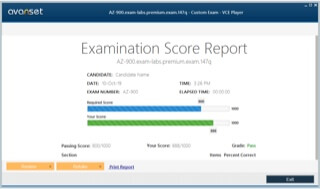

Premium File
131 Q&A
$76.99$69.99
Splunk SPLK-5001 Exam Questions & Answers, Accurate & Verified By IT Experts
Instant Download, Free Fast Updates, 99.6% Pass Rate
131 Questions & Answers
Last Update: Aug 28, 2026
$69.99
Splunk SPLK-5001 Practice Test Questions in VCE Format
| File | Votes | Size | Date |
|---|---|---|---|
File Splunk.passit4sure.SPLK-5001.v2026-06-18.by.ronnie.7q.vce |
Votes 1 |
Size 13.8 KB |
Date Jun 18, 2026 |
Splunk SPLK-5001 Practice Test Questions, Exam Dumps
Splunk SPLK-5001 (Splunk Certified Cybersecurity Defense Analyst) exam dumps vce, practice test questions, study guide & video training course to study and pass quickly and easily. Splunk SPLK-5001 Splunk Certified Cybersecurity Defense Analyst exam dumps & practice test questions and answers. You need avanset vce exam simulator in order to study the Splunk SPLK-5001 certification exam dumps & Splunk SPLK-5001 practice test questions in vce format.
SPLK-5001 is the current Splunk Certified Cybersecurity Defense Analyst exam. Splunk describes the credential as an intermediate standard for professionals using Splunk Enterprise and Enterprise Security to detect, analyze, and combat cyber threats. The role is investigation-centered: analysts need to interpret security data, follow evidence across multiple sources, understand common attack behavior, and use Splunk tools to turn noisy telemetry into a defensible incident picture.
The exam sits inside a growing security progression. Analysts can move toward SPLK-5002 Cybersecurity Defense Engineer for detection engineering and automation, while the expert-level Cybersecurity Defense Architect track focuses on program and system design. SPLK-5001 is the investigative center of that path. It asks whether a practitioner can recognize suspicious behavior, validate context, prioritize risk, and communicate findings without jumping from one alert directly to a conclusion.
Preparation should use realistic security scenarios rather than isolated SPL drills. A useful lab includes authentication, endpoint, network, cloud, and application data; a small set of known attacks; and enough normal activity to create ambiguity. The analyst should practice moving from a signal to supporting and contradicting evidence. That is the mindset behind the broader SIEM analyst discipline: data collection matters, but investigation quality depends on how well the analyst reasons about what the data actually shows.
An alert cannot be stronger than the telemetry that produced it. Analysts should know what each source records, which fields are trustworthy, how timestamps are generated, and where collection gaps may exist. Endpoint telemetry may show process execution while identity logs explain the account involved and network data shows where the process communicated. No single source automatically tells the complete story.
Reading representative raw events is an essential habit. The raw-log analysis approach helps candidates verify what normalized fields mean and recognize when extraction has simplified away useful detail. Before relying on a field in an investigation, inspect enough underlying events to understand how it is populated and what exceptions occur.
Splunk Enterprise Security relies heavily on normalized data and the Common Information Model. Candidates should understand why consistent field naming allows searches and detections to work across products. A source-specific username field and another vendor’s account field may represent the same concept; normalization lets security content operate on the common meaning rather than every proprietary format.
Normalization is not automatic proof of correctness. If a technology add-on maps the wrong source field or the source has changed format, a CIM-aligned search can return misleading results. Analysts should be able to test whether events populate the expected data model and should recognize gaps that need administrative correction. Investigation and data quality are tightly connected responsibilities.
Analysts frequently begin with notable events or other detections that represent a hypothesis, not a verdict. Triage asks whether the signal has the context, evidence, and impact needed for deeper work. Asset criticality, user identity, vulnerability context, prior behavior, destination reputation, and related alerts can all change priority. A noisy event on a lab system may matter less than a modest anomaly on a critical payment service.
Good triage also records why a decision was made. Closing an alert as benign should be supported by evidence, not by familiarity or fatigue. Escalating an incident should state what is known, what is unknown, and what action is needed. This discipline makes investigations auditable and helps detection engineers later tune rules using real analyst outcomes.
Analysts should also distinguish urgency from certainty. A low-confidence alert affecting a privileged identity or critical payment system may deserve immediate review because the potential impact is high. A high-confidence benign policy violation may be less urgent. Keeping those dimensions separate helps analysts explain why a case was prioritized and prevents severity labels from becoming a substitute for risk reasoning.
Analysts need enough SPL fluency to pivot quickly across identifiers, time windows, and data sources. The key is to formulate the question first. “What else did this account do in the hour before the alert?” produces a different search than “Which hosts contacted this domain in the last seven days?” Precise questions reduce the temptation to run broad searches and interpret whichever pattern appears interesting.
Time-bounding and field selection are particularly important during incidents. Start around the triggering event, establish a baseline before and after, then widen only when evidence suggests a longer campaign. Keep track of timezone and event-time differences so sequences are reconstructed accurately. A convincing narrative depends on ordering evidence correctly.
Saved searches and macros can accelerate recurring investigations, but analysts should know what they contain before trusting them. A convenient helper that hides time constraints or source assumptions can mislead a responder. Reusable search assets should make investigation faster while keeping critical logic transparent enough to review.
Enterprise Security can combine detections, risk information, threat intelligence, assets, identities, and investigation workflows. Candidates should understand how these capabilities help prioritize and correlate activity. Risk-based approaches can surface a series of smaller behaviors that become important when they accumulate around the same entity, reducing dependence on one dramatic rule firing at the perfect moment.
But context can be stale or incomplete. Asset lists change, identity ownership shifts, and threat-intelligence indicators can age. Analysts should verify the evidence supporting a decision. The platform helps organize signals; professional judgment still determines whether the observed behavior is malicious, expected, misconfigured, or simply unexplained.
Analysts should use investigation notes and case timelines to preserve pivots, decisions, and evidence sources as work progresses. This prevents repeated searches during handoff and helps another responder distinguish verified facts from hypotheses. Clear notes are especially important during long incidents when several analysts work different portions of the same timeline.
Hunting asks proactive questions such as whether a technique is present in the environment even when no alert has fired. Candidates should understand the difference between hunting and routine triage. A hunt begins with a behavior or threat hypothesis, identifies required data, constructs searches, evaluates results, and feeds useful discoveries back into detection and visibility improvements.
The hunt may fail because the behavior is absent, but it may also fail because the environment does not collect the needed telemetry. That distinction is valuable. A mature hunter records visibility gaps and works with platform and detection teams to close them. Security operations improves when “we found nothing” is separated from “we could not see enough to know.”
A useful hunt produces reusable knowledge even when it does not discover an incident. Search logic may become a detection, a missing data source may become an onboarding priority, or a benign pattern may become an allow-list condition with evidence behind it. Documenting these outcomes prevents hunting from becoming an isolated exercise whose value disappears when the session ends.
When suspicious activity becomes an incident, analysts need a structured response process. Evidence should support containment decisions, and actions should be recorded so later reviewers understand what changed. The incident-response lifecycle provides useful context because Splunk investigation is one part of a broader process that includes preparation, containment, eradication, recovery, and lessons learned.
Analysts should know when to escalate beyond the SIEM. Malware analysis, endpoint isolation, identity remediation, firewall changes, or legal and compliance processes may require other teams and tools. The analyst’s responsibility is to provide a clear evidence package: affected entities, timeline, observed behavior, confidence, and recommended next step.
Chain-of-custody concerns become important when evidence may support legal, regulatory, or disciplinary action. Analysts should preserve original timestamps, raw records, query logic, and exported artifacts where organizational procedures require it. Even when formal forensic handling is unnecessary, reproducibility matters: another analyst should be able to rerun the search and understand how the timeline was derived.
Knowing that a system is vulnerable or that an IP appears on a threat list can increase concern, but neither fact proves exploitation. Candidates should understand how vulnerability data, threat intelligence, and asset importance enrich an investigation while maintaining separation between context and observed behavior. This protects analysts from overreacting to weak indicators or underreacting to high-impact systems.
Useful prioritization combines probability and consequence. A low-confidence signal touching a critical privileged identity may still deserve rapid review. Conversely, repeated low-severity events from a known scanner may be expected. The goal is consistent risk reasoning that can be explained to another analyst, not a rigid score that removes judgment.
A prepared candidate should be able to take an alert, inspect the underlying data, pivot across related sources, build a timeline, test alternative explanations, and state a conclusion with an appropriate confidence level. That process matters more than producing an impressive search. Analysts are trusted because their findings survive review by people who were not present during the investigation.
The broader Splunk security path builds on this discipline. Detection engineers need analyst feedback to tune content, and architects need to understand what evidence defenders require at scale. SPLK-5001 therefore rewards habits that remain valuable far beyond the exam: curiosity, verification, context, precise searching, and clear communication.
Practice should include handoffs. Write a concise case summary for another analyst who has not seen the alert, then ask whether that person can reproduce the reasoning without verbal explanation. If key assumptions or evidence are missing, the investigation is not yet documented well enough for a real SOC workflow.
Go to testing centre with ease on our mind when you use Splunk SPLK-5001 vce exam dumps, practice test questions and answers. Splunk SPLK-5001 Splunk Certified Cybersecurity Defense Analyst certification practice test questions and answers, study guide, exam dumps and video training course in vce format to help you study with ease. Prepare with confidence and study using Splunk SPLK-5001 exam dumps & practice test questions and answers vce from ExamCollection.
Purchase Individually
Top Splunk Certifications

Top Splunk Certification Exams
Site Search:

SPECIAL OFFER: GET 10% OFF

Pass your Exam with ExamCollection's PREMIUM files!
SPECIAL OFFER: GET 10% OFF
Use Discount Code:
MIN10OFF
A confirmation link was sent to your e-mail.
Please check your mailbox for a message from support@examcollection.com and follow the directions.

Download Free Demo of VCE Exam Simulator
Experience Avanset VCE Exam Simulator for yourself.
Simply submit your e-mail address below to get started with our interactive software demo of your free trial.