
Pass Your Test Easy!
Test Questions & Answers, Accurate & Verified By IT Experts
Instant Download, Free Fast Updates, 99.6% Pass Rate.

$69.99
Test Prep NCLEX-RN Certification Exams Screenshots
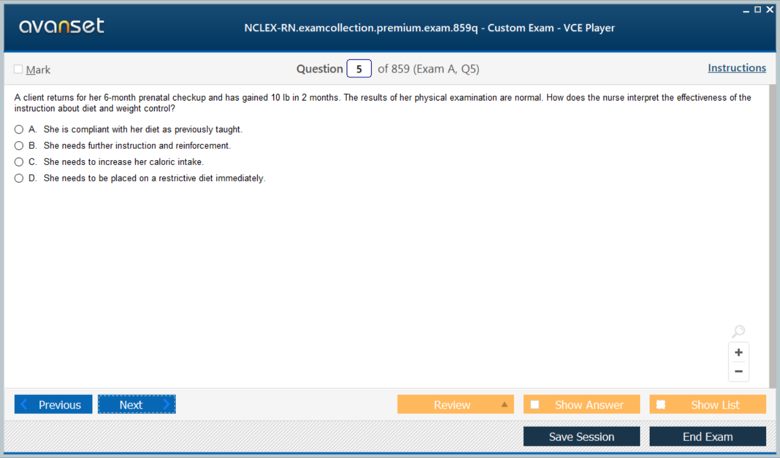
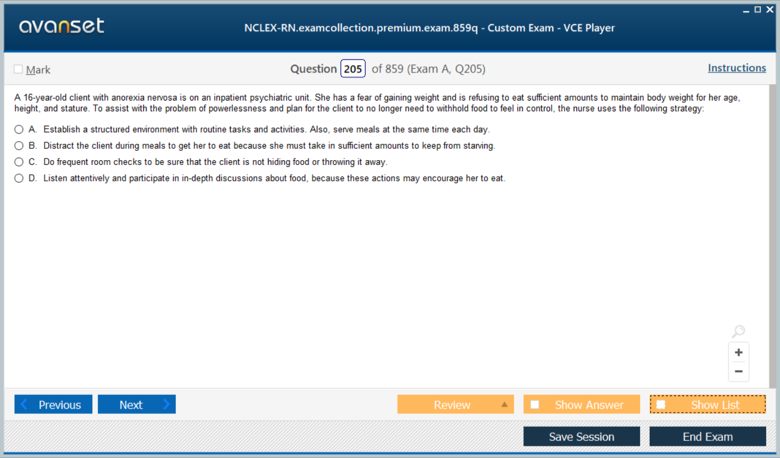
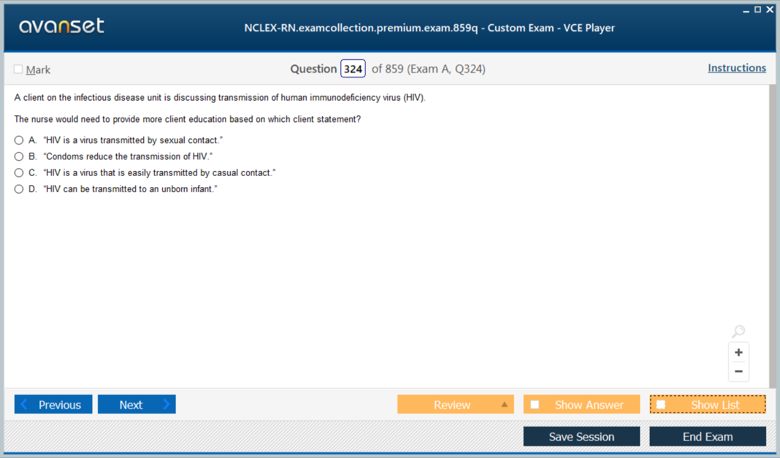
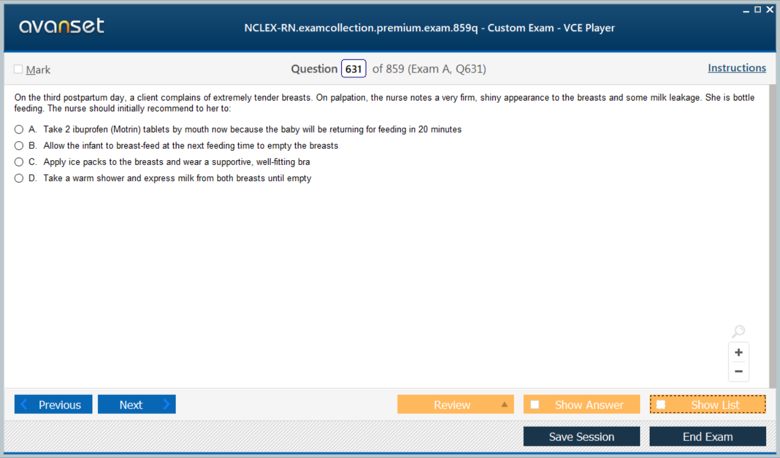
NCLEX-RN Product Reviews
Download Free NCLEX-RN Practice Test Questions VCE Files
| Exam | Title | Files |
|---|---|---|
Exam NCLEX-RN |
Title National Council Licensureination - NCLEX-RN |
Files 8 |
Test Prep NCLEX-RN Certification Exam Dumps & Practice Test Questions
Prepare with top-notch Test Prep NCLEX-RN certification practice test questions and answers, vce exam dumps, study guide, video training course from ExamCollection. All Test Prep NCLEX-RN certification exam dumps & practice test questions and answers are uploaded by users who have passed the exam themselves and formatted them into vce file format.
NCLEX-RN Practice in 2026: Building Safe, Adaptive Clinical Judgment
The 2026 NCLEX-RN is built to test whether a beginning registered nurse can make safe decisions while patient information changes. That is why strong preparation cannot be reduced to memorizing disease summaries. The examination combines the Client Needs framework with clinical judgment, nursing process, communication, teaching, culture, caring, and other integrated processes that appear inside realistic scenarios.
The current NCLEX-RN is computer-adaptive and uses the 2026 test plan effective April 1, 2026 through March 31, 2029. Candidates receive between 85 and 150 items within a five-hour limit. The number of questions is not a performance score in disguise; CAT continues until its stopping rules are satisfied, so candidates should not read meaning into whether their exam ends early or late.
Next Generation NCLEX clinical judgment remains central. Case studies use an unfolding client presentation, while stand-alone items can also require candidates to recognize cues, analyze them, prioritize hypotheses, generate solutions, take action, and evaluate outcomes. Preparation should make that reasoning cycle automatic.
Management of Care is a major RN differentiator
Management of Care carries a substantial share of the RN blueprint and reflects responsibilities that distinguish RN decision-making: prioritization, delegation, assignment, supervision, advocacy, continuity, informed consent, legal and ethical responsibilities, and coordination with the interprofessional team. Many questions are really asking who should do what, for whom, and in what order.
Practice should classify patients by stability, predictability, complexity, and risk before assigning work. The discussion of delegation in nursing practice becomes useful only when the candidate applies scope and supervision rules to the specific scenario. Never delegate assessment, nursing judgment, or responsibilities that require the RN’s own evaluation merely because another team member is available.
Safety and infection control should be learned as action priorities
Safety content includes infection prevention, environmental hazards, equipment, incident response, restraints, identification, medication safeguards, and emergency precautions. The strongest answers usually remove the immediate hazard or prevent exposure before moving to less urgent education or documentation.
Use mixed scenarios: a sterile field is contaminated, a client is at risk for falls, a line connection is unsafe, a transmission precaution is missed, or a procedure creates an unexpected hazard. Ask what the nurse should stop, assess, isolate, verify, or escalate first. Safety rules become memorable when tied to consequences.
Pharmacology should be connected to assessment and monitoring
Pharmacological and Parenteral Therapies is a major content area, but the RN task is not simply identifying drug classes. Candidates must verify safe administration, calculate accurately, recognize contraindications and interactions, monitor therapeutic and adverse effects, teach the client, and act when the response is unsafe.
For each drug or infusion, build a small decision frame: why is it given, what data matter before administration, what must be monitored, what adverse finding requires action, and what teaching changes risk? This approach also makes unfamiliar medications more manageable because class effects and patient factors still provide useful clues.
Health promotion questions reward prevention matched to the person
Health Promotion and Maintenance covers growth and development, prenatal and postpartum care, screening, risk reduction, health teaching, lifestyle, and other preventive responsibilities. A recommendation can be generally beneficial and still be wrong for the client’s age, pregnancy status, risk profile, readiness, or current condition.
Practice by adding context to every prevention fact. Who needs it, when, under what conditions, and what finding changes the recommendation? The exam favors individualized nursing judgment rather than recitation of a generic wellness checklist.
Psychosocial integrity requires communication that produces information
Therapeutic communication is not a collection of magic phrases. A useful RN response should protect safety, acknowledge the client’s experience, encourage relevant expression, and help the nurse assess what needs to happen next. False reassurance, premature advice, confrontation without purpose, and minimizing emotion usually interrupt that process.
Include depression, anxiety, psychosis, substance use, grief, crisis, abuse, cognitive change, family conflict, and end-of-life concerns in practice. When a stem contains a safety signal, such as suicidal intent or escalating aggression, direct assessment and protective action take precedence over a polished but noncommittal therapeutic statement.
Physiological integrity depends on recognizing change before collapse
Basic Care and Comfort, Reduction of Risk Potential, and Physiological Adaptation collectively cover a large part of bedside nursing. The exam can move from routine mobility and nutrition to unstable respiratory, cardiac, neurological, endocrine, renal, gastrointestinal, or postoperative problems with little warning.
Train trend recognition. Compare vital signs, output, mental status, pain, oxygenation, laboratory data, and other cues with baseline and with the expected course. A question may not say “the patient is deteriorating.” It may provide three small abnormalities whose combination should change the nurse’s priority.
Clinical judgment case studies should be debriefed one step at a time
The six clinical judgment steps provide an excellent review structure. After a case study, list the relevant cues and separate them from distractors. Explain how the cues fit together, rank the possible problems, propose realistic interventions, identify the immediate action, and define what outcome would demonstrate improvement.
This is the difference between simply knowing the right answer and understanding the reasoning process. The broader NCLEX mastery process becomes more useful when every miss is tied to one of these reasoning steps. If the same step repeatedly fails, targeted practice can fix it.
Prioritization should use physiology, safety, and trajectory together
Rules such as airway-breathing-circulation are useful, but NCLEX prioritization is rarely solved by one acronym alone. Candidates must consider whether a condition is acute or chronic, stable or changing, expected or unexpected, reversible or time-sensitive, and whether the client faces immediate harm.
Practice ranking four patients and defending the order. Then change one fact and rank them again. This develops flexible prioritization rather than memorized hierarchies. A new neurological deficit can outrank chronic respiratory symptoms; a subtle postoperative trend can outrank louder but expected discomfort.
Adaptive testing requires emotional discipline as well as knowledge
Because NCLEX is adaptive, the apparent difficulty of questions can fluctuate. Candidates should not interpret a difficult item as proof they are doing well or an easier item as proof they are failing. That kind of internal scorekeeping consumes attention without providing reliable information.
Practice with mixed difficulty and topic order so that uncertainty feels normal. The preparation perspective in moving from NCLEX candidate to caregiver is useful here: the exam is a transition into professional responsibility, and the most stable mindset is to solve the patient problem in front of you rather than guess what the algorithm is doing.
The last weeks are best used to integrate rather than endlessly expand. Revisit high-frequency medications, safety rules, delegation, common emergencies, maternal-child and adult-health priorities, mental health, infection control, calculations, and the clinical-judgment errors revealed by practice. Use the official 2026 test plan and sample pack to keep question style grounded.
A strong candidate can explain why an action is safe, within scope, timely, and responsive to the available cues. That is a more durable standard than memorizing a bank. When practice consistently produces that reasoning under mixed, timed conditions, the candidate is preparing for both the adaptive exam and the responsibility that follows licensure.
Maternal-newborn, pediatric, and adult-health questions should not be prepared as isolated silos. The same nursing principles—assessment, safety, medication checks, teaching, deterioration recognition, and family communication—change form across age groups. A newborn respiratory cue, a pediatric fluid problem, and an older adult’s postoperative confusion all require context-specific knowledge, but the RN reasoning pattern remains: recognize what is abnormal, determine the risk, and act at the right level of urgency.
Laboratory and diagnostic data should trigger interpretation rather than recitation. Learn the values most likely to affect immediate nursing care, then practice them inside cases involving medications, bleeding, electrolytes, oxygenation, kidney function, infection, and other common problems. A lab value becomes meaningful when the candidate can say what it changes: hold a medication, increase monitoring, institute a precaution, contact the provider, or prepare for an intervention.
Dosage and infusion calculations should be embedded in realistic sets. Write units through the calculation, estimate the likely range, and perform a final clinical reasonableness check. This prevents a decimal or conversion mistake from surviving simply because the arithmetic looked clean. Calculation practice is most valuable when it also tests the RN’s responsibility to verify the order, concentration, route, patient condition, and monitoring requirement.
As the appointment approaches, narrow rather than expand. Review the 2026 test plan, official sample pack and interface resources, high-frequency safety topics, and the error patterns from recent simulations. The aim is a stable process: read the stem carefully, identify the client problem and risk, choose the safest action within RN responsibility, and move on without trying to infer the CAT algorithm. That process is useful at item 1, item 85, and item 150.
The same principle applies to testing endurance: prepare for the possibility of a full five-hour session even though CAT may stop earlier. Full-length mixed practice reveals whether fatigue changes reading, prioritization, or dosage accuracy. A reliable break and reset routine is part of preparation because safe judgment late in the exam matters as much as confident performance at the beginning.
ExamCollection provides the complete prep materials in vce files format which include Test Prep NCLEX-RN certification exam dumps, practice test questions and answers, video training course and study guide which help the exam candidates to pass the exams quickly. Fast updates to Test Prep NCLEX-RN certification exam dumps, practice test questions and accurate answers vce verified by industry experts are taken from the latest pool of questions.


Test Prep NCLEX-RN Video Courses

Top Test Prep Certifications































Top Test Prep Certification Exams
Site Search:




i am very lucky that i have benefited from the nclex-rn prep materials that my fellow comrades have uploaded here, let the spirit continue and everyone will pass and get certified
i really need someome to share some of the latest nclex questions and answers, i would like to compare with what i have here
wooow! do not underestimate free nclex questions they have just made me happy for one. more than 50% of the questions were extracted from it
@brayo, perhaps, u have to go through the nclex study guide instead
@brayo i would recommend you take nclex practice test so that you can have the clear picture of the main exam. no shortcut for that friend
how are the nclex-rn questions for those who ahve already passed. are they tough or easy?
suppose you wanna know the quality of the material you are using kindly check the nclex review questions. you will get a very clear picture of the material
huraaah! i passed the nclex exam i am really happy for you comrades who never felt tired while uploading the best materials for us. really thankful about it
i am now very ready for the exam after going through nclex practice questions i could not have understood the concepts easily if i did not practice as early as possible. do not wait till the last minute so that you start practicing
u should be going through nclex questions every time you study if you are serious with this discipline, not when the exam approaches is when you think of the questions. for real it might not serve you any good
i have seen that nclex-rn concepts are very important to be covered as soon as you come across it, i am planning to register for an exam. who is with me