



Premium File
60 Q&A
$76.99$69.99
LPI 701-100 Exam Questions & Answers, Accurate & Verified By IT Experts
Instant Download, Free Fast Updates, 99.6% Pass Rate
60 Questions & Answers
Last Update: Sep 15, 2026
$69.99
LPI 701-100 Exam Screenshots
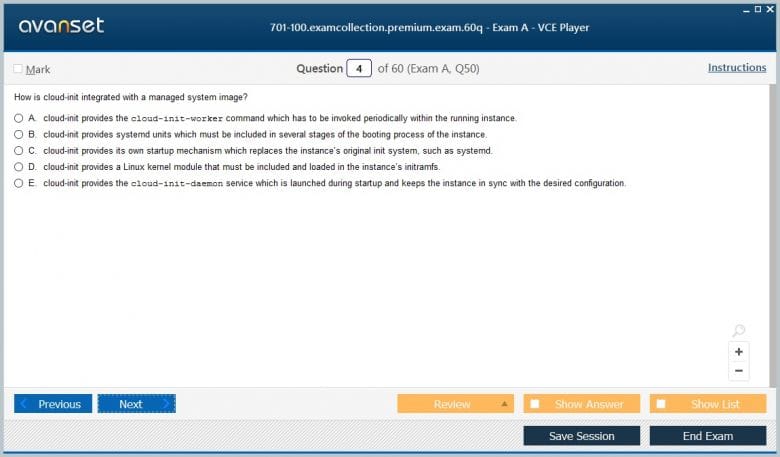
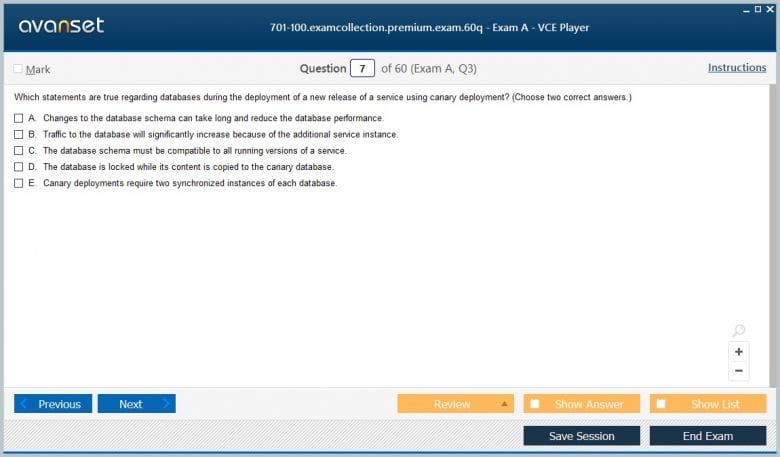
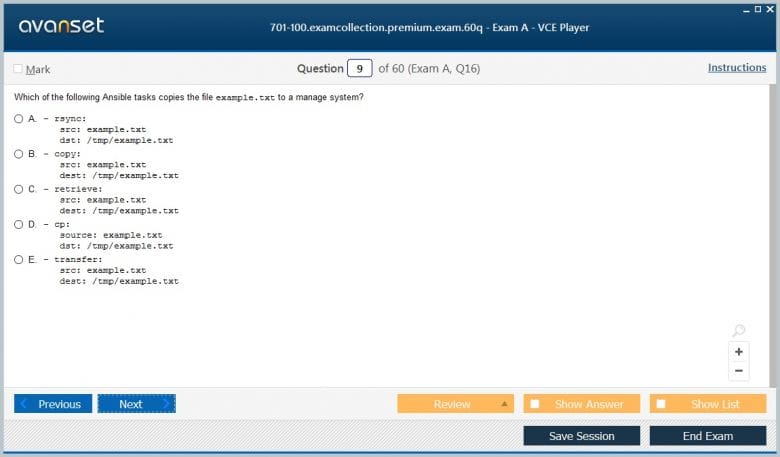
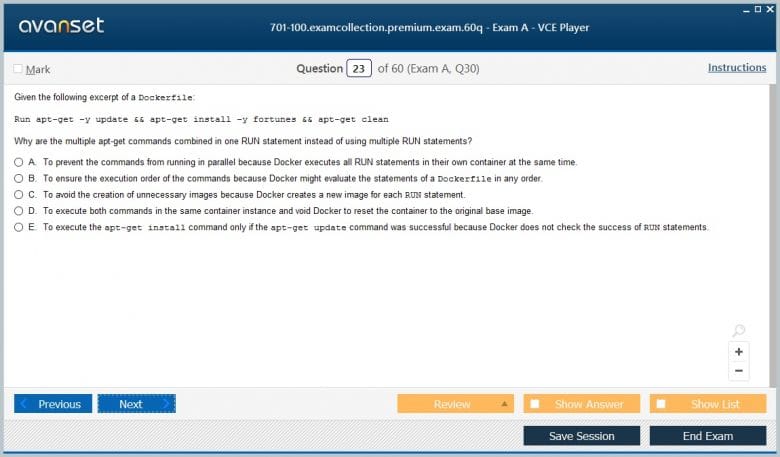
LPI 701-100 Practice Test Questions in VCE Format
| File | Votes | Size | Date |
|---|---|---|---|
File LPI.Passguide.701-100.v2026-08-26.by.David.30q.vce |
Votes 5 |
Size 43.49 KB |
Date Aug 29, 2026 |
LPI 701-100 Practice Test Questions, Exam Dumps
LPI 701-100 (LPIC-OT Exam 701: DevOps Tools Engineer) exam dumps vce, practice test questions, study guide & video training course to study and pass quickly and easily. LPI 701-100 LPIC-OT Exam 701: DevOps Tools Engineer exam dumps & practice test questions and answers. You need avanset vce exam simulator in order to study the LPI 701-100 certification exam dumps & LPI 701-100 practice test questions in vce format.
Linux Professional Institute exam 701-100 is the retired version 1.0 exam for the DevOps Tools Engineer certification. LPI lists 701-100 as the previous version and states that it remained available until June 30, 2026. The current certification uses exam 701-200, version 2.0. Candidates scheduling a new attempt should therefore follow the current objectives, while 701-100 remains useful for understanding how LPI originally framed the DevOps toolchain.
Version 1.0 was built around the bridge between software development and system administration. It covered modern software architecture, Git, Jenkins, containerization, Docker, Vagrant, Packer, Ansible, configuration management, monitoring, and logging. The exam did not require another LPI certification, although LPI recommended maintaining a system-administration or software-development credential around the LPIC-1 level.
The old objectives expected candidates to understand service-oriented and microservice architectures, APIs, persistence, sessions, transactions, concurrency, availability, scaling, load balancing, messaging, monitoring, and application-security concerns. That scope made an important point: DevOps tooling only works well when the software can be built, tested, deployed, and operated predictably.
A monolith that stores local state, assumes a permanent hostname, and cannot expose health information is harder to automate than a service designed for replaceable instances. Good preparation therefore began with architecture questions: what state must persist, how is configuration supplied, what happens during an instance restart, how does a caller find the service, and what evidence shows whether it is healthy?
Source-code management in 701-100 required practical Git knowledge: repositories, commits, branches, tags, remotes, submodules, merges, and conflict resolution. The exam treated version control as more than developer convenience because automation depends on knowing exactly which source state produced a build or deployment.
Practice with a small repository that has two contributors or simulated branches. Create a feature branch, rebase or merge it, resolve a conflict, tag a release, and clone from a remote. Then connect the tag to an artifact. This makes provenance visible: a deployment should be traceable back to source rather than being an unexplained collection of files copied from someone’s workstation.
Version 1 placed significant weight on Jenkins 2.x, including jobs, triggers, distributed builds, plugins, APIs, credentials, artifacts, fingerprinting, declarative pipelines, and the Pipeline Plugin. Candidates needed to understand unit, integration, and acceptance tests, artifact repositories, staged environments, and deployment strategies such as blue-green and canary releases.
The durable skill is pipeline decomposition. A build should fail at the earliest stage that can prove something is wrong. Source validation, unit tests, packaging, integration tests, security checks, artifact publication, deployment, and post-deployment verification each answer a different question. When all logic is hidden inside one giant script, failure becomes harder to diagnose and recovery becomes risky.
701-100 covered Docker architecture, images, containers, volumes, networking, registries, Dockerfiles, and security implications. Containers helped the original exam explain how development and operations can share a consistent runtime definition. The same image that passes automated tests can become the unit deployed to a later environment.
A good lab builds an image from a small Dockerfile, runs it with a persistent volume, exposes it on a user-defined network, and then rebuilds it after a source change. Compare what persists and what disappears. The Docker host setup process can help with mechanics, but the exam’s real lesson is the separation between image, container, configuration, and durable data.
The first version also covered Vagrant and Packer because DevOps was not limited to containers. Vagrant described repeatable development machines, while Packer automated the creation of machine images for local hypervisors and cloud environments. Together they encouraged administrators to stop treating hand-built servers as irreplaceable pets.
Use a simple base image, provision it with a script or configuration-management tool, and rebuild it from scratch. Record how long recreation takes and which settings are still manual. Every manual step is a source of drift. Even if the current environment no longer uses Vagrant, the idea of reproducible, disposable infrastructure remains central.
701-100 expected candidates to work with Ansible inventory, SSH access, playbooks, tasks, handlers, variables, conditionals, loops, templates, roles, Galaxy, Vault, and common modules. This was one of the clearest bridges between system administration and software practices: infrastructure configuration became versionable text that could be reviewed and rerun.
Write a playbook that configures a small service on two hosts, then run it repeatedly. The second run should make few or no changes if the desired state already exists. Introduce drift manually and observe how the playbook repairs it. That experiment demonstrates idempotence more effectively than memorizing the definition.
The historical objectives also addressed configuration-management principles beyond one tool. Candidates needed to understand push and pull models, inventories, templates, secrets, orchestration, immutable systems, and the trade-offs between changing a running machine and replacing it with a newly built image.
This is where DevOps becomes an operating model. If every server is repaired manually, there is no reliable source of truth. If every change is encoded but the code is never tested or reviewed, automation can spread mistakes faster. A mature workflow treats infrastructure definitions like application code: versioned, reviewed, tested, and deployed through controlled stages.
Version 1 covered monitoring concepts, Prometheus awareness, log collection, and the need to observe both technical and application behavior. Deployment is not complete when a pipeline says success; operators need evidence that users can reach the service and that latency, errors, capacity, and dependencies remain within acceptable ranges.
Build a simple service and define a few signals before deploying it: request rate, error rate, latency, resource saturation, and one application-specific success metric. The Prometheus monitoring model is useful background for turning service behavior into measurable time-series data. Add logs that explain individual failures rather than duplicating the same information already present in metrics.
The current 701-200 exam keeps many version 1 foundations but expands the blueprint toward cloud-native application design, Podman, Kubernetes, Helm, GitOps, software composition and licensing, supply-chain concerns, Prometheus, log-management stacks, and distributed tracing. That makes old 701-100 material incomplete for a current attempt even when the underlying concepts still apply.
LPI’s recommendation for system-administration or software-development depth remains sensible. The LPIC-1 path can provide Linux administration foundations, while developers may arrive with stronger application and version-control skills. DevOps requires enough understanding of both sides to recognize when a pipeline failure is really a code issue, an operating-system issue, a network issue, or a deployment-design issue.
For historical study, combine the old objectives into one project: place an application in Git, build it in a Jenkins pipeline, create a container image and a VM image, configure a host with Ansible, deploy the service, and add monitoring. Then change the source, repeat the pipeline, and verify rollback. That end-to-end cycle shows why the original certification focused on tools only insofar as they created a dependable path from source to running service.
Version 1 also included infrastructure provisioning and configuration ideas that were often practiced with cloud APIs, Packer, Vagrant, and Ansible together. A useful exercise is to build an image, start two instances from it, and then apply only the environment-specific settings through configuration management. This separates what belongs in the immutable base from what should remain dynamic.
Secrets management should be present in every stage of the historical toolchain. Do not put SSH private keys, API tokens, or passwords directly in a Git repository or Dockerfile. Use Jenkins credentials, Ansible Vault, runtime secret injection, or the platform’s secret store. Then rotate a credential and confirm that the deployment process can update consumers without rebuilding unrelated components.
Pipeline troubleshooting is strongest when artifacts are preserved. Store test results, build logs, checksums, and the exact package or image promoted to the next stage. If production fails, operators should be able to compare the running artifact with what passed testing rather than rebuilding and hoping the output is identical.
Monitoring should feed back into the next release. If a deployment increases latency or error rate, the pipeline and rollout process need a response: pause, rollback, or investigate. That feedback loop is the 'operations' part of DevOps, and it explains why the original exam grouped CI/CD, automation, containers, and monitoring instead of treating them as independent tools.
Artifact promotion is another version 1 principle that still matters. Build once, attach a version and checksum, and move the same artifact through test, staging, and production. Rebuilding separately for each environment can create subtle differences in dependencies or build output and makes it harder to prove what was actually tested.
Configuration changes should be reviewed with the same care as application code. A one-line Ansible template change or Jenkinsfile edit can affect dozens of hosts or every future deployment. Use branches, peer review, test inventories, and staged rollout. Automation increases consistency, but it also increases the blast radius of mistakes.
A useful final comparison is mutable versus immutable recovery. Repair one broken server with an Ansible playbook, then rebuild another from a known image and redeploy the application. Measure which path is faster, easier to verify, and more repeatable. The answer depends on the system, but the exercise makes infrastructure lifecycle an explicit design choice rather than a habit inherited from manual administration.
Go to testing centre with ease on our mind when you use LPI 701-100 vce exam dumps, practice test questions and answers. LPI 701-100 LPIC-OT Exam 701: DevOps Tools Engineer certification practice test questions and answers, study guide, exam dumps and video training course in vce format to help you study with ease. Prepare with confidence and study using LPI 701-100 exam dumps & practice test questions and answers vce from ExamCollection.
Purchase Individually
Top LPI Certifications

Top LPI Certification Exams
Site Search:

SPECIAL OFFER: GET 10% OFF

Pass your Exam with ExamCollection's PREMIUM files!
SPECIAL OFFER: GET 10% OFF
Use Discount Code:
MIN10OFF
A confirmation link was sent to your e-mail.
Please check your mailbox for a message from support@examcollection.com and follow the directions.

Download Free Demo of VCE Exam Simulator
Experience Avanset VCE Exam Simulator for yourself.
Simply submit your e-mail address below to get started with our interactive software demo of your free trial.