
Pass Your Google Associate Cloud Engineer Certification Easy!
Google Associate Cloud Engineer Certification Exams Questions & Answers, Accurate & Verified By IT Experts
Instant Download, Free Fast Updates, 99.6% Pass Rate.
Google Associate Cloud Engineer Certification Exams Screenshots
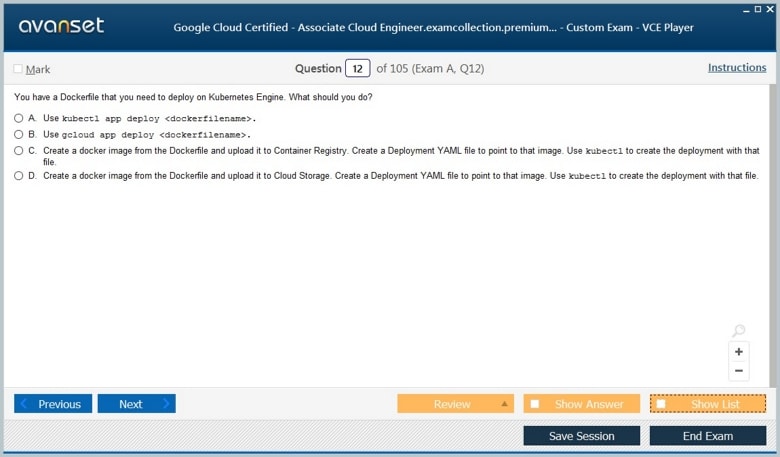
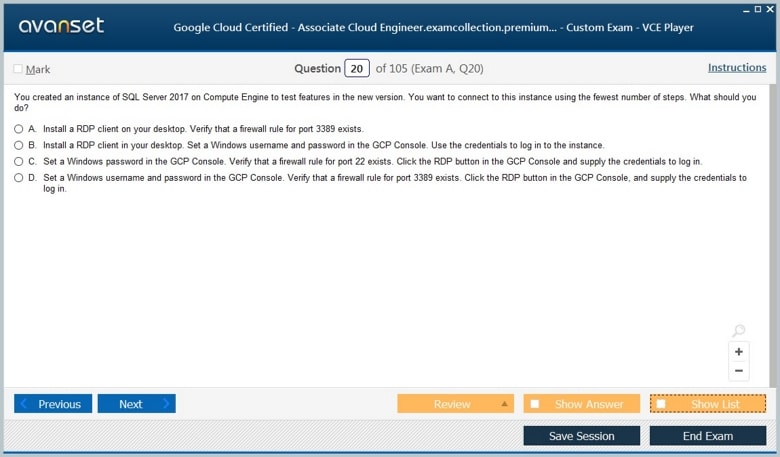
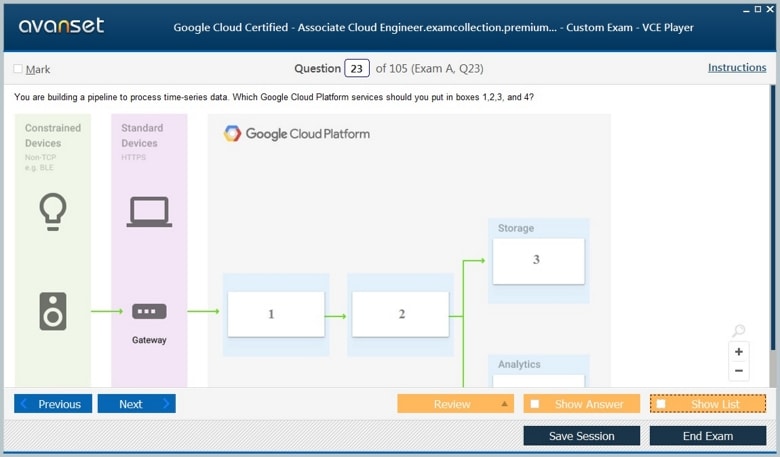
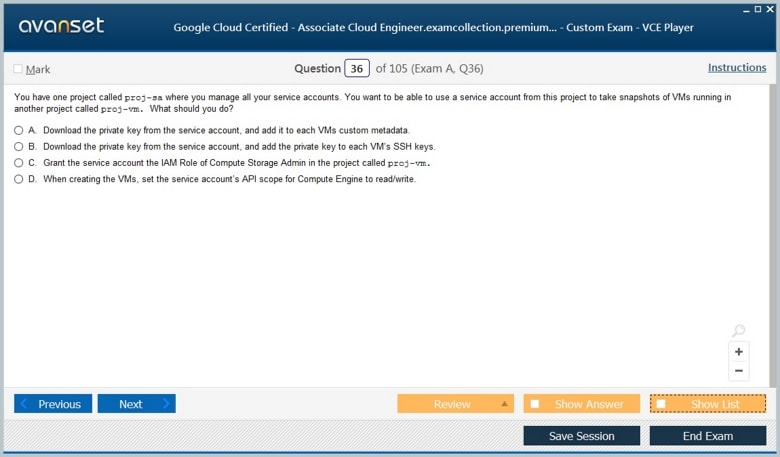
Associate Cloud Engineer Product Reviews
Download Free Associate Cloud Engineer Practice Test Questions VCE Files
| Exam | Title | Files |
|---|---|---|
Exam Associate Cloud Engineer |
Title Associate Cloud Engineer |
Files 11 |
Google Associate Cloud Engineer Certification Exam Dumps & Practice Test Questions
Prepare with top-notch Google Associate Cloud Engineer certification practice test questions and answers, vce exam dumps, study guide, video training course from ExamCollection. All Google Associate Cloud Engineer certification exam dumps & practice test questions and answers are uploaded by users who have passed the exam themselves and formatted them into vce file format.
Google Associate Cloud Engineer: Operating Google Cloud in Real Environments
The Google Associate Cloud Engineer certification is one of the most practical entry points into Google Cloud. It is not designed around architecture slogans or a catalogue of services. The exam asks whether a candidate can set up cloud projects, deploy workloads, configure access, operate resources, and troubleshoot routine problems using the tools an administrator or cloud engineer would actually touch.
The broader Google certifications include business, Workspace, cloud, data, security, and AI paths; within the Google Cloud certifications, ACE sits on the hands-on cloud-operations side of that landscape.
The current standard exam is two hours, costs $125 before applicable tax, and contains 50–60 multiple-choice and multiple-select questions. Google lists no prerequisite, recommends at least six months of hands-on Google Cloud experience, and gives the certification a three-year validity period. Renewal can be completed through the standard exam, a shorter renewal exam, or designated Google Skills coursework or skill badges when eligible.
Google positions the certification at the associate level and recommends hands-on experience. That recommendation is important. The current Associate Cloud Engineer exam rewards candidates who can translate a requirement into a sensible sequence of actions, not merely identify a product from its name. A lab environment, even a small one, teaches the relationships between projects, identities, APIs, networking, compute, storage, monitoring, and billing much more effectively than memorizing isolated facts.
Think in projects, resources, and policy boundaries
Google Cloud organizes most work around resource hierarchy and projects. Projects provide administrative boundaries for APIs, billing, permissions, quotas, and many resource names. Folders and organizations can sit above projects to support governance across larger environments. When a question describes multiple teams, billing units, environments, or compliance boundaries, the structure often matters before any workload is deployed.
A useful practice exercise is to create separate development and production projects, link them to a billing account, enable only the services you need, and inspect how quotas and IAM policies behave. The broader Google Cloud platform becomes easier to reason about once the resource hierarchy is concrete rather than abstract.
Identity and access management is a daily engineering skill
Cloud engineers constantly decide who or what should be able to perform an action. Google Cloud IAM combines principals, roles, policies, and resource inheritance. The safest solution is usually the narrowest role at the correct scope, but real scenarios require judgment. Granting a role at an organization or project can affect many resources; assigning it at a specific resource can reduce exposure but increase administrative complexity.
Service accounts deserve special attention because workloads use them to call APIs. Candidates should understand default identities, attached service accounts, impersonation, and the risks of long-lived keys. The deeper principles behind Google Cloud IAM help connect exam tasks with operational security rather than turning role names into flash cards.
Compute choices start with the workload
Google Cloud offers several ways to run applications, and the Associate Cloud Engineer must know when the operational model changes. Compute Engine gives administrators control over virtual machines, images, disks, instance templates, and managed instance groups. Google Kubernetes Engine adds container orchestration. Cloud Run provides a managed container platform where teams can focus more on application packaging and less on cluster operations.
Comparing Google Cloud compute options is useful because exam scenarios often include clues about control, portability, scaling, administration, and deployment style. If a team wants serverless container execution, the answer is different from a requirement to manage a fleet of customized VMs.
Compute Engine preparation should cover machine types, boot disks, persistent disks, images, snapshots, instance metadata, startup scripts, SSH access, labels, service accounts, and network interfaces. Managed instance groups add autoscaling, health checking, templates, and rolling updates. Candidates should be able to recognize when a reproducible group is preferable to manually maintained individual instances.
Operational questions also test lifecycle thinking. What happens to data when an instance is deleted? Which disk should store persistent application state? How would you recreate an instance in another zone? How can an image or snapshot support recovery? These questions are easier after performing the actions in the console and with the gcloud CLI.
Containers require a different operational model
GKE moves the administrative unit from individual virtual machines toward clusters, node pools, workloads, services, configuration, and Kubernetes policy. An associate-level engineer does not need to become a Kubernetes specialist, but should understand how to create and connect to a cluster, deploy a workload, expose it, inspect its state, and recognize common failure conditions.
The operational implications become clearer when studying Google Kubernetes Engine. A pod that cannot start, a service that is not reachable, or a deployment that needs scaling requires different troubleshooting steps from a broken VM. The exam often tests which tool and abstraction level fit the problem.
Cloud Run can deploy containers without requiring the team to operate a Kubernetes cluster. Engineers still need to configure regions, revisions, environment variables, identity, ingress, concurrency, scaling behavior, and connections to other services. The platform removes server management; it does not remove the need for secure configuration and observability.
A practical Cloud Run deployment can teach several exam-relevant concepts at once: build an image, deploy a revision, grant the service account access to a backend, inspect logs, change an environment variable, and roll traffic between revisions.
Networking questions are usually about reachability and control
Virtual Private Cloud networks, subnets, routes, firewall rules, IP addresses, DNS, load balancing, and hybrid connectivity form the path between users and workloads. Candidates should be able to reason from source to destination. If a VM cannot reach another service, check whether the addresses, routes, firewall rules, name resolution, and identity requirements all support the intended connection.
DNS is especially easy to overlook because applications often hide it until something fails. A working understanding of Cloud DNS helps connect zones and records with real application reachability. Networking preparation should focus on flows and failure isolation rather than memorizing every load-balancer feature.
Storage choices change durability, sharing, and access patterns
Cloud Storage is object storage; Persistent Disk and Hyperdisk attach block storage to compute; Filestore provides managed file storage. Those categories imply different interfaces and operational behavior. A web application serving media, a database needing block storage, and a shared filesystem used by multiple clients do not have the same storage requirement.
The comparison among Google Cloud storage options is more useful than memorizing product names because it forces attention to durability, latency, sharing, lifecycle, and cost. For Cloud Storage, candidates should also understand buckets, locations, object lifecycle, versioning, and access control.
Monitoring and logging turn resources into operable systems
A workload is not operational merely because it deployed successfully. Cloud Monitoring and Cloud Logging provide telemetry for availability, performance, and troubleshooting. Engineers need to locate logs, examine metrics, create alerts, and interpret health signals. When an application fails, the fastest path is often to establish whether the problem is deployment, capacity, network reachability, permissions, application behavior, or an upstream dependency.
Practice by breaking a lab intentionally. Remove a permission, close a firewall path, deploy a bad revision, exhaust a quota, or stop a service. Then use logs, metrics, resource state, and audit information to identify the cause. That is closer to the exam’s operational reasoning than reading a list of monitoring products.
Deployment tools should make changes repeatable
Associate engineers should be comfortable with the Cloud Console, gcloud CLI, Cloud Shell, and infrastructure as code or other automated deployment approaches. The exam can present several valid-looking ways to perform a task and favor the one that is efficient, repeatable, or aligned with Google-recommended administration.
CI/CD concepts also matter when workloads move beyond manual labs. Google Cloud Build shows how source changes can feed automated builds and deployments. Even if the exam does not require deep pipeline design, understanding why automation reduces configuration drift helps with many administration scenarios.
Security includes secrets, keys, and service identities
Passwords and API credentials should not be hard-coded into images, scripts, or repositories. Secret Manager gives applications a managed way to store and retrieve secrets with IAM controls and versioning. Google Cloud key management supports cryptographic control when workloads require customer-managed keys or other explicit key policies.
Understanding Secret Manager helps connect application configuration with least privilege. A secure cloud engineer asks not only where a value is stored, but which identity can retrieve it, how access is audited, and how rotation affects the application.
The most efficient study lab is not necessarily large. Build a project, configure IAM, deploy a VM, create a bucket, deploy a container, add a network rule, enable monitoring, use a service account, store a secret, and automate one deployment. Then tear the environment down and rebuild it from notes or scripts. Repetition exposes which steps you genuinely understand.
The Associate Cloud Engineer preparation and broader Google Cloud certification preparation material can help organize review, but hands-on work should remain the center of the plan.
Associate Cloud Engineer is a foundation for deeper specialization. The certification can stand alone as evidence of practical Google Cloud administration, but it also supports later specialization. Engineers who enjoy architecture may progress toward Professional Cloud Architect; those who focus on security, networking, development, DevOps, or data can follow those respective professional paths.
The best reason to earn ACE is therefore not that it unlocks a particular title. It forces a candidate to make the cloud operational: resources must be created, permissions must be correct, networks must carry traffic, workloads must be observable, and failures must be diagnosable. Those habits transfer directly into more advanced Google Cloud work.
ExamCollection provides the complete prep materials in vce files format which include Google Associate Cloud Engineer certification exam dumps, practice test questions and answers, video training course and study guide which help the exam candidates to pass the exams quickly. Fast updates to Google Associate Cloud Engineer certification exam dumps, practice test questions and accurate answers vce verified by industry experts are taken from the latest pool of questions.


Google Associate Cloud Engineer Video Courses
Top Google Certifications







Top Google Certification Exams
- Professional Cloud Architect
- Generative AI Leader
- Professional Data Engineer
- Professional Machine Learning Engineer
- Associate Cloud Engineer
- Professional Cloud Security Engineer
- Professional Security Operations Engineer
- Professional Cloud Network Engineer
- Professional Cloud Database Engineer
- Associate Data Practitioner
- Professional Cloud Developer
- Professional Cloud DevOps Engineer
- Associate Google Workspace Administrator
- Cloud Digital Leader
- Professional ChromeOS Administrator
- Professional Google Workspace Administrator
Site Search:



