
Pass Your Isaca AAIA Certification Easy!
Isaca AAIA Certification Exams Questions & Answers, Accurate & Verified By IT Experts
Instant Download, Free Fast Updates, 99.6% Pass Rate.
Download Free AAIA Practice Test Questions VCE Files
| Exam | Title | Files |
|---|---|---|
Exam AAIA |
Title ISACA Advanced in AI Audit |
Files 1 |
Isaca AAIA Certification Exam Dumps & Practice Test Questions
Prepare with top-notch Isaca AAIA certification practice test questions and answers, vce exam dumps, study guide, video training course from ExamCollection. All Isaca AAIA certification exam dumps & practice test questions and answers are uploaded by users who have passed the exam themselves and formatted them into vce file format.
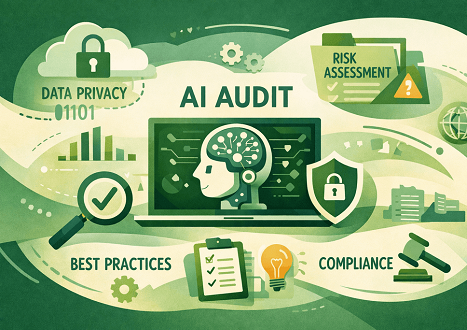
AAIA: Auditing AI Without Losing the Discipline of Audit
ISACA's Advanced in AI Audit certification arrives at a point when organizations are moving artificial intelligence from experimentation into business processes, customer interactions, decision support, software development, fraud detection, security operations, and internal productivity. The AAIA exam is designed for experienced auditors and advisors who must evaluate that adoption without treating AI as either magic or merely another software package. The credential extends established audit practice into questions of model governance, data quality, lifecycle control, human oversight, monitoring, and AI-specific risk.
AAIA sits inside the wider ISACA certifications, but it is deliberately not an entry-level AI credential. Candidates must already hold an active CISA or another qualifying advanced audit designation such as the Certified Internal Auditor when the role focus meets ISACA's eligibility rules. That prerequisite reveals the certification's basic philosophy: first understand professional assurance, then learn how AI changes the evidence, risks, controls, and audit techniques.
AAIA is an audit credential before it is an AI credential
The most important preparation mistake is to focus entirely on machine-learning terminology. Auditors certainly need to understand models, training data, inference, generative AI, lifecycle stages, and common failure modes. But the exam asks what an auditor should evaluate and why. Technical knowledge becomes useful only when it supports assurance questions: Who owns the AI risk? What objective is the system intended to achieve? Which data is permitted? How is performance monitored? What happens when outputs are wrong? Are human review and escalation mechanisms adequate?
This perspective separates AAIA from general AI literacy. An auditor does not need to build every model but does need to challenge whether governance and controls are sufficient for the model's business impact. A high-risk system used in lending, hiring, healthcare, or access decisions deserves different scrutiny from an internal drafting assistant. Audit scope should be driven by impact, risk, regulation, data sensitivity, and the degree of autonomy given to the system.
Governance and risk form the first decision layer
AAIA's first domain centers on AI governance and risk. Candidates should understand how strategy, policies, accountability, ethics, legal obligations, privacy, security, and risk management combine into an enterprise AI control environment. It is not enough for an organization to publish responsible-AI principles. Auditors need to determine whether those principles are translated into ownership, approval criteria, inventories, lifecycle requirements, monitoring, exception handling, and evidence.
Responsible AI therefore needs operational meaning. Questions about fairness, transparency, explainability, privacy, reliability, and human accountability should be connected to specific controls and decisions rather than left as slogans. Responsible AI practices matter to audit because ethical commitments become testable only when they are translated into technology governance, ownership, controls, and evidence.
Risk ownership is equally important. AI risk can involve model error, data leakage, intellectual-property exposure, bias, unsafe automation, regulatory noncompliance, cyberattack, third-party dependency, or flawed business assumptions. The auditor should be able to determine whether those risks are identified, evaluated, accepted at the correct level, and monitored after deployment.
AI operations turn policy into auditable reality
The largest AAIA domain is AI operations. This is where governance claims can be tested against how systems are designed, developed, deployed, changed, monitored, and retired. Candidates should understand data management, development methodologies, lifecycle gates, change management, supervision of outputs, testing, vulnerabilities, and incident response in AI environments.
Data deserves special attention because AI behavior is inseparable from data quality and provenance. Auditors may need to ask where training or grounding data came from, whether its use is authorized, how sensitive information is protected, whether bias was evaluated, and whether lineage is sufficient to reproduce or explain outcomes. For generative AI, retrieval sources and prompt/context handling can matter as much as the base model.
Monitoring is another major theme. A model that performed acceptably during initial validation can drift as data, user behavior, business conditions, or upstream systems change. Audit evidence should therefore include ongoing performance metrics, thresholds, alerts, change records, incident history, and governance responses. Controls that exist only at approval time are weak if the system continues learning or the environment around it changes.
AI security and AI audit overlap, but they are not the same job
AAIA candidates need enough security knowledge to assess threats and vulnerabilities specific to AI, but the credential is not the same as AAISM. AAISM is centered on security management for enterprise AI, while AAIA is centered on independent evaluation and assurance. An AAIA auditor may examine whether the security program has identified prompt injection, model theft, data poisoning, insecure integrations, excessive privileges, or sensitive-data disclosure; the auditor's task is to evaluate whether controls and governance are adequate and effective.
The distinction mirrors the broader difference between management and assurance. Security management designs, implements, and operates the program. Audit independently assesses whether the program is aligned to requirements and whether controls work as intended. Candidates should keep that separation clear in scenario questions.
Audit tools can use AI without surrendering audit judgment
The third AAIA domain addresses AI auditing tools and techniques, including the use of AI to improve audit planning, testing, evidence collection, analytics, and reporting. This creates an interesting dual responsibility: auditors may be auditing AI systems while also using AI inside the audit process.
AI-assisted analytics can help identify anomalies, cluster transactions, summarize large document sets, generate test ideas, or accelerate evidence review. Yet the auditor remains responsible for the conclusion. If an AI tool produces a classification or summary, the team should understand its limitations, protect confidential evidence, validate important outputs, and avoid treating probabilistic answers as authoritative facts. Audit quality cannot be outsourced to a model.
Sampling and evidence principles still apply. A sophisticated tool does not repair poor source data or an invalid audit objective. Candidates should therefore connect AI-enabled techniques back to traditional questions: Is the evidence sufficient? Is it reliable? Is the method appropriate? Can the result be reproduced or explained? Does the test actually address the risk?
AAIA makes more sense when paired with its prerequisite pathways
Professionals entering through CISA will already be familiar with systems audit, governance, operations, development, resilience, and protection of information assets. Those entering through CIA or another qualified audit credential bring a broader assurance perspective. In both cases, AAIA adds an AI-specific layer rather than replacing the foundation.
This is also why adjacent credentials can help clarify career direction. CRISC is centered on enterprise IT risk and controls, while CISM emphasizes security governance and program management. AAIA is different because it asks how an auditor independently evaluates AI governance, operations, and control effectiveness.
A practical way to prepare for the 90-question exam
The current AAIA exam has 90 multiple-choice questions in 150 minutes across three domains: AI Governance and Risk at 33 percent, AI Operations at 46 percent, and AI Auditing Tools and Techniques at 21 percent. The operational domain carries the largest share, so candidates should spend substantial time on lifecycle, data, testing, supervision, vulnerability, and incident scenarios. But study should not become a percentage-only exercise. Governance decisions influence operations, and operational weaknesses change audit risk.
A useful preparation method is to build a small set of realistic AI use cases—such as a customer-service chatbot, fraud model, employee productivity assistant, and automated decision system—and audit each one from end to end. Identify objectives, stakeholders, data, model dependencies, regulatory concerns, controls, monitoring, change processes, incidents, and evidence. Then ask what assurance procedures would establish whether the controls are actually working.
The real skill is asking better assurance questions
AI can tempt organizations into vague language: innovative, intelligent, autonomous, responsible, secure. Audit has to translate those labels into verifiable conditions. Who approved the use case? What data is used? Which decisions remain human? How are exceptions handled? Which risks were accepted and by whom? What evidence shows the model remains reliable? How are suppliers monitored? What happens when the model changes?
That is the deeper value of AAIA. The credential does not ask auditors to become data scientists overnight. It asks experienced assurance professionals to extend their discipline into a technology that changes quickly, behaves probabilistically, and can create consequences at scale. Candidates who keep that audit mindset at the center will be better prepared than those who study AI terminology without learning how to turn it into evidence-based assurance.
Traceability is one of the strongest AI audit controls
AI systems can be difficult to audit when organizations cannot reconstruct how a decision was produced. Traceability therefore deserves more attention than a simple logging checklist. Auditors should look for model and version identification, data lineage, prompt or instruction history where appropriate, retrieval sources, configuration, approval records, test results, monitoring data, human overrides, and change records. The required detail will vary by use case, but the principle is stable: important outcomes should be explainable enough for the organization to investigate failures and demonstrate control.
This is also where governance frameworks become useful. Professionals who want broader grounding in organizational AI governance may find the AIGP material relevant to adjacent concerns such as accountability, responsible use, and regulatory expectations. AAIA remains specifically an audit credential, but auditors work more effectively when they understand the governance structures they are evaluating.
Traceability also improves sampling. If the audit team can identify versions, input populations, exceptions, and decision paths, it can select meaningful samples rather than treating all AI outputs as interchangeable. That makes evidence more defensible and helps distinguish isolated anomalies from systemic control weaknesses.
ExamCollection provides the complete prep materials in vce files format which include Isaca AAIA certification exam dumps, practice test questions and answers, video training course and study guide which help the exam candidates to pass the exams quickly. Fast updates to Isaca AAIA certification exam dumps, practice test questions and accurate answers vce verified by industry experts are taken from the latest pool of questions.


Isaca AAIA Video Courses
Top Isaca Certifications


Top Isaca Certification Exams
Site Search:



