

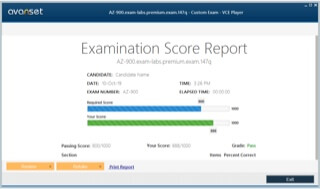

Premium File
62 Q&A
$76.99$69.99
Fortinet NSE7_OTS-7.2 Exam Questions & Answers, Accurate & Verified By IT Experts
Instant Download, Free Fast Updates, 99.6% Pass Rate
62 Questions & Answers
Last Update: Sep 21, 2026
$69.99
Fortinet NSE7_OTS-7.2 Practice Test Questions in VCE Format
| File | Votes | Size | Date |
|---|---|---|---|
File Fortinet.practiceexam.NSE7_OTS-7.2.v2026-08-04.by.eva.7q.vce |
Votes 1 |
Size 198.33 KB |
Date Aug 04, 2026 |
Fortinet NSE7_OTS-7.2 Practice Test Questions, Exam Dumps
Fortinet NSE7_OTS-7.2 (Fortinet NSE 7 - OT Security 7.2) exam dumps vce, practice test questions, study guide & video training course to study and pass quickly and easily. Fortinet NSE7_OTS-7.2 Fortinet NSE 7 - OT Security 7.2 exam dumps & practice test questions and answers. You need avanset vce exam simulator in order to study the Fortinet NSE7_OTS-7.2 certification exam dumps & Fortinet NSE7_OTS-7.2 practice test questions in vce format.
NSE7-OTS-7-2 was Fortinet’s OT Security 7.2 exam, positioned around securing operational technology with Fortinet controls while respecting the availability and safety constraints of industrial environments. It followed earlier OT material such as OT Security 6.4 and later evolved through the NSE 6 OT Security 7.6 exam. Fortinet discontinued the 7.2 architect exam on January 31, 2026 and then replaced the old 7.6 exam structure in July with the current NSE I OT Security 7.6 Architect path.
The timeline is important because the technology problem remains even when the certification label changes. Plants, utilities, manufacturing sites, and other industrial environments still need asset awareness, segmentation, controlled remote access, industrial-protocol protection, monitoring, and incident response. Candidates can use the 7.2 scope to understand those design relationships without implying that the retired code is available today.
An OT inventory should connect network identity to process function. IP address, MAC address, vendor, model, firmware, and switch port are useful, but they are incomplete without the asset’s owner, criticality, maintenance constraints, normal communication partners, and effect on production or safety. That context tells the security team how aggressively a control can be applied.
Passive visibility is often preferred for fragile devices because some controllers and embedded systems react badly to aggressive scanning. When active discovery is required, coordinate with operations and device owners. A vulnerability-management process that disrupts the production line while trying to assess it has failed the environment it is supposed to protect.
Use the inventory as a living dependency map. When a new connection appears between an engineering workstation and a controller, analysts should know whether it is expected maintenance or a new risk. When a device is replaced, update the identity and policy references so old exceptions do not quietly survive.
Industrial environments benefit from explicit zones and controlled conduits between them. Enterprise IT, an industrial DMZ, plant services, supervisory systems, controller networks, safety systems, remote vendors, and security management may each require different trust. The architecture should allow the communications needed for operations while limiting how far a compromised system can move.
Firewall policy should be written from documented flows rather than broad network ranges. Identify the initiating system, destination, protocol, direction, and operational reason. For industrial protocols, application-aware controls can add command or function visibility where supported. Monitor first if the normal process is not sufficiently understood, then enforce in planned stages.
The ICS/SCADA security domain provides useful adjacent context because industrial segmentation is not just a networking exercise. A control boundary can affect operators, historians, engineering access, failover, and maintenance procedures, so security and process teams must agree on the intended behavior.
OT estates often contain equipment that cannot support current endpoint agents, certificate enrollment, or full 802.1X workflows. That limitation should produce a controlled exception model, not blanket trust. Use network context, known switch ports, device classification, MAC-based mechanisms where appropriate, and constrained segments to reduce the privileges of systems with weaker identity capabilities.
Administrative users deserve stronger controls. Named accounts, role separation, multi-factor authentication where supported, jump hosts, and recorded remote sessions make maintenance easier to audit. Shared vendor credentials may be convenient but make it difficult to prove who changed a process or security device.
FortiNAC and related network-access controls can help connect device identity to segmentation. Before enabling automatic movement or quarantine, test what happens to a controller or engineering workstation when it is reclassified. In OT, an enforcement action that is technically correct can still be operationally dangerous if process dependencies were not considered.
Long device life cycles mean vulnerable software may remain in service after a conventional IT system would have been patched. Network IPS and industrial-protocol inspection can reduce exposure by blocking exploit patterns or unexpected commands at boundaries while the asset awaits a vendor-approved update or maintenance window. This is a bridge to remediation, not permission to ignore lifecycle risk.
False positives carry unusual consequences in a control environment. A blocked packet can interrupt production or prevent an operator command. Evaluate signatures in monitoring mode when uncertainty is high, compare events with process behavior, and involve operations before moving a high-impact control into block mode.
Document the vulnerability, temporary network control, affected assets, validation method, and planned permanent fix. When the device is eventually patched or replaced, remove compensating rules that are no longer needed. Otherwise, the security layer accumulates historical exceptions that nobody fully understands.
FortiAnalyzer and SIEM platforms can collect large volumes of logs, but an OT analyst needs context more than volume. Prioritize changes in communication patterns, denied industrial functions, remote-access events, new assets, configuration changes, unusual authentication, and traffic crossing zones that normally remain separate.
The value of SIEM analysis rises when events are normalized around asset and process context. A connection from an unknown laptop to a controller during a maintenance window means something different from the same connection at 2 a.m. during steady-state production. Time, ownership, asset role, and approved work orders help the analyst distinguish legitimate engineering from suspicious access.
Baselines should be revisited after process changes. A new production line, firmware upgrade, vendor remote-support method, or historian integration can legitimately create traffic that old detection rules mark as anomalous. Treat tuning as governed change rather than silently suppressing alerts.
Vendors often need access to specialized industrial systems, sometimes urgently. The secure pattern is to authenticate the person strongly, limit the time and destinations, enter through a monitored access point, and remove the privilege when the work is complete. Persistent VPN access directly into control networks makes both monitoring and segmentation harder.
Use separate paths for administrative management and production traffic where feasible. A vendor working on a PLC should not gain broad reachability to unrelated controllers or security infrastructure. Firewall policy and jump-host controls can make the intended work path explicit and easier to audit.
Emergency access needs preplanned governance. If normal approval cannot be completed during a production incident, define who can authorize the exception, how it is logged, and how quickly it must be reviewed afterward. Designing that process before an emergency prevents security from becoming an improvised obstacle during recovery.
Standard IT containment guidance can be dangerous when applied without process knowledge. Disconnecting a host may stop monitoring, interrupt a controller relationship, or leave equipment in an unsafe state. OT response playbooks should identify actions that are safe at each layer and who from operations, engineering, safety, and security must approve them.
Network containment can sometimes be more precise than shutting down a device. Block a malicious external destination, isolate a compromised engineering workstation from controller networks, or restrict vendor access while preserving process communication. The best action is the smallest change that reduces attacker freedom without creating a larger operational hazard.
Recovery planning should include configuration backups, offline documentation, known-good firmware and engineering files, firewall and switch configuration, and a tested sequence for restoring services. A technically recoverable device is not enough if the team does not know which process dependencies have to return first.
Automation in OT should begin with low-risk actions. Enriching an alert with asset ownership, opening a ticket, notifying an engineer, or collecting a configuration snapshot can improve response without changing the process network. More disruptive actions such as quarantine or policy modification should require stronger confidence and, for critical systems, explicit operational approval.
Risk reviews should distinguish exposure from consequence. A vulnerable controller behind tightly controlled conduits may have a different immediate risk than an engineering workstation with internet access and privileged reach into several cells. Document the assumptions behind the ranking so changes in connectivity or process importance trigger a new assessment.
Configuration integrity is another useful monitoring target. Unexpected changes to firewall policy, switch configuration, remote-access settings, or engineering workstations may precede visible process anomalies. Preserve authorized baselines and correlate change events with maintenance records so analysts can separate planned work from unauthorized modification.
Fortinet’s 2026 release notice records January 31 as the last delivery date for NSE 6 OT Security 7.2 Architect and July 15 as the last delivery date for NSE 6 OT Security 7.6 Architect. On July 15, the company released the new NSE I OT Security 7.6 Architect exam. The current exam continues themes such as asset management, access and segmentation, industrial protocol controls, virtual patching, automation, monitoring, and risk assessment.
That continuity makes 7.2 useful for lab practice. Build a small segmented industrial topology, create an asset register, define approved communication flows, introduce a remote-support path, collect logs, and simulate a vulnerability that cannot yet be patched. Then choose a compensating control and test how it affects the process.
For current certification planning, verify Fortinet certifications rather than relying on legacy labels. For technical development, keep the 7.2 lessons that remain durable: know the process, control the conduits, monitor with context, and never let a security action create more operational risk than the threat it is intended to contain.
Tabletop exercises can validate these assumptions without touching production. Give operations and security teams a scenario involving a compromised engineering workstation, suspicious controller traffic, or failed remote vendor account and require them to choose evidence, containment, approval, and recovery steps. Gaps in ownership are easier to fix before a real incident.
Go to testing centre with ease on our mind when you use Fortinet NSE7_OTS-7.2 vce exam dumps, practice test questions and answers. Fortinet NSE7_OTS-7.2 Fortinet NSE 7 - OT Security 7.2 certification practice test questions and answers, study guide, exam dumps and video training course in vce format to help you study with ease. Prepare with confidence and study using Fortinet NSE7_OTS-7.2 exam dumps & practice test questions and answers vce from ExamCollection.
Purchase Individually
Top Fortinet Certifications
Top Fortinet Certification Exams
Site Search:

SPECIAL OFFER: GET 10% OFF

Pass your Exam with ExamCollection's PREMIUM files!
SPECIAL OFFER: GET 10% OFF
Use Discount Code:
MIN10OFF
A confirmation link was sent to your e-mail.
Please check your mailbox for a message from support@examcollection.com and follow the directions.

Download Free Demo of VCE Exam Simulator
Experience Avanset VCE Exam Simulator for yourself.
Simply submit your e-mail address below to get started with our interactive software demo of your free trial.