
Pass Your Six Sigma Lean Six Sigma Yellow Belt Certification Easy!
Six Sigma Lean Six Sigma Yellow Belt Certification Exams Questions & Answers, Accurate & Verified By IT Experts
Instant Download, Free Fast Updates, 99.6% Pass Rate.

$69.99
Six Sigma Lean Six Sigma Yellow Belt Certification Exams Screenshots
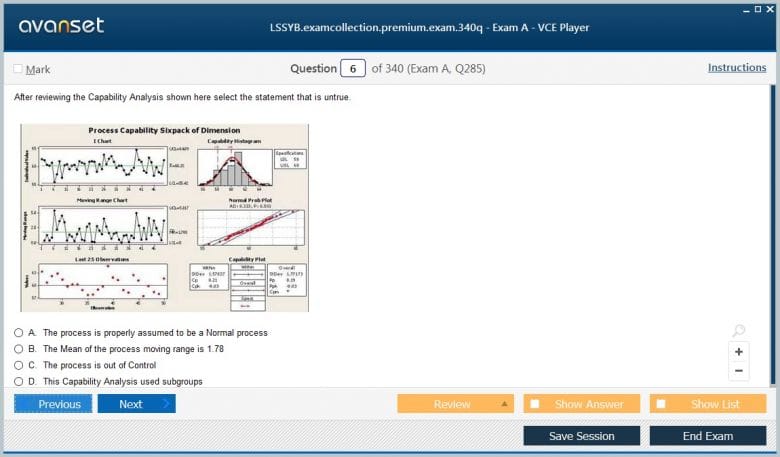
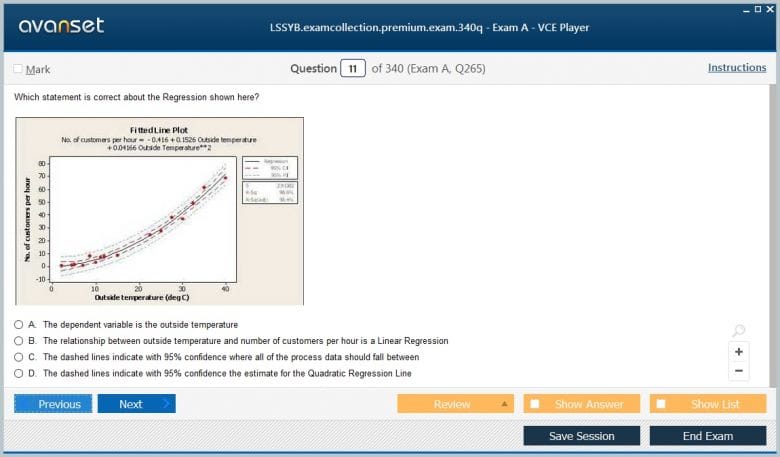
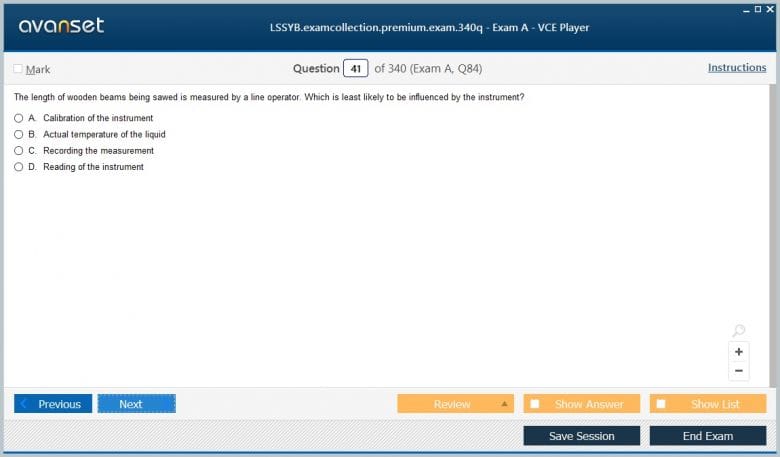
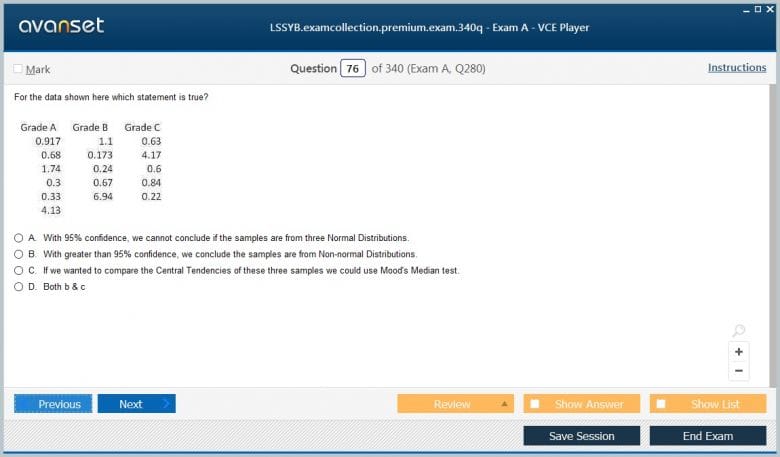
Lean Six Sigma Yellow Belt Product Reviews
Download Free Lean Six Sigma Yellow Belt Practice Test Questions VCE Files
| Exam | Title | Files |
|---|---|---|
Exam LSSYB |
Title Lean Six Sigma Yellow Belt |
Files 6 |
Six Sigma Lean Six Sigma Yellow Belt Certification Exam Dumps & Practice Test Questions
Prepare with top-notch Six Sigma Lean Six Sigma Yellow Belt certification practice test questions and answers, vce exam dumps, study guide, video training course from ExamCollection. All Six Sigma Lean Six Sigma Yellow Belt certification exam dumps & practice test questions and answers are uploaded by users who have passed the exam themselves and formatted them into vce file format.
Lean Six Sigma Yellow Belt: A Practical Foundation for DMAIC Teams
Lean Six Sigma Yellow Belt is the practical entry point for people who need to understand improvement work well enough to participate in it. The level is designed for team members, supervisors, analysts, coordinators, and other professionals who may not lead complex DMAIC projects but still need to recognize process waste, collect useful data, contribute to root-cause analysis, and help sustain improvements. Current providers continue to offer Yellow Belt credentials, although their exam rules are not identical.
PeopleCert’s current IASSC Yellow Belt, for example, has no formal prerequisite and uses a three-year renewal cycle, while other providers may define different requirements or credential lifetimes. That variation is why candidates should verify the body of knowledge behind the credential they plan to earn. The LSSYB exam can anchor preparation, but the transferable value comes from understanding how Lean Six Sigma teams reason about processes.
Yellow Belt study is most effective when tied to a familiar workflow. Choose a process you experience often—request intake, appointment scheduling, invoice handling, warehouse picking, customer support, or employee onboarding—and use it as a running example. You do not need advanced statistics to start improving your observation. You need a precise description of the process, clear definitions, and the discipline to separate evidence from assumptions.
A Yellow Belt’s contribution is usually focused and local. The person may help map the process, identify customer needs, gather data, participate in brainstorming, document causes, support pilots, and follow control procedures. This is different from the broader project leadership and advanced analysis expected at Green Belt and Black Belt levels.
That narrower scope is useful, not inferior. Improvement projects depend on people who understand the actual work and can translate it accurately for the project team. A Yellow Belt who recognizes a hidden rework loop or clarifies how a metric is really captured can prevent a more senior practitioner from analyzing the wrong process. The credential should build confidence to contribute evidence rather than encourage people to act outside their experience.
Start with value, customers, and the difference between work and waste
Lean asks whether each activity contributes value from the customer’s perspective and whether the process flows with unnecessary delay or effort. Waiting, defects, rework, excessive movement, unnecessary transport, overprocessing, excess inventory, overproduction, and unused human capability are common ways organizations describe waste. The exact labels matter less than learning to observe where time and effort disappear.
Walk your chosen process from beginning to end and record what happens to one item of work. Mark value-adding activity, necessary support activity, waiting, queues, rework, handoffs, and decisions. Do not assume that the longest step is the biggest problem. A five-minute approval that waits three days in a queue may dominate the customer’s experience more than an hour of careful value-adding work.
DMAIC gives the improvement team a common sequence for thinking
Define identifies the problem and customer. Measure establishes current performance. Analyze investigates causes. Improve tests changes. Control makes the new result durable. A Yellow Belt should understand what each phase is trying to accomplish and recognize when a team is jumping ahead. If the group proposes solutions before it has agreed on the problem or baseline, that is a process risk in the project itself.
Comparing Six Sigma and Lean Six Sigma helps clarify why variation reduction and waste reduction are related but distinct. Then build a one-page DMAIC summary for your sample process. Keep each phase short and specific. The exercise reveals whether you can connect the method into one story rather than recall five phase names independently.
Basic process maps make invisible handoffs visible
SIPOC and flowcharts are especially useful at Yellow Belt level because they create a shared picture before the team starts debating causes. SIPOC identifies suppliers, inputs, the major process steps, outputs, and customers. A more detailed flowchart then shows decisions, loops, parallel work, and rework. Both tools help teams discover that different departments may have completely different mental models of the same process.
Draw the current state with people who perform the work and include exceptions. If a request is sometimes returned for missing information, show that loop. If an urgent case bypasses a queue, show the alternate route. Do not make the diagram prettier than reality. Improvement begins when the team can see the actual system and agree on where a measurement or investigation should start.
Measurement begins with definitions that different people can apply consistently
Yellow Belts frequently help collect project data, so they need to understand operational definitions. “Defect,” “late,” “complete,” and “customer complaint” can all mean different things to different people. A team should define exactly what is counted, when the event begins and ends, and how ambiguous cases are handled before collecting a large data set.
Practice creating a simple check sheet for your process. Record categories that are mutually clear, dates or durations from the same start and stop points, and enough context to stratify later if needed. Then have another person use the form and compare results. If both observers cannot apply the definition consistently, the measure needs work before the project trusts the numbers.
Simple visual tools can expose patterns before advanced analysis is needed
Pareto charts, run charts, histograms, check sheets, and basic scatter plots can reveal where defects concentrate, whether performance changes over time, and how variable a process is. A Yellow Belt does not need to perform every advanced statistical test, but should understand why the team looks beyond an average. Variation tells you whether performance is consistent and whether one summary number hides important behavior.
Suppose average resolution time is eight hours. That number means something very different if almost every case takes seven to nine hours versus a process where half finish in one hour and the rest take fifteen. Plot the data and ask what operational story the distribution suggests. Visual analysis is powerful because it gives the whole team a concrete pattern to discuss.
Root-cause tools organize ideas, but evidence still decides what is true
Five Whys and fishbone diagrams help teams explore possible causes across people, process, equipment, materials, environment, measurement, and other relevant categories. Their purpose is to expand and organize thinking. They do not prove that a cause is real. A Yellow Belt should be comfortable saying, “That is a hypothesis; what evidence would confirm it?”
Take one recurring defect and build a cause-and-effect diagram with colleagues. Then mark which causes are already supported, which can be tested with existing data, and which need new observation. This separates brainstorming from analysis. Teams save time when they stop treating every plausible story as equally likely and start designing small checks that eliminate weak explanations.
Improvement participation means testing changes and watching for side effects
Yellow Belts often support pilots by documenting the new method, collecting results, observing operator feedback, and identifying unintended consequences. An improvement that reduces cycle time but creates more errors may not be an improvement at all. A useful pilot therefore has a clear objective, a defined population, simple measures, and a way to reverse the change if it creates unacceptable risk.
Learn common Lean countermeasures such as standard work, visual controls, 5S, kanban, mistake-proofing, and improved handoffs, but apply them to diagnosed problems. Cleaning a work area is not useful merely because 5S appears in a syllabus. The intervention should remove a specific source of delay, confusion, error, or unnecessary motion that the team has observed.
Control is where everyday team members protect the gains
After the project closes, Yellow Belts are often the people who live with the improved process. That makes control plans, standard work, visual management, checklists, escalation rules, and simple monitoring especially important at this level. The team should know what “normal” performance looks like and what to do when results begin to deteriorate.
Write a short response plan for one important metric. State who reviews it, how often, what condition triggers investigation, and what first action should occur. If the response depends on calling the former project leader for an explanation, the control design is weak. Sustainable improvement should become part of ordinary work rather than an expert-only ritual.
Yellow Belt is a strong foundation when it leads to applied participation
The broader Lean Six Sigma and Six Sigma certification family provide options for deeper study, but candidates should not rush to the next belt before they can contribute effectively to a real project. Join an improvement team, help map a process, collect data, participate in cause analysis, and support a pilot. Those experiences make later Green Belt concepts much easier to understand.
Keep a simple learning log that connects every tool to the problem it helped solve. Instead of writing “learned Pareto chart,” record what categories were analyzed and what decision changed. Instead of “used 5 Whys,” record which assumed cause was rejected and why. This creates practical memory and discourages the mechanical use of tools for their own sake.
Lean Six Sigma Yellow Belt remains relevant because improvement is not performed only by specialists. Most process knowledge lives with the people who do the work, and organizations need those people to recognize waste, collect reliable evidence, and participate constructively when change is designed.
A strong Yellow Belt candidate finishes preparation able to describe a process clearly, measure it consistently, distinguish symptoms from causes, support a controlled improvement, and help maintain the result. That is a useful professional capability even before any higher belt is pursued.
ExamCollection provides the complete prep materials in vce files format which include Six Sigma Lean Six Sigma Yellow Belt certification exam dumps, practice test questions and answers, video training course and study guide which help the exam candidates to pass the exams quickly. Fast updates to Six Sigma Lean Six Sigma Yellow Belt certification exam dumps, practice test questions and accurate answers vce verified by industry experts are taken from the latest pool of questions.


Six Sigma Lean Six Sigma Yellow Belt Video Courses

Top Six Sigma Certifications

Top Six Sigma Certification Exams
Site Search:




i think am the happiest person ever having passed the lssyb cert exam. i used premium files for lssyb exam and they helped me a lot. thank you guys.
i need someone to teach me how to open vce files with vce player. i want to use lssyb vce files to revise for my forthcoming exam.
the practice questions and answers for lssyb exam are awesome. the helped me pass the exam with 81 percent. almost all the questions tested in the real exam i had come across them.
any person with lssyb exam questions can upload them for us please. i want to use them in my preparation for the main exam.
the vce simulator for six sigma yellow belt practice test aided me towards success in the cert exam of lssyb. the questions comprised in it were a replica of those contained in the exam.
i have passed the exam using lssyb premium file. it comprises questions and their respective answers. for sure if it were not for it I could have registered a fail.
lssyb practice questions are nice. they help the candidate to evaluate the readiness for the actual test. the questions actually helped me to revise properly the test and i was able to attain the passing score.
@denis, dumps for lssyb are around 90% valid. i managed to score 83% in the exam using them. they are contain all what a candidate requires in order to pass the test. try it and you have excellent results.
who can ascertain the validity of lssyb exam dumps?
i can’t imagine I managed to earn six sigma yellow belt certification. i sat for lssyb cert exam last and managed to perform very well. it is a tough exam which requires a lot of dedication and thorough study.
wow! i have passed the exam using six sigma yellow belt vce files. exam questions are similar to those comprised in the vce files. i am glad you provided reliable vce files.