CompTIA A+ Certification Exams Questions & Answers, Accurate & Verified By IT Experts
Instant Download, Free Fast Updates, 99.6% Pass Rate.
$89.98
Or Purchase CompTIA A+ Exams Individually
| 220-1101 | CompTIA A+ Certification Exam: Core 1 | $69.99 | Add to cart |
| 220-1102 | CompTIA A+ Certification Exam: Core 2 | $69.99 | Add to cart |
| 220-1201 | CompTIA A+ Certification Exam: Core 1 | $69.99 | Add to cart |
| 220-1202 | CompTIA A+ Certification Exam: Core 2 | $69.99 | Add to cart |
Download Free CompTIA A+ Practice Test Questions VCE Files
| Exam | Title | Files |
|---|---|---|
Exam 220-1101 |
Title CompTIA A+ Certification Exam: Core 1 |
Files 1 |
Exam 220-1102 |
Title CompTIA A+ Certification Exam: Core 2 |
Files 1 |
Exam 220-1201 |
Title CompTIA A+ Certification Exam: Core 1 |
Files 1 |
Exam 220-1202 |
Title CompTIA A+ Certification Exam: Core 2 |
Files 1 |
CompTIA A+ Certification Exam Dumps & Practice Test Questions
Prepare with top-notch CompTIA A+ certification practice test questions and answers, vce exam dumps, study guide, video training course from ExamCollection. All CompTIA A+ certification exam dumps & practice test questions and answers are uploaded by users who have passed the exam themselves and formatted them into vce file format.
The CompTIA A+ certification is the most widely recognized entry-level credential in the information technology industry, serving as the foundational benchmark for individuals beginning their careers in IT support, hardware maintenance, and technical troubleshooting. It is vendor-neutral, meaning it covers concepts and skills applicable across multiple platforms, operating systems, and hardware manufacturers rather than being tied to any single company's products or technologies. CompTIA, the Computing Technology Industry Association, develops and maintains the A+ certification with input from industry employers, ensuring that its content reflects the actual skills needed in real IT support roles.
The certification consists of two separate exams, Core 1 and Core 2, both of which must be passed to earn the full A+ credential. Core 1 covers mobile devices, networking technology, hardware, virtualization, cloud computing, and hardware and network troubleshooting. Core 2 covers operating systems, security, software troubleshooting, and operational procedures. Together, these two exams validate a broad range of practical skills that prepare candidates for entry-level positions including help desk technician, desktop support specialist, field service technician, and IT support analyst. The CompTIA A+ is also endorsed by major technology companies and recognized by the United States Department of Defense as meeting the requirements for certain information assurance roles.
A thorough knowledge of computer hardware components is fundamental to passing the CompTIA A+ exams and performing effectively in any IT support role. The central processing unit is the primary computing component of any computer system, responsible for executing instructions and performing calculations that drive all software operations. Modern CPUs from Intel and AMD come in multiple core configurations, support simultaneous multithreading, and include integrated graphics processors in many consumer models. Understanding CPU specifications including clock speed, core count, cache size, thermal design power, and socket compatibility is essential for selecting appropriate components and diagnosing performance issues.
Random access memory provides the temporary high-speed storage that the CPU uses to hold active program data and instructions during operation. RAM comes in several generations including DDR4 and DDR5, with each generation offering higher speeds and greater power efficiency than its predecessor. Storage devices include traditional hard disk drives that use spinning magnetic platters, solid state drives that use flash memory chips for much faster access times, and NVMe drives that connect directly to the CPU through the PCIe interface for the highest possible performance. Power supply units convert alternating current from the wall outlet into the direct current voltages required by internal components, and selecting an appropriately rated power supply is critical for system stability and longevity.
The motherboard is the central circuit board that connects all the components of a computer system together and provides the pathways through which they communicate. It houses the CPU socket, RAM slots, expansion card slots, storage connectors, and the chipset that manages communication between components. Understanding motherboard form factors including ATX, Micro-ATX, and Mini-ITX is important for building and upgrading systems because the form factor determines which cases are compatible and how many expansion slots are available. The BIOS or UEFI firmware stored on the motherboard controls the hardware initialization process during startup and provides configuration options for memory timing, CPU performance, and boot device priority.
The chipset on the motherboard determines which CPUs are compatible, how many storage devices can be connected, and what features are supported such as overclocking capability and the number of USB and PCIe lanes available. Expansion slots including PCIe x16 for graphics cards, PCIe x1 for smaller add-in cards, and M.2 slots for NVMe storage provide the interfaces for adding functionality to the system. CMOS memory stores BIOS configuration settings and relies on a small battery to maintain those settings when the system is powered off. When this battery fails, the system loses its date and time settings and may revert to default BIOS configurations, which is a common troubleshooting scenario covered in the CompTIA A+ exams.
Windows is the dominant desktop operating system in enterprise environments, and CompTIA A+ candidates must have comprehensive knowledge of Windows installation, configuration, management, and troubleshooting. The exam covers multiple Windows versions including Windows 10 and Windows 11, which share many fundamental concepts but differ in system requirements, interface features, and security capabilities. Understanding the Windows file system hierarchy, registry structure, user account types, and built-in administrative tools is essential for managing Windows systems effectively in a support role.
Windows administrative tools that A+ candidates must know include Task Manager for monitoring system performance and managing running processes, Device Manager for viewing and troubleshooting hardware drivers, Disk Management for partitioning and formatting storage devices, and the Control Panel and Settings applications for configuring system behavior. The Windows command line and PowerShell are also tested, requiring candidates to know common commands for file management, network diagnostics, and system administration. Windows Update management, driver installation and rollback procedures, and the Windows Recovery Environment for repairing damaged system installations are all practical skills that appear regularly in both the exam and real-world IT support work.
Networking knowledge is a significant component of the CompTIA A+ Core 1 exam, covering the concepts, protocols, hardware, and troubleshooting skills needed to support networked computing environments. The TCP/IP protocol suite forms the foundation of modern networking, and candidates must understand IP addressing including both IPv4 and IPv6, subnet masks, default gateways, and the difference between static and dynamic IP address assignment using DHCP. Common application layer protocols including HTTP, HTTPS, FTP, SMTP, POP3, IMAP, DNS, and DHCP must be understood in terms of their purpose, port numbers, and how they function in typical network communication scenarios.
Network hardware including routers, switches, wireless access points, modems, and network interface cards are all covered in the exam. Understanding the difference between a hub and a switch in terms of how they handle network traffic, how routers connect different networks and make forwarding decisions, and how wireless networks use different frequency bands and standards including 802.11a, b, g, n, ac, and ax is essential for both the exam and practical support work. Network troubleshooting tools including ping, traceroute, nslookup, ipconfig, and netstat are command-line utilities that technicians use daily to diagnose connectivity problems, and A+ candidates must know how to interpret the output of each tool to identify and resolve common network issues.
Mobile devices including smartphones and tablets have become central to enterprise computing environments, and CompTIA A+ Core 1 dedicates significant coverage to the support and troubleshooting of these devices. Candidates must understand the major mobile operating systems, iOS and Android, including how to configure email accounts, wireless connectivity, and security settings on each platform. Mobile device management concepts are also covered, including how organizations use MDM solutions to enforce security policies, distribute applications, and remotely manage devices used for work purposes.
Cellular network technologies including 4G LTE and 5G are tested in terms of their basic operation and the types of devices and use cases they support. Bluetooth pairing procedures, near field communication for contactless payments and data transfer, and GPS functionality are all mobile connectivity topics that appear in the exam. Common mobile device issues including battery drain, overheating, connectivity problems, touchscreen unresponsiveness, and application crashes are troubleshooting scenarios that A+ candidates must be able to diagnose and resolve using appropriate tools and techniques. Understanding the difference between soft resets and factory resets and when each is appropriate is a practical skill that directly translates to real-world mobile device support situations.
Security is a critical component of the CompTIA A+ Core 2 exam, reflecting the reality that IT support technicians are often the first line of defense against security threats in many organizations. Candidates must understand the major categories of malware including viruses, worms, trojans, ransomware, spyware, adware, and rootkits, as well as the techniques attackers use to deliver them including phishing emails, malicious websites, infected removable media, and social engineering. Understanding how each type of malware behaves and what indicators of compromise look like helps technicians identify infections quickly and take appropriate remediation steps.
Physical security is an often-overlooked aspect of IT security that the A+ exam covers in practical terms. Securing server rooms and network equipment with proper access controls, using cable locks for laptops in shared spaces, properly disposing of old hardware and storage media through degaussing or physical destruction, and following clean desk policies all fall under the physical security responsibilities that IT support technicians share. Logical security controls including user account management, password policies, file and folder permissions, encryption of sensitive data, and the principle of least privilege are fundamental concepts that technicians must implement and enforce consistently across the systems they support. Firewall configuration, antivirus management, and software update deployment round out the practical security skills tested in this certification.
Virtualization and cloud computing have transformed how IT infrastructure is deployed and managed, and CompTIA A+ Core 1 introduces these concepts at a level appropriate for entry-level IT professionals. Virtualization allows multiple virtual machines to run simultaneously on a single physical host system, with each VM isolated from the others and running its own operating system and applications. Hypervisors are the software layer that manages this virtualization, with Type 1 hypervisors running directly on the hardware and Type 2 hypervisors running as applications within a host operating system. Understanding the resource requirements and performance implications of virtualization helps technicians size host systems appropriately and troubleshoot performance issues in virtualized environments.
Cloud computing delivers computing resources including compute, storage, databases, and applications over the internet on a consumption-based pricing model. The three main cloud service models of Infrastructure as a Service, Platform as a Service, and Software as a Service represent different levels of responsibility and control shared between the cloud provider and the customer. Public, private, and hybrid cloud deployment models offer different trade-offs between cost, control, and compliance. Common cloud applications that A+ technicians support include Microsoft 365, Google Workspace, cloud storage services like OneDrive and Google Drive, and virtual desktop infrastructure solutions that deliver desktop environments from cloud-hosted servers to thin client devices. Understanding these cloud concepts prepares entry-level technicians for the increasingly cloud-centric IT environments they will encounter in their careers.
CompTIA has defined a systematic troubleshooting methodology that is explicitly tested in the A+ exams and serves as a practical framework for resolving technical problems efficiently in real-world support situations. The methodology consists of six steps that guide technicians from initial problem identification through final documentation of the resolution. The first step is to identify the problem by gathering information from the user, observing symptoms, and asking questions to understand what changed before the problem appeared. The second step is to establish a theory of probable cause by considering the most likely explanations for the observed symptoms based on experience and logical reasoning.
The third step is to test the theory to determine the cause by performing specific diagnostic actions that will confirm or disprove the suspected cause. If the theory is confirmed, the technician moves to the fourth step of establishing a plan of action and implementing the solution. If the theory is not confirmed, a new theory must be formulated and tested. The fifth step is to verify full system functionality after implementing the fix, ensuring that the solution resolved the original problem without creating new issues. The sixth and final step is to document the findings, actions taken, and outcomes in the ticketing system or knowledge base so that the resolution is available to other technicians who encounter the same problem in the future. This systematic approach reduces the time spent on guesswork and ensures that problems are resolved thoroughly rather than superficially.
Printers remain one of the most commonly supported peripheral devices in enterprise environments, and CompTIA A+ covers printer technologies, installation, configuration, and troubleshooting in considerable depth. Laser printers use a complex six-step process involving charging, exposing, developing, transferring, fusing, and cleaning to produce high-quality text and graphics output on paper. Understanding each step of this process is important for diagnosing print quality issues, as different defects in the output correspond to problems at specific stages of the process. Inkjet printers use microscopic nozzles to spray ink droplets onto paper and require regular head cleaning and nozzle alignment maintenance to maintain print quality.
Thermal printers use heat to activate special thermal paper and are commonly used for receipt printing in retail and point-of-sale environments. Impact printers use a print head that physically strikes an ink ribbon against paper, producing output that can print through multiple layers of carbonless copy paper. Installing and configuring printers in a Windows environment involves adding the printer through the operating system, installing the appropriate driver, and configuring shared access for network printing. Common printer troubleshooting scenarios covered in the exam include paper jams, print quality defects, connectivity issues, driver conflicts, and print spooler problems that prevent jobs from being processed and delivered to the printer.
Operational procedures and professional behavior are covered in the CompTIA A+ Core 2 exam because technical skills alone are insufficient for success in IT support roles. Technicians must communicate effectively with users who may be frustrated, confused, or under time pressure, which requires patience, empathy, and the ability to explain technical concepts in plain language that non-technical users can understand. Active listening, avoiding interrupting the user while they describe their problem, and confirming your understanding by restating the issue in your own words are communication practices that lead to more accurate problem diagnosis and more satisfied users.
Documentation is an operational procedure that is often neglected by busy technicians but provides significant value to the organization over time. Accurate tickets that describe the problem, the troubleshooting steps taken, and the resolution reached create a knowledge base that helps other technicians resolve similar issues faster. Change management procedures require technicians to obtain proper approval before making significant changes to systems, document what changes were made, and have a rollback plan in case the change causes unexpected problems. Safety procedures including proper electrostatic discharge precautions when handling sensitive components, safe battery disposal, and following OSHA guidelines for safe working conditions protect both technicians and the equipment they work on. These operational and professional skills distinguish competent technicians from exceptional ones who build strong reputations and advance quickly in their careers.
Remote support capabilities have become increasingly important as organizations adopt hybrid work models where employees work from home offices and remote locations that IT technicians cannot visit in person. CompTIA A+ Core 2 covers the tools and techniques used to provide remote support effectively and securely. Remote desktop software allows technicians to view and control a user's computer screen from a different location, enabling them to diagnose and resolve software issues, configure settings, and install applications without being physically present. Windows includes built-in remote desktop and remote assistance capabilities, and third-party tools like TeamViewer and AnyDesk are also widely used in enterprise support environments.
Security considerations for remote support are important because remote access tools create potential attack vectors if not properly controlled. Remote support sessions should be initiated only with the explicit consent of the user, protected by strong authentication, and terminated immediately when the support task is complete. VPN connections encrypt the network traffic between remote workers and organizational resources, protecting sensitive data from interception as it travels over the public internet. Split tunneling VPN configurations route only traffic destined for organizational resources through the VPN while allowing other internet traffic to flow directly, reducing bandwidth requirements and improving performance for remote users. Understanding these remote access technologies and their security implications prepares A+ certified technicians for the realities of supporting modern distributed work environments.
Data backup and recovery are fundamental IT responsibilities that the CompTIA A+ exam covers because data loss events are inevitable over time, and having effective backup strategies in place determines whether those events become minor inconveniences or catastrophic business disruptions. Three backup types are commonly used in combination to balance protection with storage efficiency and recovery speed. Full backups copy all selected data regardless of whether it has changed since the previous backup, providing the simplest and fastest recovery but consuming the most storage space and time to complete. Differential backups copy only the data that has changed since the last full backup, growing progressively larger between full backup cycles but requiring only two backup sets for recovery.
Incremental backups copy only the data that has changed since the most recent backup of any type, keeping each backup set small and fast to complete, but requiring the full backup plus every incremental backup since the full to restore completely. The 3-2-1 backup rule recommends maintaining three copies of data, storing them on two different types of media, and keeping one copy off-site to protect against local disasters. Cloud backup services have made off-site backup more accessible and cost-effective for organizations of all sizes by eliminating the need to physically transport backup media to a separate location. Recovery time objective and recovery point objective are planning metrics that define how quickly systems must be restored after a failure and how much data loss is acceptable, guiding decisions about backup frequency and recovery infrastructure investment.
Preparing for the CompTIA A+ exams effectively requires a combination of structured study, hands-on practice, and regular assessment through practice questions and simulated exam conditions. The official CompTIA study guide and objectives document published on the CompTIA website is the authoritative source for what content will be tested and should be the foundation of any study plan. Third-party study resources from providers like Professor Messer, Mike Meyers, and Jason Dion offer video courses, study guides, and practice exams that many candidates find helpful for reinforcing and supplementing the official content with engaging explanations and practical demonstrations.
Building a home lab for hands-on practice significantly accelerates learning and builds the practical intuition that helps candidates answer performance-based questions on the actual exam. Performance-based questions require candidates to perform a specific task within a simulated environment rather than simply selecting the correct answer from a list, and they cannot be answered through memorization alone. Collecting old computers and components, practicing hardware installation and removal, setting up a home network, and experimenting with different operating system configurations all provide valuable hands-on experience. Taking multiple full-length practice exams under timed conditions in the weeks before your scheduled exam date helps identify remaining knowledge gaps, builds time management skills, and reduces the anxiety that can impair performance during the actual certification test.
Earning the CompTIA A+ certification opens the door to a wide range of entry-level IT positions and creates a foundation for advancing along multiple distinct career paths within the technology industry. Help desk and technical support roles are the most direct entry points for A+ certified professionals, providing opportunities to build customer service skills, broaden technical knowledge across diverse environments and technologies, and develop the troubleshooting instincts that come from solving large volumes of diverse technical problems. These roles are available in virtually every industry, giving A+ certified professionals the flexibility to work in healthcare, finance, government, education, retail, or any other sector that relies on technology to operate.
From the help desk foundation, A+ certified professionals can advance in multiple directions based on their interests and aptitudes. Those interested in infrastructure and systems administration can pursue CompTIA Network+ and Security+ certifications before moving toward Microsoft, Cisco, or cloud platform credentials. Those interested in cybersecurity can use the A+ as a stepping stone toward CompTIA Security+, CompTIA CySA+, and eventually advanced security roles in penetration testing or security operations. Those with an interest in programming and software development can combine their hardware and operating system knowledge with coding skills to move into DevOps or site reliability engineering. The A+ certification is not just a credential for staying in entry-level support roles but a genuine launching pad for a technology career that can develop in many rewarding and well-compensated directions.
The job market for CompTIA A+ certified professionals remains strong across the globe as organizations of every size continue to rely on qualified IT support staff to keep their technology infrastructure running smoothly. Entry-level help desk and technical support positions for A+ certified candidates typically offer starting salaries in a range that varies significantly by geographic location, industry, and the size and type of the employing organization. Metropolitan areas with high concentrations of technology companies and financial institutions generally offer higher compensation than smaller markets, and candidates who combine their A+ certification with demonstrated hands-on experience and strong communication skills command the best starting offers.
Salary growth for IT support professionals who continue building their skills and earning additional certifications can be substantial over a relatively short period. Technicians who earn CompTIA Network+ and Security+ alongside their A+ credential and gain two to three years of practical experience often qualify for mid-level roles in network administration, systems administration, or cybersecurity that offer significantly higher compensation. Government and defense contractor positions that require CompTIA A+ certification under the Department of Defense Directive 8570 mandate often offer particularly competitive salaries and benefits packages. The overall employment outlook for computer support specialists is positive, with the Bureau of Labor Statistics projecting continued demand driven by the ongoing proliferation of technology across all sectors of the economy and the constant need for qualified professionals to install, maintain, and support that technology effectively.
The CompTIA A+ certification represents one of the most valuable investments an aspiring IT professional can make at the beginning of their technology career. Throughout this comprehensive guide, we have walked through every major knowledge domain covered by the two A+ exams, from hardware components, motherboard architecture, and operating system fundamentals through networking, mobile devices, security, virtualization, cloud computing, troubleshooting methodology, printer support, operational procedures, remote support, data backup, and career development opportunities. Each of these areas reflects genuine knowledge and skills that IT support professionals use in their daily work, which means your preparation for the A+ exam builds real capability that translates directly into job performance.
What distinguishes the CompTIA A+ from many other entry-level certifications is the remarkable breadth of its coverage combined with the practical, hands-on orientation of its exam questions. The inclusion of performance-based questions that require you to actually perform tasks rather than simply recognize correct answers means that passing the A+ requires genuine understanding rather than surface-level memorization. This higher standard of assessment is precisely what makes the credential meaningful to employers who trust it as a reliable indicator of candidate readiness for real IT support work.
The technology industry is one of the most dynamic and rapidly evolving fields in the global economy, and the CompTIA A+ is specifically designed to evolve with it. CompTIA updates the exam objectives periodically to ensure the content remains aligned with current technologies and employer requirements, which means that earning the A+ keeps you current with industry expectations rather than certifying knowledge that has become obsolete. This commitment to relevance ensures that the time and effort you invest in preparation retains its value in the job market long after you receive your certification.
From a personal development perspective, the journey through A+ preparation teaches you something more valuable than any specific technical fact or troubleshooting technique. It teaches you how to approach technical problems systematically, how to communicate effectively under pressure, how to learn continuously in a field that never stops changing, and how to balance technical precision with the human dimension of supporting users who depend on technology to do their jobs. These meta-skills compound over time and become the foundation of a long, successful IT career regardless of where your specific technical interests eventually take you.
Take your preparation seriously, build hands-on experience wherever possible, engage with the broader IT community through forums, study groups, and professional networks, and approach the certification exams with the confidence that comes from thorough, practical preparation. The CompTIA A+ certification is your gateway to an IT career that offers intellectual challenge, continuous learning, job security, competitive compensation, and the genuine satisfaction of helping people solve problems and stay productive every single day.
ExamCollection provides the complete prep materials in vce files format which include CompTIA A+ certification exam dumps, practice test questions and answers, video training course and study guide which help the exam candidates to pass the exams quickly. Fast updates to CompTIA A+ certification exam dumps, practice test questions and accurate answers vce verified by industry experts are taken from the latest pool of questions.

CompTIA CompTIA A+ Video Courses



Top CompTIA Certification Exams
Site Search:
SPECIAL OFFER: GET 10% OFF

Pass your Exam with ExamCollection's PREMIUM files!
SPECIAL OFFER: GET 10% OFF
Use Discount Code:
MIN10OFF
A confirmation link was sent to your e-mail.
Please check your mailbox for a message from support@examcollection.com and follow the directions.
Download Free Demo of VCE Exam Simulator
Experience Avanset VCE Exam Simulator for yourself.
Simply submit your e-mail address below to get started with our interactive software demo of your free trial.
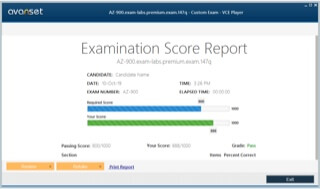
Thanks to ExamCollection, I got some useful dumps that helped me to pass the test and get 801/900. I’m very glad with the results.
Thanks to ExamCollection I finally earned my promotion after passing the exams. Many people ask me questions on how to study for the CompTIA A+ exams. My advice is to use the official guide and the resources from this site. The guide will help you understand the concepts, while the Q&A that you can get here will help you to test your skills. If you apply these two techniques, you will never go wrong.
I have no IT experience but needed A+ to get into the college program. I registered for my exams and read dumps and also books. These resources provided me with good practice, which helped in answering the exam questions. Eventually, I passed both tests on the first try.