
Pass Your RedHat RHCSA Certification Easy!
RedHat RHCSA Certification Exams Questions & Answers, Accurate & Verified By IT Experts
Instant Download, Free Fast Updates, 99.6% Pass Rate.

$69.99
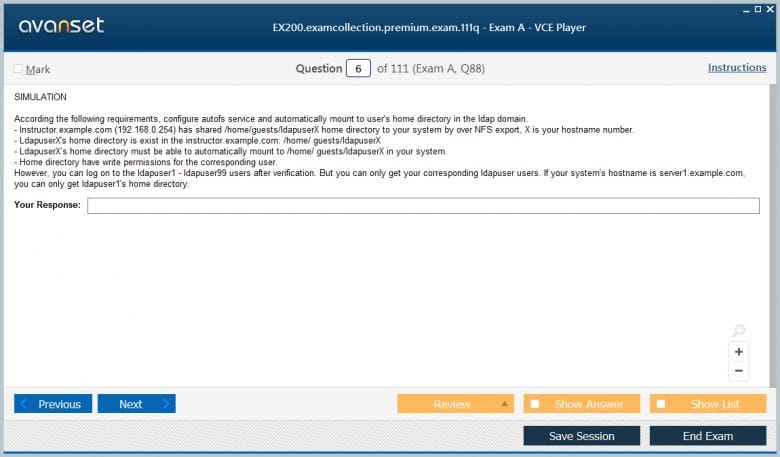
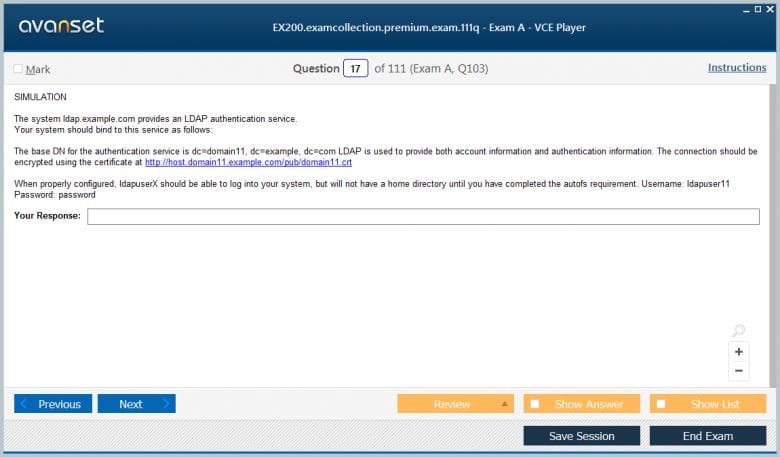
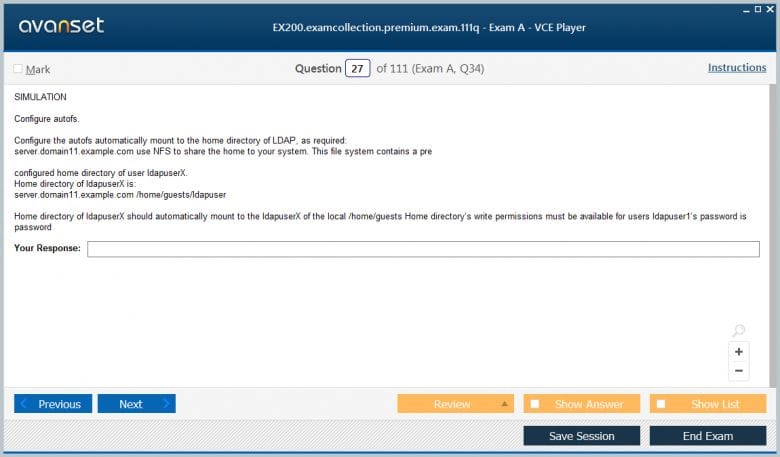
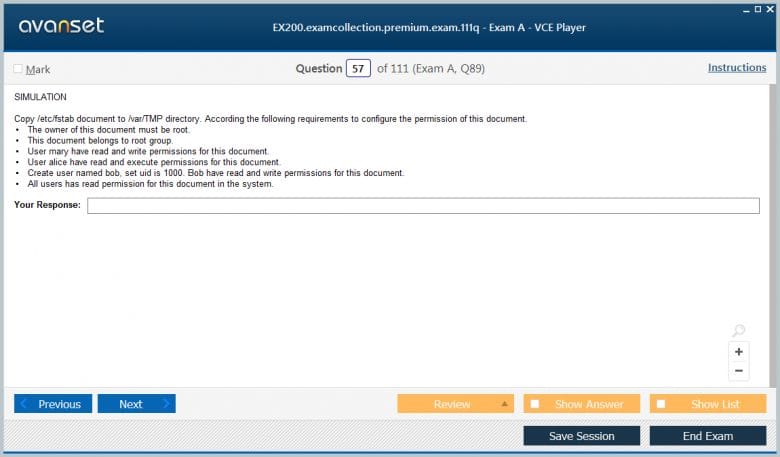
RedHat RHCSA Certification Exams Screenshots
RHCSA Product Reviews
Download Free RHCSA Practice Test Questions VCE Files
| Exam | Title | Files |
|---|---|---|
Exam EX200 |
Title Red Hat Certified System Administrator (RHCSA) |
Files 14 |
RedHat RHCSA Certification Exam Dumps & Practice Test Questions
Prepare with top-notch RedHat RHCSA certification practice test questions and answers, vce exam dumps, study guide, video training course from ExamCollection. All RedHat RHCSA certification exam dumps & practice test questions and answers are uploaded by users who have passed the exam themselves and formatted them into vce file format.
RHCSA in 2026: RHEL 10 Administration and the EX200 Skills That Matter
Red Hat Certified System Administrator remains the practical starting point for Red Hat’s administrator and engineer pathways. In 2026 the EX200 exam is based on Red Hat Enterprise Linux 10 and still uses Red Hat’s performance-based model: candidates work on real systems and are judged on whether the required configuration actually works. That makes RHCSA less about remembering Linux terminology and more about proving that routine administration can be performed accurately under time pressure.
The certification also became more structurally important after Red Hat reorganized its certification framework in May 2026. EX200 now sits at the foundation of both the Enterprise Linux and Ansible tracks. A current RHCSA is required before candidates can progress to Red Hat Certified Engineer paths, including the automation route represented by RHCE. The practical implication is that RHCSA preparation should build habits that remain useful when the work later expands into automation, specialist administration, and architecture.
A strong study plan therefore looks like a small production environment, not a stack of flashcards. Candidates should create users, repair permissions, configure storage, manage services, work with software repositories, troubleshoot boot and networking problems, enforce security controls, and prove that every change survives a reboot. The goal is dependable system state: if the machine is restarted, handed to another administrator, or checked with a different command, the configuration should still be correct.
RHEL 10 changes the lab baseline, not the administrator’s core discipline
Red Hat’s current EX200 objectives are tied to RHEL 10, so candidates should practice on the operating system generation the live exam expects. The release changes some tools and defaults, but the administrator’s underlying responsibilities remain recognizable: navigate the shell, manage files and permissions, install software, control services, configure storage and networking, administer identities, and apply security settings. Studying only older RHEL screenshots can create unnecessary friction when the exam environment behaves differently.
The most effective response is not to memorize every release note. Build a clean RHEL 10 lab and deliberately perform the objectives from a blank system. Keep a short command journal for unfamiliar syntax, but spend more time understanding what the system is doing. If a service will not start, investigate its unit status, logs, configuration, dependencies, ports, and security context instead of reaching for a memorized fix.
Command-line fluency is useful only when it produces verifiable results
Shell speed matters because performance-based exams are timed, but fast typing is not the same as competent administration. Candidates need to move through directories, redirect and filter output, use regular expressions, inspect documentation, create archives, manage links, and edit files without losing track of the system state they are changing. Every command should answer a practical question: what exists, what changed, what failed, and how can the result be verified?
A useful drill is to perform the same task three ways: from memory, with local documentation, and while diagnosing a deliberately introduced error. For example, create a service account, assign group membership, set directory permissions, and then break one permission or ownership setting. The recovery pass teaches more than repeating the happy path because it forces you to read evidence and isolate the difference.
Software management connects repositories, packages, and operational trust
Package installation is simple only when repository access is already healthy. RHCSA candidates should understand how repository definitions, metadata, package signatures, dependencies, and update sources fit together. The ExamCollection article on configuring repositories on Red Hat Enterprise Linux is useful context because package failures often begin with repository configuration rather than the package itself.
Practice with local and remote repositories, enable and disable sources deliberately, install and remove packages, and verify what version is actually present. When an installation fails, check reachability, repository configuration, metadata freshness, entitlement or access conditions, and package naming before assuming the package manager is broken. This is the kind of layered troubleshooting that transfers directly to production work.
Storage questions test planning as much as command syntax
Partitions, logical volumes, swap, and file systems can be unforgiving because a wrong device name or size assumption can damage the environment. Candidates should become comfortable reading the existing block-device layout before changing it, then creating and extending storage without disrupting what is already mounted. RHEL administration often rewards restraint: understand the current topology, identify unused capacity, and make the smallest safe change.
A realistic lab should include standard partitions, LVM, XFS and ext4, swap, persistent mounts, network file systems, and autofs. After every storage change, reboot the machine and confirm that mounts and services return correctly. A configuration that works only until restart is not complete, and Red Hat explicitly expects exam configurations to persist without intervention.
Systemd, boot behavior, and scheduled work reveal whether you understand the running system
Administrators spend much of their time controlling what starts, when it starts, and how to recover when it does not. Candidates should be able to enable and disable services, interpret failed units, choose appropriate targets, inspect logs, and schedule work with cron, at, and systemd timers. These topics are connected: a scheduled job may depend on a service, a service may fail because a mount is missing, and a boot problem may trace back to an invalid persistent configuration.
Practice recovery deliberately. Disable a required service, create a bad mount entry, misconfigure a unit, or interrupt a normal boot path and then restore the system. Recovery skills turn exam pressure into a familiar diagnostic sequence instead of a guessing exercise.
Networking is a small objective area with large consequences
A server can be perfectly configured and still be unusable if its address, route, name resolution, firewall, or service binding is wrong. RHCSA preparation should include IPv4 and IPv6 configuration, hostname resolution, persistent connection settings, service reachability, and firewall rules. Candidates should verify from both sides of a connection whenever possible: the service process may be listening locally while a firewall or network setting still blocks access.
The same layered method applies to troubleshooting. Confirm the interface and address first, then routes and DNS, then listening sockets, then firewalld, then the application. The article on Linux firewall foundations can help connect packet-filtering concepts to the practical firewalld tasks expected in a modern RHEL environment.
Users, privileges, and SELinux make security an everyday administration task
RHCSA security is not an isolated chapter. User accounts, groups, password aging, sudo-style privileged access, SSH keys, file permissions, firewall policy, and SELinux all determine whether a service is both usable and appropriately constrained. Candidates should be able to explain why an access attempt failed instead of disabling controls until it works.
SELinux deserves special attention because it is easy to misdiagnose. Learn to inspect enforcement mode, file and process contexts, port labels, booleans, and audit evidence. Restore the expected context or policy behavior rather than reaching for a permanent permissive setting. In production, weakening SELinux to bypass a configuration mistake trades a visible problem for a quieter security problem.
RHCSA is the foundation for two different engineer directions
Under Red Hat’s 2026 framework, EX200 is the foundational requirement for both Enterprise Linux and Ansible engineer paths. The Ansible progression continues through EX294, while the Enterprise Linux path adds its own advanced administration requirement. Candidates do not need to choose an engineer specialization before taking RHCSA, but they should recognize that strong system knowledge supports both directions.
The broader set of Red Hat certifications is useful for understanding that progression. The important point is not collecting credentials as quickly as possible; it is making sure the next level builds on verified capability. Automation is much easier to learn when you already understand the system state an automation task is meant to create.
A timed lab is the best rehearsal for a performance-based exam
Build several small virtual machines and assign yourself mixed tasks without arranging them by objective. Create a user, extend storage, install a package from a configured repository, expose a service through the firewall, repair an SELinux issue, schedule a recurring command, and make the result survive reboot. Mixed tasks force you to switch context the way real administration work does.
Then repeat the lab from a clean snapshot with less reference material. Do not chase speed until the verification steps are automatic. The strongest candidates know how to prove that a change worked, recognize when it did not, and recover without destroying unrelated configuration. That is exactly the operational discipline a performance-based credential is meant to reveal.
RHCSA remains valuable because it measures ordinary Linux work in an unusually direct way. The credential is current, EX200 is aligned to RHEL 10, and the 2026 Red Hat framework makes the certification an explicit foundation for multiple higher-level paths. Those facts make preparation more straightforward: build real systems, configure them repeatedly, break them intentionally, and learn to read the evidence they produce.
The best final review is a machine you can administer without ceremony. If you can move from an unfamiliar requirement to a safe change, verify the result, and leave the configuration persistent and secure, you are practicing the behavior RHCSA is designed to validate rather than merely studying for a test.
ExamCollection provides the complete prep materials in vce files format which include RedHat RHCSA certification exam dumps, practice test questions and answers, video training course and study guide which help the exam candidates to pass the exams quickly. Fast updates to RedHat RHCSA certification exam dumps, practice test questions and accurate answers vce verified by industry experts are taken from the latest pool of questions.


RedHat RHCSA Video Courses

Top RedHat Certifications
Site Search:




Anyone taking it recently? Is premium valid?
Any updates? how was the premium file?
heey! I used rhcsa premium files for my preparation. it helped me greatly. it is a perfect guideline that will show you what should be in the actual exam
@matic, i used it during my preparation and i scored highly. i am waiting for my rhcsa certification to be in my pocket)
which is the best material to use when identifying the validity of a exams. I need to find best rhcsa training I used the book and it just confused me
who have used rhcsa practice exam, i found many questions familiar to the exam i did though it was too late. please use it in preparation of your forthcoming exam
@idi, the truth concerning rhcsa exam questions and answers is the setting, once you have a clear understanding of how examiners keeps on revolving the same concept with a set of questions then you are done, you can use several materials to achieve this understanding
wonderful...i have all i needed to know concerning the exam, rhcsa study guide pdf is the best material to let you have a clear overview.
please, share the secrets of passing rhcsa certification exam from the certified professionals,,,we are newbies here.
anyone with the latest rhcsa book,,it is an ideal solution to all rhcsa concepts
@chadli, that is great bro,,, i have no success story myself but i will soon do the exam. please share with us the pieces of advice that can help us understand how rhcsa exam questions are set.
the good times that we always remember has a connection with success. i passed my rhcsa exam after going through several materials here and i am glad to affirm this site repeatedly as the best