
Pass Your ITIL V4 Foundation Certification Easy!
ITIL V4 Foundation Certification Exams Questions & Answers, Accurate & Verified By IT Experts
Instant Download, Free Fast Updates, 99.6% Pass Rate.

$69.99
ITIL V4 Foundation Certification Exams Screenshots
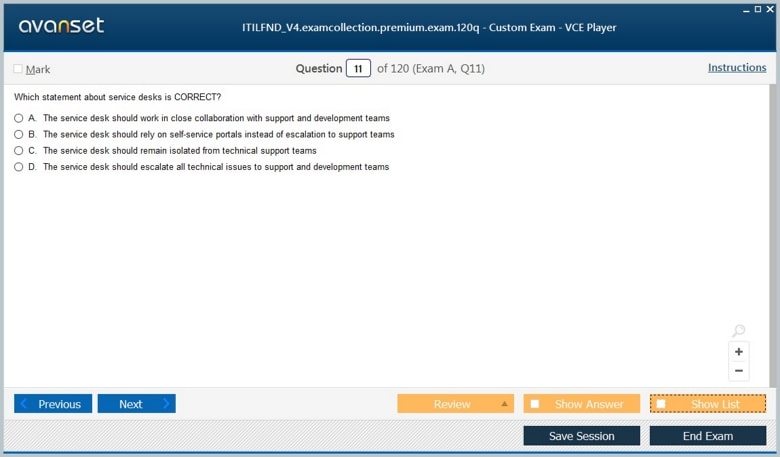
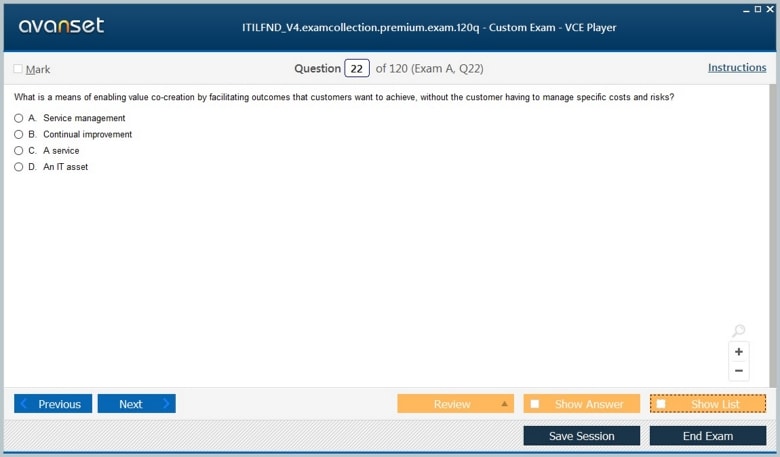
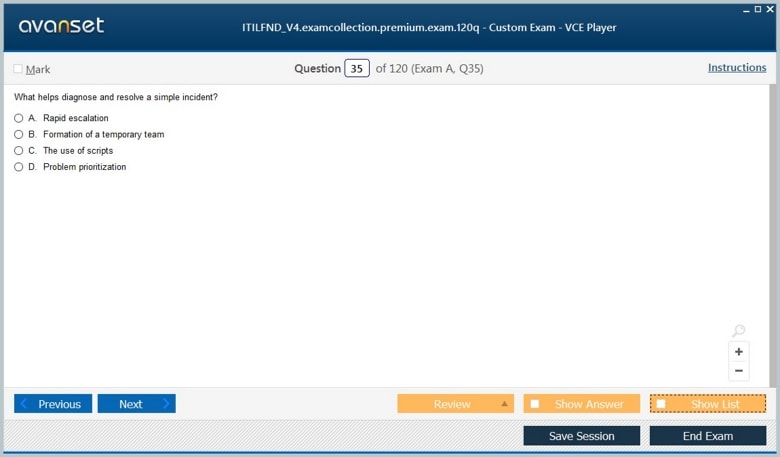
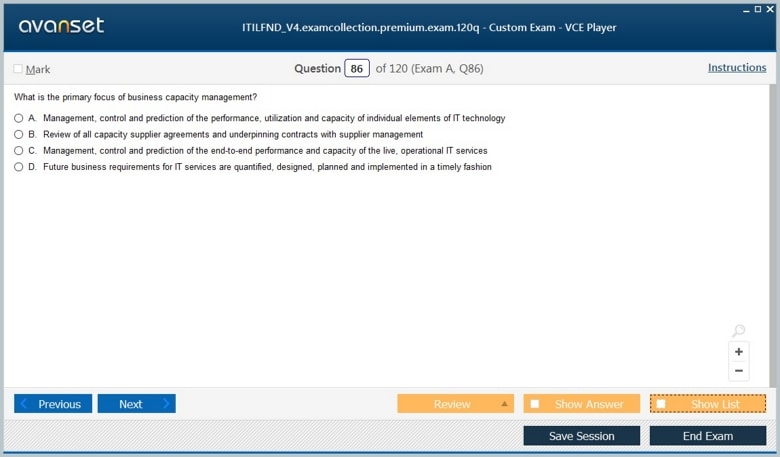
ITIL V4 Foundation Product Reviews
Download Free ITIL V4 Foundation Practice Test Questions VCE Files
| Exam | Title | Files |
|---|---|---|
Exam ITILFND V4 |
Title ITIL 4 Foundation |
Files 12 |
ITIL V4 Foundation Certification Exam Dumps & Practice Test Questions
Prepare with top-notch ITIL V4 Foundation certification practice test questions and answers, vce exam dumps, study guide, video training course from ExamCollection. All ITIL V4 Foundation certification exam dumps & practice test questions and answers are uploaded by users who have passed the exam themselves and formatted them into vce file format.
ITIL 4 Foundation in 2026: Active, but in Transition
ITIL 4 Foundation remains an active certification in September 2026, even though PeopleCert has already launched ITIL Foundation (Version 5). That makes ITILFND-V4 unusual: it is still valid study material for candidates who intentionally choose the ITIL 4 route, but it is no longer the newest Foundation credential. PeopleCert currently plans to sunset ITIL 4 modules on December 31, 2027, giving learners and organizations time to complete existing paths and move into the new scheme deliberately.
Within the ITIL certifications, the exam itself remains familiar: 40 multiple-choice questions, 60 minutes, closed book, with a 65% pass mark. The knowledge it tests is also still highly relevant. The Service Value System, guiding principles, four dimensions, service value chain, continual improvement model, and management practices remain important foundations for contemporary service management. The key 2026 question is therefore not whether ITIL 4 suddenly became obsolete. It is whether a learner should finish an existing ITIL 4 plan or begin directly with ITIL Foundation Version 5.
ITIL 4 replaced process-first thinking with a value system
The central intellectual change in ITIL 4 was the move away from treating service management as a collection of lifecycle processes. The Service Value System shows how guiding principles, governance, the service value chain, practices, and continual improvement work together to create value. This is important because real service work crosses team and process boundaries. A customer outcome may depend on product development, security, infrastructure, support, suppliers, and business decision-makers at the same time.
For Foundation candidates, the best way to study the Value System is as a set of relationships. Governance gives direction. The value chain provides flexible activities. Practices provide capabilities. Guiding principles shape decisions. Continual improvement keeps the whole system adaptive. Questions become easier when those connections are understood rather than memorized as a diagram.
The seven guiding principles are decision tools
Focus on value, start where you are, progress iteratively with feedback, collaborate and promote visibility, think and work holistically, keep it simple and practical, and optimize and automate are intentionally broad. Their value comes from helping practitioners reason through different situations. A team replacing a functioning tool without assessing the current state may violate “start where you are.” A large transformation with no usable feedback until the end ignores iterative progress. Automation applied to a broken workflow can simply make waste happen faster.
Candidates should practice explaining when principles reinforce one another. “Optimize and automate” should normally follow an understanding of value and current performance. “Collaborate and promote visibility” helps expose constraints and dependencies needed for holistic improvement. The principles are not slogans to select by keyword; they are lenses for evaluating choices.
The four dimensions prevent narrow solutions
Organizations and people, information and technology, partners and suppliers, and value streams and processes are the four dimensions of service management. They exist to prevent a technically correct solution from failing because the human, supplier, information, or workflow implications were ignored. A new monitoring platform, for example, may be excellent technology but still fail if roles are unclear, data is noisy, suppliers are not integrated, or escalation paths create delay.
Foundation questions often reward the answer that considers the whole operating system. This is one reason ITIL 4 remains relevant even as Version 5 advances the framework. Digital work is socio-technical. Tools, people, contracts, data, processes, and organizational incentives interact, and service-management decisions need to account for those interactions.
The service value chain is deliberately flexible
Plan, improve, engage, design and transition, obtain/build, and deliver and support are not meant to be executed as one fixed sequence. Different value streams combine the activities in different ways. A standard access request may move through a simple flow. A major new digital service may require repeated cycles of engagement, design, build, transition, delivery, and improvement.
Candidates should resist turning the value chain into the old lifecycle with new labels. Its purpose is to support adaptable value streams. When studying, take a real activity—onboarding a user, resolving a major incident, releasing an application update—and ask which value-chain activities contribute and where feedback enters the system.
Practices broaden the old process model
ITIL 4 defines general management, service management, and technical management practices. The exam does not require Foundation candidates to master each practice at specialist depth, but it does require understanding the purpose and key terms of important practices. Incident management aims to restore normal service quickly. Problem management reduces the likelihood and impact of incidents by managing causes and workarounds. Change enablement helps maximize successful changes by assessing risk and authorizing change appropriately.
The shift from processes to practices matters because a practice includes people, information, technology, suppliers, and workflows. Modern problem management illustrates this broader view: effective problem work may combine technical analysis, knowledge, supplier input, trend data, and communication rather than following one isolated process.
ITIL 4 and DevOps are not opposites
ITIL 4 was designed to coexist with agile, lean, DevOps, cloud, and product-oriented delivery. The framework does not require a slow approval culture. It asks organizations to manage risk, value, flow, and improvement sensibly. A high-performing team can use automated testing, deployment pipelines, observability, and pre-authorized low-risk changes while still applying service-management discipline.
The conflict usually appears when organizations implement ITIL mechanically. If change enablement is reduced to a committee approving every routine deployment, it can become a bottleneck. If incident management is measured only by ticket closure, teams may optimize metrics instead of service restoration. Foundation study should therefore distinguish the intent of ITIL from poor local implementations.
Why ITIL 4 is still worth studying during the transition
Organizations with large ITIL 4 programs will continue to use its language for years. Existing higher-level pathways such as Create, Deliver and Support also remain relevant until the planned 2027 sunset. Someone already deep into an ITIL 4 program may reasonably finish a planned module rather than abandon it immediately. In addition, Version 5 builds on concepts that ITIL 4 made mainstream, so the learning is not discarded.
The decision is different for a brand-new candidate with no existing commitments. In that case, the current Version 5 Foundation exam is usually the more future-facing entry point. The availability of a bridge route for eligible ITIL 4 holders reduces the risk of being trapped, but candidates should still choose intentionally.
Start with the Service Value System and guiding principles, then add the four dimensions and value chain. Once that skeleton is clear, place the practices onto it. Use scenarios to practice deciding what should happen next and why. Avoid study plans that treat every term as equally important. The Foundation exam tests broad understanding and application at an introductory level, not specialist operational detail.
Timed practice should be used to verify fluency. Forty questions in one hour is comfortable if a candidate can identify the concept quickly, but confusing if every question triggers a search through memorized definitions. A focused ITIL 4 Foundation study strategy can support revision, while official objectives should determine what is actually in scope.
Plan the transition instead of ignoring it
ITIL 4 certification holders should pay attention to the new qualification map, their certification renewal dates, and PeopleCert’s bridge options. The planned December 31, 2027 sunset does not mean every certificate becomes worthless on that day, but it does mean the training and examination ecosystem is moving to Version 5. Organizations should update learning roadmaps before old modules become unavailable rather than waiting for the deadline.
For individuals, the best plan is role-based. Finish ITIL 4 work that provides immediate value if the timeline makes sense, then bridge or move into Version 5 where appropriate. The framework is evolving, but the professional goal remains the same: improve how digital products and services create value, manage risk, support users, and change over time.
ITIL 4 Foundation continues to use a 40-question, 60-minute, closed-book multiple-choice exam with a 65% passing score. That format encourages broad conceptual fluency. Candidates do not need specialist depth in every practice, but they do need to recognize the purpose of the major components quickly enough to apply them to short scenarios. The best preparation therefore combines vocabulary review with scenario practice rather than spending all study time on flashcards.
PeopleCert also applies a three-year renewal cycle to current ITIL certifications. Renewal can be supported through continuing professional development or by completing additional qualifying certification activity. Anyone choosing ITIL 4 during the transition should consider both the certificate renewal timeline and the planned 2027 module sunset so that follow-on study does not collide with a retiring exam path.
Use Version 5 as a comparison, not a reason to dismiss ITIL 4
The arrival of Version 5 can actually improve ITIL 4 study because it highlights which concepts proved durable. Value, guiding principles, holistic dimensions, flexible value streams, continual improvement, governance, and practices remain central ideas. Version 5 extends the model toward more explicit digital product and lifecycle thinking rather than declaring that ITIL 4 was a mistake.
Candidates who understand that continuity are less likely to memorize version-specific wording mechanically. They can ask what management problem a concept solves and how the newer scheme develops it. That produces knowledge that survives framework updates and is more useful at work.
ExamCollection provides the complete prep materials in vce files format which include ITIL V4 Foundation certification exam dumps, practice test questions and answers, video training course and study guide which help the exam candidates to pass the exams quickly. Fast updates to ITIL V4 Foundation certification exam dumps, practice test questions and accurate answers vce verified by industry experts are taken from the latest pool of questions.

ITIL ITIL V4 Foundation Video Courses
Top ITIL Certifications

Top ITIL Certification Exams
- ITILFND V5
- ITILFND V4
- ITIL 4 Specialist Create Deliver and Support
- ITIL 4 Strategist Direct and Plan and Improve
- ITIL 4 Leader Digital and IT Strategy
- ITIL V5 Transformation
- ITIL 4 Specialist Collaborate Assure and Improve
- ITIL 4 Specialist - IT Asset Management
- ITIL 4 Specialist Drive Stakeholder Value
- ITIL4 Specialist - Monitor and Support and Fulfil
- ITIL 4 BRM
- ITIL 4 Specialist High-Velocity IT
- ITIL 4 Specialist Plan Implement and Control
Site Search:



Is this ITIL v4 premium dump valid?
Premium Dump is good, I missed only 2 questions, I passed today January 21, 2022 with a score of 95%
It's useful and good.