



Premium File
71 Q&A
$76.99$69.99
GIAC GASF Exam Questions & Answers, Accurate & Verified By IT Experts
Instant Download, Free Fast Updates, 99.6% Pass Rate
71 Questions & Answers
Last Update: Oct 29, 2026
$69.99
GIAC GASF Exam Screenshots
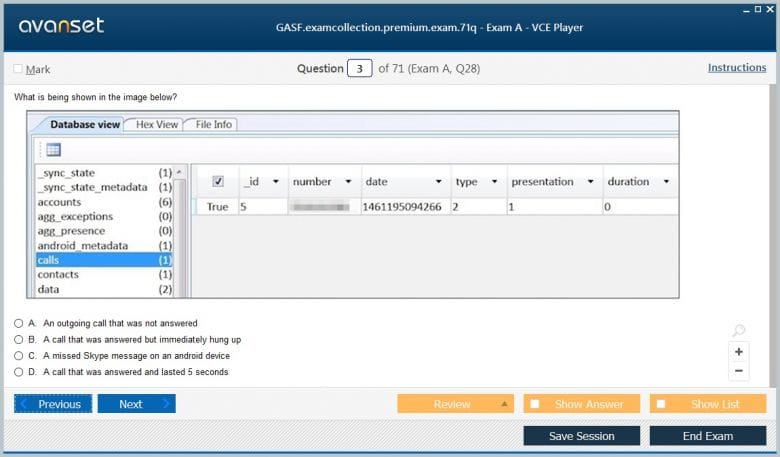
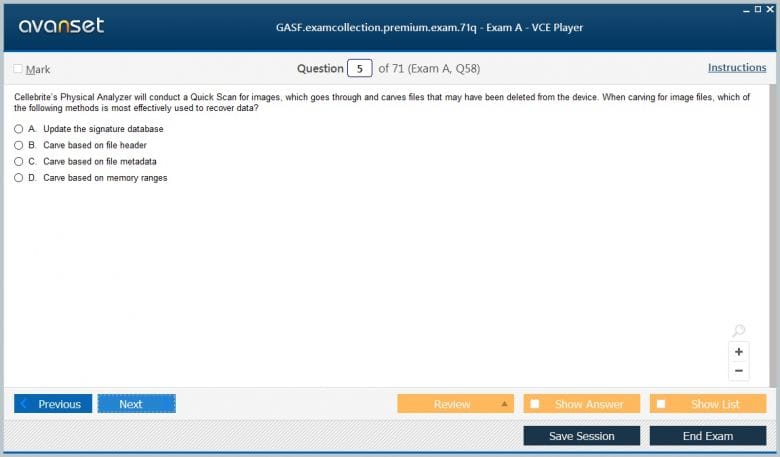
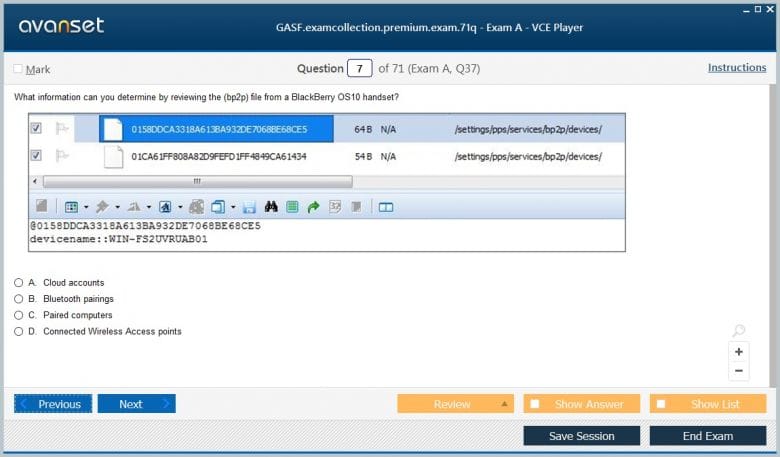
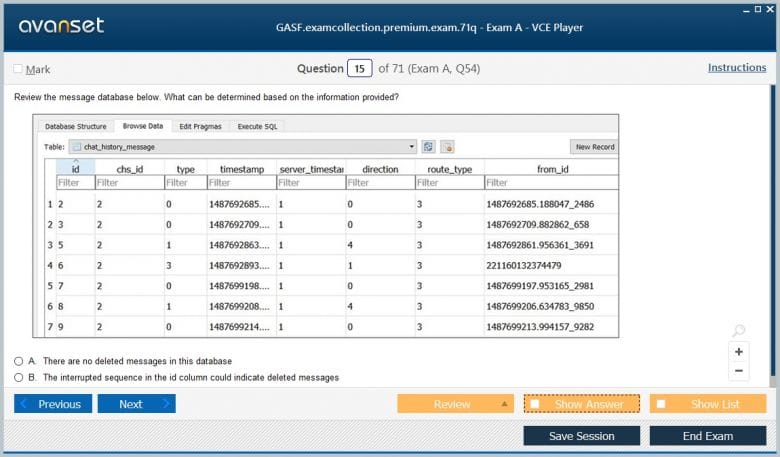
GIAC GASF Practice Test Questions in VCE Format
| File | Votes | Size | Date |
|---|---|---|---|
File GIAC.Train4sure.GASF.v2026-09-10.by.Amir.40q.vce |
Votes 2 |
Size 1.65 MB |
Date Sep 13, 2026 |
GIAC GASF Practice Test Questions, Exam Dumps
GIAC GASF (GIAC Advanced Smartphone Forensics (GASF)) exam dumps vce, practice test questions, study guide & video training course to study and pass quickly and easily. GIAC GASF GIAC Advanced Smartphone Forensics (GASF) exam dumps & practice test questions and answers. You need avanset vce exam simulator in order to study the GIAC GASF certification exam dumps & GIAC GASF practice test questions in vce format.
The GIAC Advanced Smartphone Forensics certification, GASF, is a current practitioner credential for investigators who need to collect and analyze evidence from smartphones and tablets. GIAC’s current objectives span Android and Apple file-system artifacts, application analysis, mobile-device file formats and databases, event artifacts, and mobile malware. The exam is not limited to “finding deleted texts.” It tests whether the examiner can move from acquisition through interpretation while understanding how modern mobile operating systems and applications actually store evidence.
GASF sits inside GIAC’s digital-forensics focus area. The broader GIAC certifications family helps place it beside Windows and advanced incident-response credentials. Candidates often benefit from comparing its mobile emphasis with GCFE Windows forensics and GCFA advanced incident response, because the investigative discipline is shared even when the artifacts and acquisition constraints differ.
The examiner must also consider what an acquisition method may change. Unlocking a device, installing an agent, connecting it to a workstation, or allowing it to boot can alter timestamps and application state. In some situations a live collection is still necessary because volatile or decrypted information would otherwise disappear, but that trade-off should be deliberate and documented. A defensible mobile examination records the device condition, acquisition path, tool versions, access method, and any actions that could have modified evidence so later conclusions can be evaluated in context.
Mobile acquisition is not one universal process. The examiner must consider device model, operating-system version, lock state, encryption, available credentials, management controls, backups, cloud synchronization, and legal authority. A logical extraction, file-system acquisition, backup, or other collection method can expose different data. Choosing the most invasive technique first can destroy opportunities that a more careful sequence would preserve.
Preparation should therefore begin with acquisition planning. Identify what evidence is needed, what methods are supported, what can change on the device, and how the collection will be documented. A defensible investigation records tool versions, timestamps, device identifiers, hashes where appropriate, and any actions taken on the handset. The examiner should be able to explain not only what was recovered but how the acquisition method affects the meaning of the result.
Android and iOS both use structured file systems, but investigators rarely work by browsing directories at random. The objective is to recognize where user data, application containers, preferences, caches, databases, media, logs, and system artifacts are likely to reside. Permissions and sandboxing also matter because the operating system deliberately isolates applications and sensitive data.
File-system context prevents false conclusions. A timestamp on a cached file may describe download or refresh activity rather than the moment a user viewed content. A database can retain records after the interface stops showing them. An application container can include configuration, tokens, and attachments with different lifecycles. Good forensic analysis links the artifact to the process that created it.
Schema-level analysis matters because the visible application is only one interpretation of the stored data. Tables may retain identifiers, timestamps, status flags, deleted rows, or relationship keys that are not shown in the user interface. The examiner should identify how records relate before assigning meaning to a single field. Time conversion is especially important: epoch choices, time zones, and application-specific representations can shift an event if they are assumed rather than verified. Cross-checking the same event against another artifact can expose a mistaken interpretation early.
Mobile applications commonly store information in structured formats such as SQLite databases, property lists, JSON, and application-specific files. Candidates should be comfortable identifying a format, examining its schema, and correlating fields instead of treating the forensic tool’s parsed view as the only source of truth. When a parser produces an unexpected record, looking at the underlying structure can show whether the problem is tool interpretation, application-version change, or genuinely unusual data.
SQLite deserves particular attention because deleted or historical information may exist beyond the obvious active rows. Journaling behavior, write-ahead logs, and unallocated database content can add context, though recovery depends on how the application and operating system have used the file. The broader discussion of cyber-forensics techniques reinforces the same principle: tools accelerate examination, but artifact interpretation still requires understanding the underlying data source.
Android examinations also benefit from separating platform artifacts from manufacturer or application customizations. Account data, package information, notifications, usage records, location-related artifacts, and media databases can provide broad context, while each application may maintain its own databases and caches. Version differences matter because storage locations, permissions, and encryption behavior evolve. An examiner should document the OS version and device context before applying a known artifact interpretation, then validate important conclusions against another source when possible rather than assuming that one parser or path applies uniformly to every handset.
Android investigations can involve account information, call and message artifacts, application databases, browser activity, location-related data, notifications, media, and system records. The exact locations and accessibility of those artifacts vary across Android versions and device vendors. Candidates should avoid memorizing one directory as if it were permanent. Instead, understand the relationship between application package, user profile, protected storage, shared media, and operating-system services.
Third-party apps are especially important because modern communication often bypasses traditional SMS and voice logs. An examiner may need to reconstruct activity from app databases, attachments, caches, notification records, and metadata. The challenge is to distinguish user-generated content from sync artifacts or automatic background activity. That distinction turns a raw extraction into a defensible timeline.
Apple devices use strong platform security and application sandboxing, so acquisition options and artifact availability can vary substantially with device state and operating-system version. Investigators should understand the role of application containers, preferences, key databases, backups, and system-level records. A backup can be valuable, but it is not equivalent to a complete file-system acquisition, and its omissions need to be understood before conclusions are drawn.
iOS applications can leave evidence in SQLite databases, property lists, caches, attachments, and synchronized data. Apple ecosystem services may also connect phone activity with cloud accounts or other devices. Examiners need to preserve the distinction between data physically present on the device and data obtained through another lawful source. That provenance becomes important when a timeline is challenged.
A useful app examination asks what the application can do and where those actions leave traces. Messaging, mapping, ride sharing, social media, cloud storage, authentication, and financial apps create very different evidence patterns even when they all store SQLite databases and preference files. Investigators should combine package identifiers, container paths, account records, caches, databases, notifications, and network-related artifacts into a behavioral model. That approach helps separate a meaningful record from background application activity and makes the resulting timeline easier to explain.
Two applications with similar user-facing features can store evidence very differently. One may retain message bodies locally, another may keep only metadata, and a third may encrypt content with keys unavailable in the extraction. Candidates should learn a repeatable method: identify the application and version, locate its data stores, understand the schema, test how normal actions change the data, and compare those observations with the evidence.
That process is especially valuable when forensic tools have not yet added a parser for a new application version. The examiner who understands raw files and databases can continue working while a tool-dependent workflow stalls. It also reduces the risk of accepting a convenient label that the parser derived incorrectly from an unfamiliar schema.
Mobile malware can also abuse legitimate platform features, so the presence of a suspicious application is not the whole analysis. Permissions, accessibility services, device-admin privileges, persistence mechanisms, network destinations, installed certificates, and evidence of sideloading can show what the software was capable of doing. Static indicators should be compared with device artifacts that demonstrate execution or communication. The goal is to move from 'this package is known to be malicious' to a device-specific account of what happened and what information may have been affected.
GASF includes the identification and analysis of mobile malware. The forensic task is to determine what the suspicious application or process did, what permissions it obtained, what data it accessed, how it communicated, and what persistence or command-and-control behavior is visible. Static information such as package metadata and code can be combined with dynamic observations and recovered artifacts.
Malware evidence should be correlated with the rest of the case. A suspicious domain in application data is stronger when network records, browser artifacts, notifications, or process evidence show related activity. The same principle appears in broader malware analysis: the goal is not to label a file “bad,” but to explain behavior and impact with evidence.
GIAC currently lists GASF as a 75-question, two-hour proctored exam with a 69 percent passing score, while also warning that specifications can change. The more durable preparation target is the published objective set. Build practice around acquisition choices, file-system navigation, Android and iOS artifacts, third-party application analysis, databases, event timelines, and malware evidence.
Use hands-on datasets whenever possible. Recover an artifact, identify its source file, validate how the application created it, and explain its evidentiary limits. Related material on digital-forensics certification paths can help place GASF within a larger skills plan, but the credential itself rewards depth in mobile evidence. The best candidate can move from a device image to a defensible story without treating any parser output as unquestionable truth.
Go to testing centre with ease on our mind when you use GIAC GASF vce exam dumps, practice test questions and answers. GIAC GASF GIAC Advanced Smartphone Forensics (GASF) certification practice test questions and answers, study guide, exam dumps and video training course in vce format to help you study with ease. Prepare with confidence and study using GIAC GASF exam dumps & practice test questions and answers vce from ExamCollection.
Purchase Individually
Site Search:

SPECIAL OFFER: GET 10% OFF

Pass your Exam with ExamCollection's PREMIUM files!
SPECIAL OFFER: GET 10% OFF
Use Discount Code:
MIN10OFF
A confirmation link was sent to your e-mail.
Please check your mailbox for a message from support@examcollection.com and follow the directions.

Download Free Demo of VCE Exam Simulator
Experience Avanset VCE Exam Simulator for yourself.
Simply submit your e-mail address below to get started with our interactive software demo of your free trial.