
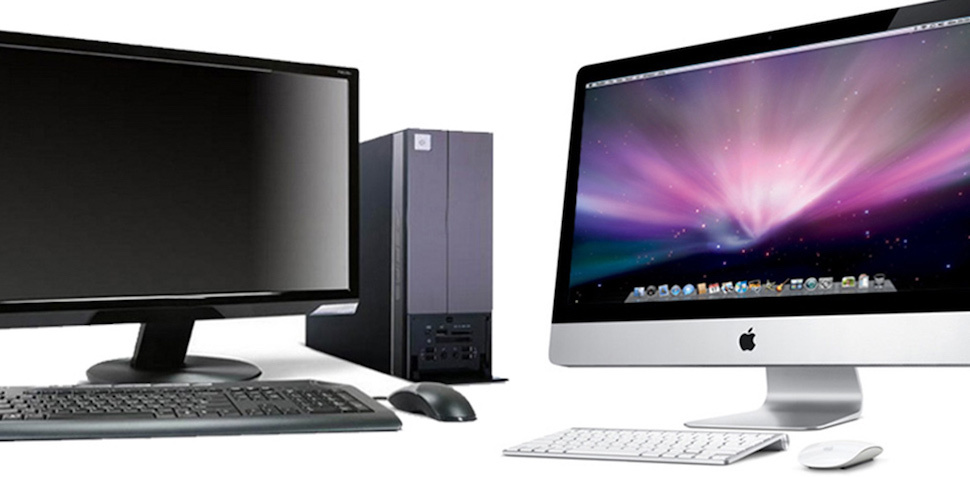
IBM News: Mac Is $543 Cheaper to Work Than PC
IBM’s internal research into the total cost of ownership of Mac computers versus Windows PCs produced findings that surprised many within the corporate technology world. The conclusion drawn from IBM’s own large-scale deployment experience was striking in its clarity: Mac computers cost approximately $543 less per user over a comparable period than their Windows PC counterparts. This finding came from one of the world’s largest and most respected technology organizations, giving the data a level of credibility that independent studies or vendor-commissioned research simply could not match.
The significance of this announcement extended far beyond a simple price comparison. IBM’s finding challenged decades of conventional wisdom within enterprise IT departments that had long assumed Windows PCs represented the most economical choice for large-scale corporate deployments. When a company of IBM’s scale and technical sophistication reaches a conclusion this definitive about platform economics, the entire enterprise technology community takes notice and begins reassessing its own assumptions about device procurement strategy.
How IBM Arrived at the $543 Cost Difference Figure
The $543 figure did not emerge from a theoretical model or a vendor-sponsored calculation but from IBM’s direct operational experience managing one of the largest enterprise Mac deployments in the world. IBM began deploying Mac computers to its workforce as part of a broader initiative to give employees greater device choice, and this real-world deployment generated authentic cost data that revealed the true economics of supporting each platform at scale. The cost difference was calculated by comparing the total expenses associated with supporting Mac users against those associated with supporting Windows PC users across comparable time periods.
The calculation incorporated multiple cost dimensions including hardware procurement, software licensing, helpdesk support costs, deployment and configuration expenses, and the time spent by IT staff managing and maintaining each platform. When all of these factors were combined and analyzed at the scale of IBM’s workforce, the cumulative advantage of the Mac platform emerged clearly and consistently. The methodology grounded in actual operational data rather than projections made the $543 figure particularly compelling and difficult to dismiss.
Support Cost Differences That Drove the Economic Advantage
One of the most significant contributors to the cost difference IBM identified was the substantially lower support burden associated with Mac users compared to Windows PC users. IBM’s data showed that Mac users generated far fewer helpdesk calls and support tickets than their Windows counterparts, meaning that the IT support resources required to maintain Mac users in productive working condition were considerably smaller. This difference in support demand translated directly into measurable cost savings when calculated across thousands of employees.
The reasons behind this support difference were multiple and interconnected. Mac users reported fewer software conflicts, fewer malware incidents, fewer driver compatibility issues, and fewer operating system stability problems than Windows users. Each of these problem categories represents not only direct IT labor costs but also indirect productivity costs when employees are unable to work effectively while waiting for technical assistance. IBM’s data captured both dimensions of this cost difference, making the total advantage of the Mac platform even more substantial than hardware procurement comparisons alone would suggest.
Employee Satisfaction and Its Connection to Productivity Economics
IBM’s research extended beyond pure cost accounting to examine employee satisfaction with their computing devices, and the findings in this dimension further strengthened the case for Mac deployment. Employees who used Mac computers reported higher satisfaction levels with their devices than those using Windows PCs, and this satisfaction difference carried genuine economic implications. Satisfied employees who are comfortable with their tools spend less time frustrated by technical issues and more time focused on productive work.
The relationship between device satisfaction and productivity is difficult to quantify precisely, but IBM’s scale of deployment allowed patterns to emerge clearly from the data. Employees who received their preferred device, particularly when that preference was for Mac, demonstrated lower turnover intentions and higher engagement scores in internal surveys. Talent retention is a significant cost factor for large organizations, and any device policy that measurably influences employee satisfaction therefore has financial implications that extend well beyond the IT budget into human resources economics.
Security Advantages of the Mac Platform in Enterprise Environments
Security represented another dimension where IBM’s experience with Mac deployment revealed meaningful cost advantages over Windows PCs. The Mac platform’s historically lower malware exposure rate compared to Windows translated into reduced spending on endpoint security software, fewer security incident responses, and lower risk of the catastrophic costs associated with significant security breaches. For an organization of IBM’s size and the sensitivity of the data it manages, security economics are not a minor consideration but a major factor in total cost of ownership calculations.
IBM’s IT security team observed that Mac computers required less intensive endpoint security management than Windows machines, freeing security staff to focus on higher-value protective activities rather than routine malware remediation. The underlying security architecture of macOS, combined with its smaller share of targeted malware compared to Windows, created a measurably safer computing environment that required less reactive management. This security advantage compounded over time as the threat landscape continued to evolve in ways that disproportionately targeted the Windows platform.
The Role of Self-Service in Reducing Mac Support Overhead
A particularly interesting finding within IBM’s Mac deployment experience was the significantly higher rate of self-service among Mac users compared to Windows PC users. Mac users were more likely to resolve technical issues independently without contacting the helpdesk, and they were more successful when attempting self-service resolutions. This behavioral difference reduced the volume of support interactions required and allowed IBM’s IT support organization to operate more efficiently despite supporting a large and growing Mac user population.
The Mac App Store and macOS’s intuitive application management tools contributed to this self-service capability by making software installation, updates, and basic troubleshooting more accessible to non-technical users. IBM enhanced this capability by deploying self-service portals that allowed Mac users to install approved software and access support resources without IT intervention. The combination of macOS usability and IBM’s self-service infrastructure created a support model for Mac users that was genuinely less labor-intensive than the equivalent Windows support model.
Deployment Efficiency Advantages When Onboarding New Employees
The process of deploying a new computer to an employee, including configuring the operating system, installing required software, applying security policies, and verifying that everything works correctly, represents a significant operational cost in any large organization. IBM’s experience showed that Mac deployment was faster and required less IT labor than equivalent Windows PC deployment, contributing meaningfully to the overall cost advantage. A faster, more automated deployment process also meant that new employees became productive more quickly, reducing the hidden cost of onboarding delays.
Apple’s deployment tools, including Device Enrollment Program integration and mobile device management compatibility, enabled IBM to automate large portions of the Mac setup process in ways that reduced hands-on IT involvement significantly. New Mac computers could be shipped directly to employees and configured automatically upon first activation, a workflow that required far less IT labor than traditional Windows deployment processes. This deployment efficiency advantage was particularly valuable for an organization of IBM’s size, where the cumulative savings from faster deployment multiplied across thousands of annual device deployments.
Software Licensing Considerations in the Cost Comparison
Software licensing is a complex dimension of enterprise computing costs, and IBM’s analysis examined how licensing expenses differed between Mac and Windows environments. While some enterprise software carries equivalent licensing costs across platforms, the overall software licensing profile of Mac deployments in IBM’s environment was found to be favorable compared to Windows. Part of this advantage came from the productivity software bundled with macOS at no additional cost, which reduced the need for separately licensed equivalent applications.
The App Store volume purchasing program also provided IBM with cost-effective mechanisms for deploying Mac applications across the organization without the complex licensing management overhead associated with many Windows enterprise applications. IBM’s analysis found that the total software licensing costs associated with their Mac users, when calculated on a per-user basis and including all required applications, compared favorably to the equivalent costs for Windows users. This licensing advantage contributed to the overall $543 cost difference alongside the more prominently discussed support and security savings.
IBM’s Internal Scale as a Validation of the Findings
The credibility of IBM’s cost comparison findings derives substantially from the scale at which they were generated. IBM deployed Mac computers to tens of thousands of employees, creating a dataset large enough to produce statistically meaningful conclusions rather than anecdotal impressions. At this scale, genuine patterns in support costs, security incidents, deployment efficiency, and employee satisfaction emerged clearly from the noise of individual variation, giving the $543 figure a robustness that smaller studies cannot achieve.
IBM’s position as a technology services company with deep expertise in enterprise IT management further strengthened the credibility of its findings. This was not an organization unfamiliar with the complexities of enterprise computing or likely to overlook important cost factors. IBM’s IT organization approached the Mac versus PC cost comparison with the same analytical rigor it would apply to any significant business question, and the resulting findings reflected that methodological discipline. The combination of scale and expertise made IBM’s cost comparison one of the most authoritative assessments of enterprise Mac economics ever conducted.
Industry Reactions to IBM’s Cost Comparison Announcement
The announcement of IBM’s findings generated substantial discussion and debate across the enterprise technology industry. IT leaders at other large organizations began examining their own cost data with fresh eyes, questioning whether assumptions about Windows PC economics that had guided procurement decisions for years were actually supported by current evidence. Some organizations accelerated existing Mac pilot programs or initiated new ones specifically to generate their own cost data comparable to what IBM had reported.
Predictably, the announcement also generated skeptical responses from those who questioned whether IBM’s experience was generalizable to other organizational contexts. Critics pointed out that IBM’s workforce demographics, software requirements, and IT management practices might differ sufficiently from other organizations to limit the applicability of its specific cost figures. While this skepticism was reasonable, even skeptics acknowledged that IBM’s findings raised important questions about enterprise device economics that deserved serious examination rather than dismissal.
What the Findings Meant for Enterprise Technology Strategy
IBM’s cost comparison findings had meaningful implications for enterprise technology strategy that extended beyond simple device procurement decisions. Organizations that had historically maintained Windows-only environments began reconsidering whether that uniformity was genuinely serving their financial interests or whether it represented an inherited assumption that had never been rigorously examined. The possibility of achieving significant per-user savings through platform diversification became a legitimate strategic consideration rather than a peripheral curiosity.
The findings also contributed to broader conversations about employee choice programs in enterprise technology. If allowing employees to choose between Mac and PC platforms resulted in higher satisfaction, lower support costs, and better security outcomes, then the administrative complexity of supporting multiple platforms might be justified by the measurable returns. IBM’s experience suggested that employee choice programs, when well-designed and properly supported, could deliver net positive outcomes that justified their implementation and management costs.
Apple’s Enterprise Push and Its Alignment With IBM’s Experience
IBM’s cost comparison findings did not exist in isolation but aligned with a broader strategic relationship between IBM and Apple that had been developing over the preceding years. The two companies had entered into a significant partnership aimed at accelerating Mac adoption in enterprise environments, with IBM agreeing to deploy and support Mac computers for its own workforce and for client organizations. IBM’s cost findings effectively validated the business case for this partnership and provided Apple with powerful enterprise-facing evidence that its products delivered measurable value at scale.
Apple had been investing in enterprise capabilities for several years prior to IBM’s announcement, improving its mobile device management support, enhancing security features, and building deployment tools specifically designed for large-scale corporate environments. IBM’s experience validated these investments by demonstrating that organizations willing to deploy Mac at enterprise scale could achieve genuine cost advantages. The alignment between IBM’s findings and Apple’s enterprise strategy narrative was not coincidental but reflected the genuine improvements Apple had made to its platform’s enterprise readiness.
Long Term Implications for Corporate Device Procurement Policies
The long-term implications of IBM’s cost comparison findings for corporate device procurement policies continued to unfold in the years following the announcement. Organizations that had previously maintained rigid Windows-only policies began developing more flexible frameworks that accommodated Mac computers for employees whose roles were well-suited to the platform. This shift represented a significant cultural change in enterprise IT departments that had long treated Windows uniformity as an operational necessity rather than a policy choice.
Procurement teams began incorporating total cost of ownership calculations into device selection decisions with greater sophistication, moving beyond simple hardware purchase price comparisons to account for support costs, security expenses, deployment efficiency, and productivity factors. IBM’s methodology for calculating the true cost difference between platforms influenced how other organizations approached these calculations, raising the analytical standard for device procurement decision-making across the industry.
Lessons That Other Organizations Could Draw From IBM’s Experience
The lessons available to other organizations from IBM’s Mac deployment experience extended beyond the specific cost figures to encompass broader insights about enterprise technology management. One of the most important lessons was that long-held assumptions about platform economics deserved periodic empirical examination rather than perpetual acceptance. IBM’s willingness to analyze its own cost data rigorously and act on the findings demonstrated the kind of evidence-based technology management that drives genuine organizational efficiency.
Another lesson concerned the relationship between employee experience and total cost of ownership. IBM’s findings illustrated clearly that devices which are easier to use, more reliable, and better suited to employee preferences generate lower support costs and higher productivity, creating a virtuous economic cycle. Organizations that prioritize employee experience in technology procurement decisions are not sacrificing fiscal responsibility but making a sophisticated investment whose returns manifest across multiple cost dimensions simultaneously.
Conclusion
IBM’s announcement that Mac computers cost approximately $543 less per user than Windows PCs represented one of the most consequential data points in enterprise technology management discussions of its era. Coming from an organization with the scale, expertise, and credibility of IBM, this finding could not be easily dismissed or attributed to vendor bias. It reflected genuine operational experience with tens of thousands of deployed devices, calculated across multiple cost dimensions including support labor, security management, deployment efficiency, software licensing, and employee productivity.
The broader significance of IBM’s findings lies not merely in the specific dollar figure but in what it revealed about the importance of rigorous, evidence-based thinking in enterprise technology decision-making. For decades, Windows PC dominance in corporate environments had been treated as an economic inevitability rather than a choice subject to ongoing scrutiny. IBM’s cost comparison demonstrated that this assumption deserved challenge and that the evidence, when examined carefully at scale, pointed toward a different and more nuanced conclusion.
The ripple effects of IBM’s announcement continued to influence enterprise technology strategy long after the initial news cycle, contributing to the broader adoption of Mac computers in corporate environments and inspiring other organizations to conduct their own honest assessments of device platform economics. The methodology IBM employed, combining procurement costs with support expenses, security costs, deployment efficiency, and employee satisfaction factors, raised the standard for how total cost of ownership calculations should be approached across the industry.
For technology leaders navigating device procurement decisions today, the lessons from IBM’s experience remain relevant and actionable. The most economical choice is not always the one with the lowest purchase price, and the platforms that minimize friction, support demand, and security risk often deliver the greatest long-term value. IBM’s willingness to examine its assumptions, gather real data, and share its findings publicly contributed meaningfully to the collective intelligence of the enterprise technology community and continues to inform smarter, more evidence-driven decision-making.
- Category: All Certifications Others
- Tags: apple mac, ibm, ibm company, ibm news
