
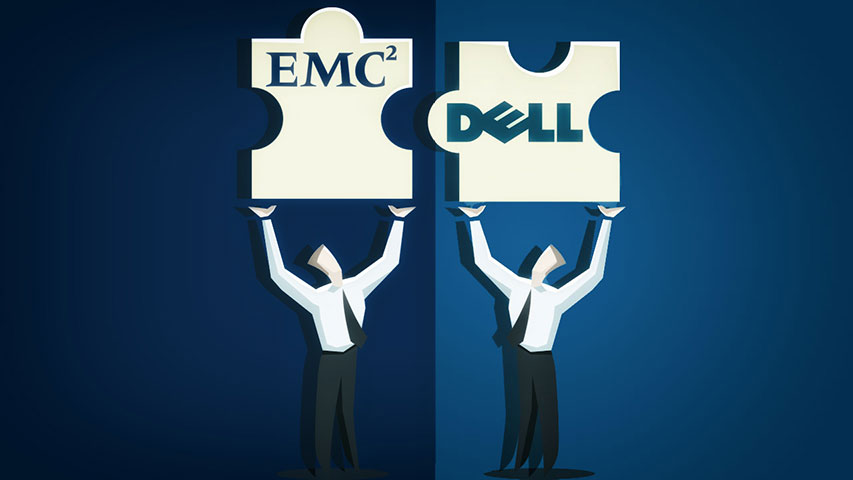
EMC: 2018 Will Begin without E20-370 and E20-670 Exams
When EMC announced that 2018 would begin without the E20-370 and E20-670 exams available for certification candidates, it sent a significant signal to IT professionals who had been preparing for or planning to pursue these credentials. The retirement of certification exams is never a trivial event in the professional development landscape, as it affects career planning, training investments, and the value of credentials that working professionals have already earned. Understanding what this announcement meant required looking beyond the immediate inconvenience and considering the broader context of how EMC was repositioning its certification portfolio.
For candidates who were actively preparing for either of these exams at the time of the announcement, the news created immediate uncertainty about how to redirect their efforts. Study materials, training courses, and preparation time already invested suddenly needed to be reassessed against a changed landscape. This kind of disruption is a reminder of why staying current with certification vendor announcements is an important habit for any IT professional, as exam retirements and replacements can significantly affect career planning timelines and the relevance of ongoing study efforts.
Background on the E20-370 Exam and Its Coverage
The E20-370 exam was associated with EMC’s storage and data management certification track, covering topics related to technology solutions that EMC had developed and marketed to enterprise customers over many years. This exam validated candidate knowledge in areas that were central to how organizations managed, protected, and recovered their data using EMC infrastructure. Professionals who held credentials based on this exam had demonstrated competence in a technology area that remained critically important to enterprise IT operations.
The content covered by the E20-370 reflected EMC’s product portfolio at the time of the exam’s development, and as that portfolio evolved through product updates, acquisitions, and strategic repositioning, the alignment between the exam content and the current state of the technology inevitably shifted. This kind of drift between certification content and current product reality is one of the primary drivers of exam retirement decisions, as vendors have a responsibility to ensure their certifications reflect skills that are genuinely applicable to the products customers are actually using in production environments.
Background on the E20-670 Exam and Its Professional Relevance
The E20-670 exam similarly represented a specialized area within EMC’s certification ecosystem, targeting professionals who worked with specific EMC technology platforms in enterprise environments. Like the E20-370, this exam had served as a credential that validated hands-on knowledge and practical implementation skills in a defined area of the EMC product portfolio. Professionals who had earned certifications based on this exam had made meaningful investments in their technical education and demonstrated their expertise through a formal assessment process.
The retirement of the E20-670 alongside the E20-370 suggested that EMC was making deliberate and coordinated changes to its certification portfolio rather than retiring individual exams in isolation. Coordinated retirements of this nature typically signal a strategic realignment of how a vendor structures its certification program, often driven by changes in the underlying product portfolio, shifts in customer technology priorities, or the consolidation of multiple specialized tracks into a more unified framework. Understanding these broader motivations helps certification candidates make sense of changes that might otherwise seem arbitrary.
The Broader Context of Dell EMC’s Certification Transformation
To fully appreciate why these exam retirements occurred at the start of 2018, it is necessary to consider the broader transformation that was reshaping EMC as an organization during this period. The landmark acquisition of EMC by Dell, completed in 2016, created Dell Technologies and brought together two of the largest enterprise technology companies in the world under a single corporate structure. This merger had profound implications for every aspect of both organizations, including their certification programs, which needed to be rationalized and aligned under the new combined entity.
Dell Technologies undertook a comprehensive restructuring of the EMC certification portfolio as part of this integration process, introducing new credentials that reflected the combined company’s product strategy and retiring older exams that no longer aligned with the direction the organization was heading. The retirement of the E20-370 and E20-670 at the beginning of 2018 was part of this larger rationalization effort, representing a deliberate decision to sunset credentials that belonged to the pre-merger era and replace them with certifications that better reflected the Dell EMC brand and portfolio.
How Exam Retirements Affect Credential Holders
One of the most pressing concerns for professionals when certification exams are retired is what happens to credentials they have already earned based on those exams. This is a legitimate and important question because certifications represent significant investments of time, money, and professional effort, and holders understandably want to know whether their credentials retain their value and recognition after the underlying exams are no longer available to new candidates. Vendors typically address this through policies that allow existing credential holders to maintain their certifications for a defined period or transition to updated credentials.
Dell EMC, like most major certification vendors, communicated transition paths for professionals affected by these retirements, providing guidance on how to move to updated credentials that aligned with the revised certification portfolio. For professionals in this situation, the key action was to engage directly with the vendor’s official certification channels to understand exactly what the transition options were, what additional requirements might apply, and what timelines governed the transition process. Proactive engagement with this information is always preferable to waiting until the last moment, when options may be more limited.
What Replacement Credentials Emerged in the New Framework
As EMC retired the E20-370 and E20-670 exams, the organization simultaneously worked to establish replacement credentials within the evolving Dell EMC certification framework. These new credentials were designed to reflect both the updated product portfolio and the integration of Dell and EMC technologies under a unified architecture. For professionals whose specializations aligned with the retired exams, identifying the most relevant replacement credential was the critical next step in maintaining certification currency and continuing to demonstrate validated expertise to employers and clients.
The Dell EMC certification framework that emerged from the integration period organized credentials around technology tracks that reflected the combined company’s strategic focus areas, including cloud infrastructure, data protection, converged infrastructure, and software-defined storage. Professionals coming from the E20-370 and E20-670 tracks could typically identify replacement credentials in these areas that built on their existing knowledge while adding coverage of newer technologies and architectural approaches. The transition, while disruptive in the short term, ultimately gave certified professionals access to credentials that were more relevant to the current state of enterprise technology.
Practical Steps for Candidates Who Were Mid-Preparation
For candidates who were actively preparing for the E20-370 or E20-670 exams when the retirement announcement came, the immediate practical challenge was deciding what to do with their preparation efforts. The first step was to determine whether there was still time to sit the exam before it was officially retired, as vendors typically announce retirements with a notice period that allows candidates who are close to ready to complete their certification before the window closes. If an exam retirement date had been set, candidates needed to assess honestly whether they could be adequately prepared within that timeframe.
For those who could not reasonably complete preparation in time or who were at an earlier stage of their study, the more productive path was to pivot toward the replacement credentials. Much of the foundational knowledge built during preparation for the retired exams would transfer to the new credentials, particularly in areas where the underlying technology had not changed dramatically. Reviewing the skills measured by the replacement exam and comparing them against the content already studied would reveal how much overlap existed and where additional preparation was needed, allowing candidates to build on their existing investment rather than starting from zero.
Lessons About Certification Planning and Vendor Awareness
The retirement of the E20-370 and E20-670 exams offers broader lessons about how IT professionals should approach certification planning in a landscape where vendor programs evolve continuously. One of the most important habits to develop is regularly monitoring official communications from certification vendors, including exam retirement announcements, curriculum updates, and new credential launches. Vendors typically provide this information through their official websites, certification newsletters, and professional community channels, and staying connected to these sources allows professionals to anticipate changes rather than being caught off guard.
Another lesson is the value of choosing certifications that are tightly aligned with an active and growing product portfolio. Credentials built around technologies that are being actively developed and sold by a vendor are less likely to be retired in the near term than those associated with legacy products or platforms that are being phased out. When evaluating which certifications to pursue, considering the strategic direction of the vendor and the trajectory of the underlying technology is as important as assessing the current market demand for the credential, as a certification that is highly valued today may be retired within a few years if the technology landscape shifts significantly.
The Value of Staying Flexible in Your Certification Strategy
The disruption caused by exam retirements underscores the importance of maintaining flexibility in your professional certification strategy. Rather than building a long-term career plan around a single certification track with a rigid sequence of exams to complete, successful IT professionals approach certification as an adaptive process where they regularly reassess their direction in light of new information about the market, vendor programs, and their own career goals. This flexibility allows them to respond effectively to changes like the E20-370 and E20-670 retirements without experiencing them as catastrophic setbacks.
Flexibility also means being willing to invest in foundational knowledge that transfers across certification tracks and vendor programs. Deep technical understanding of storage principles, data protection concepts, and infrastructure architecture does not become obsolete when a specific exam is retired. Professionals who have built genuine expertise in these areas can adapt to new credential frameworks more readily than those whose preparation was narrowly focused on passing a specific exam without developing transferable knowledge. This distinction between learning for certification and learning for competence is one of the most important principles that guides sustainable professional development.
How the Industry Responded to These Changes
The IT certification community’s response to the E20-370 and E20-670 retirements reflected the broader tensions that exist whenever major vendors restructure their certification programs. Online forums, professional communities, and certification-focused discussion groups saw significant activity as candidates and credential holders sought information, shared concerns, and helped each other identify the best path forward. This kind of community response highlights the important role that peer networks play in helping professionals navigate certification program changes that can otherwise feel isolating and confusing.
Training providers who had developed courses and study materials for the retired exams also needed to respond quickly to the changes, either by adapting their existing materials to align with replacement credentials or by developing entirely new curriculum. The quality of available training resources typically dips temporarily in the immediate aftermath of major certification changes as the ecosystem of providers catches up with the new requirements. Professionals preparing for replacement credentials should be aware of this dynamic and prioritize official vendor materials during the transition period when third-party resources may be less developed or less reliable.
Career Implications of Certification Evolution
From a long-term career perspective, the retirement of established certifications and their replacement with updated credentials is not a fundamentally negative development, even though it creates short-term disruption. The evolution of certification programs reflects the evolution of the underlying technology, and professionals who engage with updated credentials are positioning themselves at the current frontier of their field rather than holding credentials that describe yesterday’s technology landscape. Employers and clients increasingly value credentials that demonstrate current knowledge over those that reflect expertise in legacy platforms.
The professionals who thrive through certification program changes are those who view each transition as an opportunity to refresh and extend their knowledge rather than as a threat to credentials they have already earned. Approaching the Dell EMC certification evolution with this mindset meant seeing the retirement of the E20-370 and E20-670 not as the loss of hard-earned credentials but as an invitation to engage with updated technology concepts and earn credentials that would be more relevant and valuable in the marketplace going forward. This growth-oriented perspective is what distinguishes professionals who build enduringly successful careers from those who find themselves left behind by the pace of technological change.
Conclusion
The retirement of the EMC E20-370 and E20-670 exams at the start of 2018 was a significant event in the EMC and Dell EMC certification landscape, but it was also a reflection of the dynamic and continuously evolving nature of enterprise technology and the certification programs that validate expertise within it. Throughout this article, the focus has been on providing a comprehensive understanding of what these retirements meant, why they occurred in the context of the Dell EMC merger and portfolio evolution, and what practical steps affected candidates and credential holders needed to take in response.
The broader lesson that runs through every aspect of this discussion is that professional certification in the technology industry is not a static achievement but an ongoing commitment to staying current with a field that never stops changing. Certifications earn their value from their relevance to current technology and current market demand, and that relevance requires continuous maintenance by both the vendors who issue credentials and the professionals who hold them. When exam retirements occur, they are ultimately a signal that the technology landscape has moved and that the certification program is moving with it.
For professionals who were affected by the E20-370 and E20-670 retirements, the experience, while disruptive, provided a valuable lesson in the importance of certification portfolio awareness and adaptive career planning. Those who responded proactively by engaging with transition resources, identifying replacement credentials, and redirecting their preparation efforts came through the transition with updated skills and credentials that served them better than the retired exams would have in a rapidly changing market. Their experience demonstrates that certification program changes, handled well, can be catalysts for professional growth rather than obstacles to it.
The habits that serve professionals best in navigating changes like these are the same habits that support successful certification preparation more broadly. Staying connected to official vendor communications, building foundational knowledge that transfers across credential tracks, engaging with peer communities for support and information sharing, and approaching each certification as a milestone in an ongoing learning journey rather than a permanent destination are all practices that create resilience in the face of change. As the Dell EMC and broader enterprise technology landscape continues to evolve, these habits will remain as valuable as any specific credential a professional might hold.
Finally, it is worth acknowledging that the professionals who hold certifications from any vendor, including those that have been retired, have demonstrated something important about themselves through the effort they invested in earning those credentials. The technical knowledge, study discipline, and commitment to professional development that certification requires do not expire when an exam is retired. They are qualities that serve professionals throughout their careers, regardless of which specific credentials happen to be current at any given moment. Carry that knowledge and discipline forward, engage with the certifications that reflect today’s technology landscape, and approach each new certification challenge with the same commitment that earned you every credential that came before.
