
What Is IoT (Internet of Things), and Why Does Everyone Talk About It?
Few technology concepts have captured the collective imagination of both the general public and the professional technology community quite like the Internet of Things. It appears in conversations about smart homes and connected cities, in boardroom discussions about industrial efficiency and supply chain optimization, in policy debates about data privacy and cybersecurity regulation, and in academic research spanning computer science, electrical engineering, urban planning, and behavioral economics. The phrase itself has become so ubiquitous that it risks losing the specific meaning it carries, becoming a vague shorthand for anything connected to a network rather than a precise description of a genuinely transformative technological paradigm.
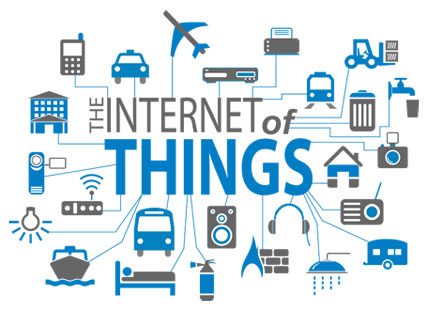
At its core, the Internet of Things refers to the network of physical objects embedded with sensors, software, and connectivity capabilities that allow them to collect and exchange data with other devices and systems over the internet or other communication networks. These objects range from consumer electronics like smart thermostats and fitness trackers through industrial equipment like manufacturing sensors and agricultural monitoring devices to urban infrastructure like traffic management systems and utility meters. What unites them is the ability to gather information about their environment or operation, transmit that information digitally, and in many cases receive instructions or updates in return, all without requiring direct human intervention in the data exchange process.
The Origins and Development of a Connected World
The concept of connecting physical objects to networks predates the term Internet of Things by several decades. Early examples of networked physical devices include the ATM machines of the 1970s and the vending machines that began reporting inventory levels over networks in the 1980s. The intellectual foundations of what would eventually become the IoT were laid by researchers and engineers who recognized that the value of a network extended beyond connecting computers to connecting any device capable of generating or responding to digital information. These early connected devices were isolated experiments rather than components of a coherent ecosystem, but they established the proof of concept that would eventually scale into something far more significant.
The term Internet of Things itself is generally credited to Kevin Ashton, a British technology pioneer who used it in a 1999 presentation to describe a system where the internet was connected to the physical world through ubiquitous sensors. Ashton was working at the time on supply chain applications using radio frequency identification technology, and his framing of the concept emphasized the potential for objects to communicate their status and location without human involvement in the data collection process. The two decades following his coining of the term saw the gradual assembly of the technological conditions that would allow his vision to become a practical reality at massive scale, including dramatic reductions in the cost of sensors and processors, the proliferation of wireless connectivity, and the development of cloud computing infrastructure capable of handling enormous volumes of data generated by connected devices.
The Technology Stack That Makes IoT Possible
Understanding why IoT has become technically feasible at the scale it operates today requires looking at the convergence of several distinct technological developments that each contributed a necessary component to the overall capability. The miniaturization and cost reduction of sensors and microprocessors is perhaps the most fundamental of these developments. The sensors required to measure temperature, pressure, motion, light, humidity, location, and dozens of other physical parameters have become dramatically smaller and cheaper over the past two decades, to the point where including sensing capability in objects that were previously entirely passive has become economically viable across a wide range of applications.
Wireless connectivity in its various forms, including Wi-Fi, Bluetooth, cellular networks, and specialized low-power wide-area network protocols designed specifically for IoT applications, provides the communication layer that allows devices to transmit the data their sensors collect. Cloud computing platforms provide the storage and processing infrastructure needed to handle the enormous volumes of data that large IoT deployments generate, applying analytical capabilities that would be impossible to perform on the devices themselves given their limited processing resources. Advances in battery technology and energy harvesting extend the operational life of devices that cannot be connected to permanent power sources. The combination of these technologies, each mature enough individually to be deployed reliably at scale, creates the integrated capability that makes IoT systems functional in real-world environments.
Consumer IoT and How It Entered Everyday Life
For most people outside the technology industry, the Internet of Things first became a tangible reality through consumer products that brought connected functionality into homes and daily routines. Smart thermostats that learn occupant preferences and adjust heating and cooling automatically, voice-activated speakers that respond to spoken commands and control other connected devices, fitness trackers that monitor physical activity and physiological metrics continuously, smart lighting systems that can be controlled remotely and programmed to respond to environmental conditions, and connected security cameras that stream video to smartphone applications all represent consumer IoT applications that have achieved mainstream adoption in many markets.
The appeal of these consumer applications lies in the combination of convenience, efficiency, and personalization they offer. A thermostat that learns when occupants are home and adjusts temperature accordingly reduces energy consumption without requiring deliberate effort from residents. A fitness tracker that monitors sleep patterns and heart rate provides health insights that would previously have required clinical monitoring equipment. Connected home security systems provide remote visibility and control that was previously available only to those who could afford professional monitoring services. These value propositions have proven compelling enough to drive significant consumer adoption, even among individuals who have limited interest in technology for its own sake and who engage with IoT primarily through the practical benefits it delivers in their daily lives.
Industrial IoT and the Transformation of Manufacturing
While consumer applications of IoT have captured significant public attention, the industrial applications of connected device technology arguably represent even greater economic significance. Industrial IoT, sometimes referred to separately as IIoT, encompasses the deployment of sensors, connected equipment, and data analytics in manufacturing, energy, agriculture, transportation, and other sectors where operational efficiency, quality control, and predictive maintenance represent major cost and competitive considerations. The potential to instrument physical processes with sensors that generate continuous data streams, and to apply analytical capabilities to that data to optimize operations, has attracted enormous investment from organizations in virtually every industrial sector.
Manufacturing environments benefit from IoT through applications that monitor equipment condition continuously, identifying patterns that predict mechanical failure before it occurs and allowing maintenance to be scheduled proactively rather than reactively. This shift from reactive to predictive maintenance reduces unplanned downtime, extends equipment lifespan, and improves the consistency of production quality in ways that translate directly into measurable financial benefits. Quality control applications use sensor data to detect deviations from production specifications in real time, enabling intervention before defective products complete the production process. Supply chain applications use location tracking and condition monitoring to provide continuous visibility into the movement and status of goods throughout the logistics network.
Smart Cities and the IoT Vision for Urban Infrastructure
The application of IoT principles to urban infrastructure represents one of the most ambitious and consequential expressions of the technology’s potential. Smart city initiatives use connected sensors and data analytics to optimize the operation of traffic systems, public transportation networks, utility distribution, waste management, public safety infrastructure, and environmental monitoring across entire urban areas. The vision of a city where infrastructure responds dynamically to actual conditions rather than operating on fixed schedules or requiring manual monitoring represents a significant departure from how urban systems have traditionally been managed, and the potential efficiency and quality of life improvements are substantial.
Traffic management systems that use real-time sensor data to adjust signal timing based on actual traffic flow rather than predetermined schedules can meaningfully reduce congestion and the fuel consumption and emissions associated with it. Smart utility meters that communicate consumption data directly to utility providers eliminate the need for manual meter reading while providing both utilities and consumers with more detailed information about usage patterns. Environmental monitoring networks that continuously measure air quality, noise levels, and other urban environmental parameters provide the data needed to identify problems, evaluate interventions, and make informed planning decisions. Public lighting systems that adjust brightness based on actual pedestrian and vehicle activity reduce energy consumption without compromising safety. These applications collectively represent a vision of urban management that is more responsive, more efficient, and more data-informed than what has historically been achievable.
Healthcare IoT and the Connected Patient
The application of IoT technology to healthcare represents one of the domains with the greatest potential to improve human wellbeing, and also one of the most demanding in terms of reliability, security, and regulatory requirements. Connected medical devices that monitor patient vital signs continuously and transmit data to clinical systems allow for more responsive care and earlier detection of deteriorating patient conditions than periodic manual measurement can provide. Remote patient monitoring applications extend this capability outside clinical settings, allowing patients with chronic conditions to be monitored at home while their clinical care teams receive alerts when measurements fall outside acceptable ranges.
Wearable health monitoring devices represent a consumer-accessible version of healthcare IoT that has gained significant traction. Devices that continuously monitor heart rate, blood oxygen levels, sleep patterns, and physical activity provide individuals with health data that was previously available only through clinical testing, and in some cases their continuous monitoring capability provides insights that periodic clinical measurements would miss entirely. The integration of this consumer health monitoring data with clinical systems, when done with appropriate privacy protections and clinical validation, creates opportunities for more comprehensive and personalized healthcare management. Implantable devices including pacemakers and insulin pumps with connectivity capabilities represent a higher-stakes application of the same principles, where the reliability and security requirements are correspondingly more demanding.
The Data Challenge at the Heart of IoT
Every IoT device generates data, and large IoT deployments generate data at volumes and velocities that strain conventional data management approaches. A single industrial sensor might generate readings multiple times per second continuously. A manufacturing facility with thousands of sensors generates volumes of data that would overwhelm traditional data storage and processing systems designed for human-generated information. The data challenge of IoT is not simply about storage capacity but about the entire pipeline from data generation through transmission, processing, analysis, and action, each stage of which must be capable of handling the volume and velocity of data that large-scale IoT deployments produce.
Edge computing has emerged as an important architectural response to the data challenge of IoT. Rather than transmitting all sensor data to centralized cloud systems for processing, edge computing performs initial data processing and filtering at or near the point of data generation, transmitting only the results of that processing or data that meets specific criteria for further analysis. This approach reduces the bandwidth requirements of IoT deployments, lowers the latency between data generation and action, and reduces the cost of cloud data processing and storage. The combination of edge computing for immediate local processing and cloud computing for longer-term storage and more sophisticated analysis represents the architecture that many large-scale IoT deployments use to manage the data challenge effectively.
Security Vulnerabilities and the Risks of a Connected World
The proliferation of connected devices has created a cybersecurity challenge of considerable proportions that has attracted serious concern from security researchers, government agencies, and technology organizations worldwide. IoT devices frequently present security vulnerabilities that would be considered unacceptable in other categories of computing equipment, including default credentials that users rarely change, infrequent or absent security update mechanisms, minimal encryption of data in transit, and limited capability to run the security software that is standard on conventional computing platforms. These vulnerabilities make IoT devices attractive targets for malicious actors who can compromise them to gain access to networks, conduct surveillance, or recruit them into botnets used for large-scale attacks.
High-profile security incidents involving compromised IoT devices have demonstrated that these vulnerabilities represent real rather than merely theoretical risks. Attacks that used networks of compromised IoT devices to conduct large-scale distributed denial of service attacks demonstrated the potential for poorly secured consumer devices to be weaponized in ways that affect internet infrastructure well beyond the networks where those devices were installed. The security challenge of IoT is compounded by the diversity of devices involved, the limited technical sophistication of many device owners, the long operational lifespans of many IoT devices that outlast the period during which manufacturers provide security updates, and the difficulty of patching devices that may be physically inaccessible or that lack adequate update mechanisms.
Privacy Implications of Pervasive Sensing
The data collection capabilities of IoT devices raise privacy questions that extend well beyond the cybersecurity concerns associated with device vulnerabilities. Connected devices that monitor home environments, track physical location continuously, record audio or video, or measure physiological parameters generate intimate data about individuals and their behaviors that creates significant privacy considerations. The combination of data from multiple IoT sources can enable inferences about individuals that go far beyond what any single data stream would reveal, and the aggregation of this data across large populations creates the foundation for surveillance capabilities of a scope that raises serious civil liberties concerns.
Regulatory responses to IoT privacy concerns have emerged in various jurisdictions, with data protection frameworks like the European Union’s General Data Protection Regulation establishing requirements for how personal data collected by connected devices must be handled, stored, and protected. Consumer awareness of IoT privacy implications has also grown, influencing purchasing decisions and public attitudes toward connected device deployments in public spaces. The tension between the genuine value that data collection enables and the privacy costs it imposes remains one of the most contested dimensions of the IoT conversation, with reasonable people reaching different conclusions about where the appropriate balance lies between connectivity benefits and privacy protection.
Why IoT Dominates Technology Conversations Today
The reason IoT appears in so many different conversations across so many different domains is that it represents a genuinely cross-cutting technology with implications that span industries, disciplines, and aspects of daily life in ways that few other technological developments have matched. It is not primarily a technology story but an economic story, a social story, an environmental story, and a governance story simultaneously. The economic implications of connecting industrial equipment and optimizing operations at scale are enormous. The social implications of instruments that monitor health, behavior, and environment continuously raise questions that go to the heart of how societies balance individual autonomy with collective benefit.
The environmental implications of IoT run in both directions, with connected systems offering significant potential to reduce energy consumption and improve resource efficiency while the manufacturing and disposal of billions of connected devices creates its own environmental burden. The governance implications of a world where physical infrastructure is controlled by software systems raise questions about resilience, accountability, and the appropriate role of public oversight in systems that affect public safety and welfare. It is precisely because IoT intersects with so many dimensions of consequential concern that it generates the sustained and broad conversation it does, drawing in voices from technology, policy, business, civil society, and academia who approach it from different angles but share recognition that its implications are too significant to be left to any single community to resolve.
Conclusion
The Internet of Things has moved from a speculative concept to a pervasive technological reality in a remarkably short period, and its continued development promises to deepen its influence across virtually every domain of human activity in the years ahead. Understanding what IoT actually is, how it works, where it is being applied, and what challenges it raises is no longer optional knowledge for technology professionals or informed citizens. It is foundational literacy for anyone who wants to participate meaningfully in conversations about how technology is shaping economies, societies, and daily life in the contemporary world.
The conversation about IoT that seems to be everywhere is not mere hype or the technology industry’s tendency toward self-promotion, though those elements are not entirely absent from how the topic is sometimes discussed. It reflects genuine recognition that the boundary between the physical and digital worlds is dissolving in ways that have profound implications for how businesses operate, how cities are managed, how healthcare is delivered, how security and privacy are protected, and how individuals experience their daily environments. These are not peripheral concerns but central questions about the kind of world that connected technology is helping to build and whether that world reflects the values and priorities of the people who inhabit it.
For professionals working in technology, the IoT landscape represents both a rich source of career opportunity and a domain of significant responsibility. The systems being built today will shape physical and social environments for decades, and the decisions made about their architecture, security, privacy protections, and governance will have consequences that extend far beyond the immediate technical context in which those decisions are made. For individuals engaging with IoT as consumers, the connected devices entering homes and daily routines deserve thoughtful consideration rather than uncritical adoption, with attention to what data is being collected, how it is being used, and whether the benefits justify the tradeoffs involved. And for society as a whole, the Internet of Things represents one of the defining technological developments of the current era, deserving the serious, sustained, and multidisciplinary conversation that its genuine significance warrants.
